
Researchers uncover how immune cells use zinc to fight infections — challenging long-held beliefs
A research team from Umeå University, Sweden, in collaboration with Ghent University, Belgium, has made a groundbreaking discovery about how the body's first immune defense, neutrophils, orchestrate the mobilization of zinc to fight microbes. The study is published in the Journal of Biological Chemistry.
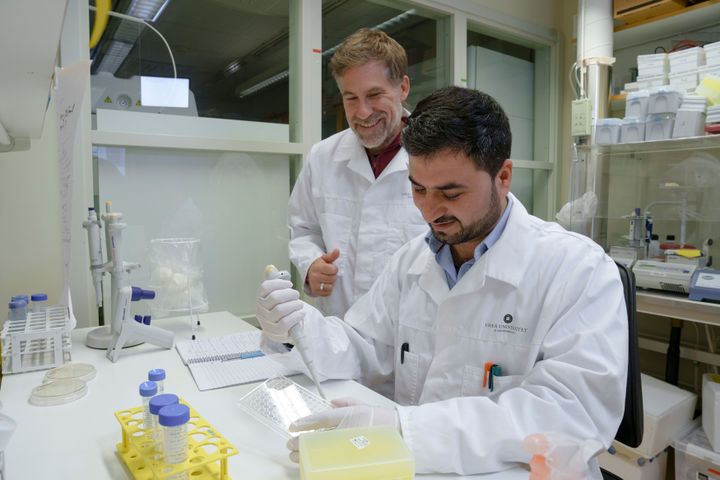
“We show that immune cells drain microbes of zinc, making them more vulnerable. At the same time, the ability of neutrophils to kill microbes is clearly affected by how much zinc is available. Our results reveal the delicate balance of trace metals in the immune system,” says Constantin Urban, professor at the Department of Clinical Microbiology at Umeå University.
Neutrophils are specialized immune cells that respond rapidly to infections by capturing and destroying microbes – a process called phagocytosis. During phagocytosis, the cell surrounds the microbe with its membrane and forms a fluid-filled vesicle, a phagosome, where the microbe is digested.
Trace metals such as zinc, copper, and manganese are vital for the survival of all living organisms, from animals to microbes. During an infection, an intense struggle for these metals occurs, with both disease-causing microbes and the body's immune system trying to gain access to them. This phenomenon is called "nutritional immunity."
Until now, it has been uncertain whether neutrophils can extract zinc ions from microbes inside the phagosome. The prevailing hypothetical model suggests that neutrophils intoxicate microbes by pumping excess zinc into the phagosome.
To answer this question, Constantin Urban and his colleagues used cutting-edge high-resolution chemical imaging techniques to monitor the redistribution of zinc in real-time in neutrophils during phagocytosis. The study used the common model organism Saccharomyces cerevisiae – yeast.
Surprisingly, their data showed that the prevailing theory is incorrect.
“We can show that the movement of zinc is tightly coordinated by the neutrophils, which dynamically regulate the availability of zinc in the phagosome,” says Nadeem Ullah, postdoctoral fellow at the Department of Clinical Microbiology at Umeå University.
The study shows that zinc levels affect the efficiency of neutrophils. When zinc levels were low, yeast cells were killed more efficiently, while high zinc levels in the phagocytized yeast cell significantly impaired the neutrophil's ability to fight microbes. This highlights the importance of a carefully regulated balance of trace metals for a strong immune response.
“Our findings open up new ways to strengthen the immune system,” says Nadeem Ullah. By adjusting zinc levels, we could help neutrophils fight infections more effectively. Understanding how metals, especially zinc, affect immune cells could lead to new treatments for infections and conditions where immune function is weakened.
The research group now plans to continue with studies that focus on the molecular mechanisms behind zinc mobilization.
“In upcoming projects, we want to identify the membrane transporters that control the flow of zinc ions between the phagosome and the microbe,” says Constantin Urban.
About the study
Ullah N., et al. Nanoscale Chemical Imaging of Phagocytosis: A Battle for Metals between Host and Microbe. Journal of Biological Chemistry (2025). https://doi.org/10.1016/j.jbc.2025.110485
Contacts
Constantin Urban
Professor
Department of Clinical Microbiology, Umeå University
+46 90 785 27 02
constantin.urban@umu.se
Nadeem Ullah
Postdoc
Department of Clinical Microbiology, Umeå University
nadeem.ullah@umu.se
Ingrid Söderbergh
Research Coordinator
Umeå Centre for Microbial Research, UCMR, Umeå University
+ 46 70 60 40 334
General Press InquiriesPress Officer
Tel:+46 90 786 50 89press@umu.seImages
About us
Umeå University is a comprehensive university and one of Sweden’s largest higher education institutions with around 38,000 students and 4,600 staff. We have a diverse range of high-quality educational programmes and research within all disciplinary domains and the arts. The University offers world-class educational and research environments and helps expand knowledge of global significance. This is where the groundbreaking discovery was made of the CRISPR-Cas9 gene-editing tool, which was awarded the Nobel Prize in Chemistry. At Umeå University, everything is just around the corner. Our tightly knit campus makes it easy to meet, collaborate and share knowledge, something that encourages a dynamic and open culture.
Subscribe to releases from Umeå University
Subscribe to all the latest releases from Umeå University by registering your e-mail address below. You can unsubscribe at any time.
Latest releases from Umeå University
Thyroid gland new possible target for prostate cancer treatment14.11.2025 10:01:20 CET | Press Release
A hormone produced in the thyroid gland can play a key role in the development of prostate cancer. This is shown in a new study by an international research group led by Umeå University, Sweden, and the Medical University of Vienna, Austria. By blocking a receptor for the hormone, the growth of tumour cells in the prostate was inhibited. In the long term, the discovery may open up a new way of attacking certain types of aggressive prostate cancer.
Bacterial “bubbles” hitchhike on cellular protrusions to reach the cell surface8.10.2025 13:05:00 CEST | Press Release
Researchers at Umeå University have discovered that the microscopic “bubbles” released by bacteria in our body do not just drift around randomly. Instead, they use the thin protrusions of cells as a transport route to quickly and efficiently reach their target with their contents.
Sara Granér / Derail Us from Evil4.10.2025 07:00:00 CEST | Press Release
Sara Granér is one of Sweden’s leading comic artists and satirists. This autumn, she presents three-dimensional works at Bildmuseet. The exhibition Sara Granér / Räls oss ifrån ondo [Derail Us from Evil] opens on Art Friday, 17 October.
Art and Truth-Telling at Bildmuseet4.10.2025 07:00:00 CEST | Press Release
What counts as truth? In what ways can art expand the language of truth and the process of truth-telling? Art and Truth-Telling marks the process of the Truth Commission for the Sámi people on the Swedish side of Sábmie. Through vuöllie [joik], duöjjie [Sámi crafts], drawing, installation, architecture and glasswork, the exhibition highlights the role of art in the expression of personal and collective truths.
Bildmuseet: MFA exhibition from Umeå Academy of Fine Arts30.4.2025 09:13:21 CEST | Press Release
Infinite Proposals is the title of this year’s Master’s exhibition from Umeå Academy of Fine Arts at Umeå University. It will be unveiled with an Art Friday at Bildmuseet on 23 May. A media preview will be held on Wednesday 21 May at 10:00–11:00 ( RSVP). The newly graduated artists will be there to talk about their work. The exhibition presents works by Kalliopi Akonidou, Maja F. Eriksson, Adam Gidlund, Jonna Iversen, Johanna Löwenhamn, Miranda Monauti, Senja Penttilä Sollén, Jordan Shakes Pålerfält, Josefin Selander, Alva Sjöstedt, Martin Wallén, Erik Olof Wiklund and Malin Östberg, all of whom are graduating from the Master’s Programme in Fine Arts at Umeå University’s Umeå Academy of Fine Arts. The curator is artist Annika Eriksson, a professor at Umeå Academy of Fine Arts and the students’ principal supervisor. The title of the exhibition, Infinite Proposals, refers to the artistic process, from the initial idea to creating and sending the work out into the world, Annika Eriksson e
In our pressroom you can read all our latest releases, find our press contacts, images, documents and other relevant information about us.
Visit our pressroom