
Pan-disease atlas maps molecular fingerprints of health, disease and aging
A new study has mapped the distinct molecular “fingerprints” that 59 diseases leave in an individual’s blood protein – which would enable blood tests to discern troubling signs from those that are more common.
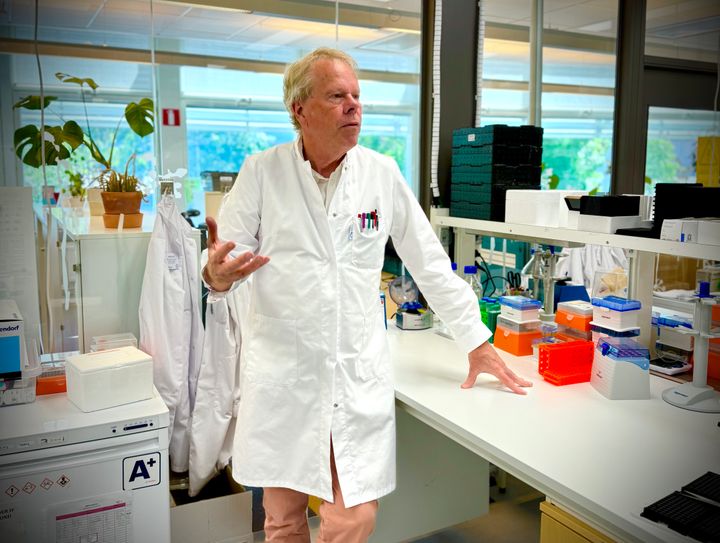
Publishing Thursday in Science, an international team of researchers mapped how thousands of proteins in human blood shift as a result of aging and serious diseases, such as cancer and cardiovascular and autoimmune diseases.
The Human Disease Blood Atlas also reveals that each individual’s blood profile has a unique molecular fingerprint, which changes through childhood and stabilizes in adulthood. This provides a baseline for comparison that healthcare providers could one day use to flag early deviations.
The study’s senior author, Mathias Uhlén, and lead author, María Bueno Álvez, say the study used machine learning that enables information critical for building blood panels that would not misclassify patients in real world settings.
“By comparing these diseases side by side, we can separate universal false alarm bells of inflammation from truly disease specific signals, says Uhlén, a professor at Stockholm’s KTH Royal Institute of Technology and the director of the Human Protein Atlas project.
“The mapping of molecular fingerprints of disease is a crucial step for building blood tests that work in the clinic,” Uhlén says.
For example, many proteins that rise in cancer or autoimmunity also rise in infections, reflecting shared inflammatory pathways, while other patterns such as liver-related conditions are clustered by organ systems. This dual view helps focus on truly disease specific markers, he says.
The Disease Blood Atlas offers a path to solve the problem of identifying reliable, reproducible biomarkers for diseases – a process that to date has typically involved comparing new protein markers against a control, that is, a healthy profile. The researchers point to the study’s success in identifying common biomarkers that are consistently altered in various conditions.
These shared molecular features could serve as universal diagnostic, prognostic or therapeutic targets.
“Every day, around 70 new biomarker studies are published worldwide, but most compare disease against controls,” says Bueno Álvez, a PhD student at KTH and the first author on the paper.
“Because many proteins show variability across multiple conditions, such narrow comparisons often produce results that cannot be reproduced, contributing to the wider reproducibility crisis in today’s science,” she says.
Among the findings was that specific protein profiles can change substantially as individuals approach a cancer diagnosis, with some proteins showing higher concentrations prior to diagnosis. These findings suggest more study should be devoted to investigating the potential of using proteomics for early cancer detection.
The study was carried out through SciLifeLab in Stockholm and involved collaboration with more than 100 researchers worldwide.
Images

Links
Subscribe to releases from KTH Royal Institute of Technology
Subscribe to all the latest releases from KTH Royal Institute of Technology by registering your e-mail address below. You can unsubscribe at any time.
Latest releases from KTH Royal Institute of Technology
Alternative to BPA passes toxicity and sustainability standards set by EU innovation guidelines4.12.2025 11:07:37 CET | Press Release
Polyester and a host of other plastic products could potentially be manufactured with non-toxic and sustainable BPA alternatives identified in a multidisciplinary study published today by researchers in Sweden.
Study shows potential for more affordable and efficient hydrogen gas production3.12.2025 15:29:35 CET | Press Release
A recent advance in the science of hydrogen fuel production could enable higher output and more sustainable production of this renewable energy source, researchers with Stockholm’s KTH Royal Institute of Technology report.
Calcium-sensitive switch designed to boost efficacy of cancer drugs24.11.2025 21:11:53 CET | Press Release
Cancer-fighting antibody drugs are designed to penetrate tumor cells and release a lethal payload deep within, but too often they don’t make it that far. A new study shows how this Trojan Horse strategy works better by exploiting calcium differences outside and inside cells.
Potential treatment may prevent brain damage in premature babies11.11.2025 11:10:46 CET | Press Release
A treatment that could protect premature babies from brain damage showed promise in a recent study in Sweden. Using a first-of-its-kind prenatal brain model created with human cells, researchers observed new details about the effects of cerebral hemorrhages on stem cells during premature birth. And they successfully tested an antidote that reduced the damage.
Heart ‘blueprint’ reveals origins of defects and insights into fetal development29.10.2025 11:13:11 CET | Press Release
New research has produced a “blueprint” revealing how the human heart is built during prenatal development. It offers insights that could lead to improved prenatal care and new treatments for heart defects, such as holes between heart chambers or deformities of the heart valves.
In our pressroom you can read all our latest releases, find our press contacts, images, documents and other relevant information about us.
Visit our pressroom