
Eye implant may be used to treat diabetes
18.10.2023 15:05:48 CEST | KTH Royal Institute of Technology | Press Release
Researchers in Sweden have developed a microscale device for implantation in the eye, which presents new opportunities for cell-based treatment of diabetes and other diseases.
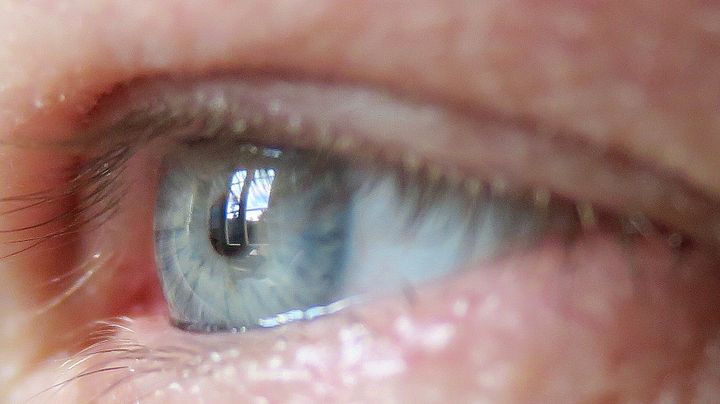
Aiming to encapsulate insulin-producing pancreatic cells and electronic sensors, the 3D-printed device was developed by a team from KTH Royal Institute of Technology and Karolinska Institutet. The researchers reported the results of the work in the journal Advanced Materials.
The collaboration between KTH and Karolinska Institutet enables micro-organs—namely pancreatic islets or islets of Langerhans—to be positioned precisely in the eye without need for sutures. It offers the possibility of cell-based therapy, for example to treat Type 1 or Type 2 diabetes, using the eye as a base.
Anna Herland, senior lecturer in the Division of Bionanotechnology at SciLifeLab at KTH and the AIMES research center at KTH and Karolinska Institutet, says that the eye is ideal for this technology because it has no immune cells that react unfavorably in the first stage of implantation. Its transparency allows visual and microscopic study of what happens to the implant over time.
“The eye is our only window into the body, and it’s immune-privileged,” Herland says.
The device is designed as a wedge, about 240 micrometers long, allowing the structure to be mechanically fixed at the angle between the iris and the cornea in the anterior chamber of the eye (ACE). The work demonstrates the first mechanical fixation of a device in the anterior chamber of the eye.
“We designed the medical device to hold living mini-organs in a micro-cage and introduced the use of a flap door technique to avoid the need for additional fixation,” says Wouter van der Wijngaart, professor in the Division of Micro- and Nanosystems at KTH.
In tests on mice the device maintained its position in the living organism for several months, and the mini-organs quickly integrated with the host animal's blood vessels and functioned normally, Herland says.
Per-Olof Berggren, professor of experimental endocrinology at Karolinska Institutet contributed to the research with years of experience in transplanting islets of Langerhans to the anterior chamber of the eye in mice.
“The current unit is unique and will among other things form the basis for our continued work to develop an integrated microsystem for studying the function and survival of the islets of Langerhans in the anterior chamber of the eye,” Berggren says. “This is also of great translational importance, as transplantation of Langerhans islands to the anterior chamber of the eye in humans is subject to clinical trials in patients with diabetes."
Herland says the technology overcomes one obstacle to the development of cell therapies, including those for diabetes. Namely, there is no need for invasive methods to monitor the graft’s function and to guide care in order to ensure long-term transplant success.
“Ours is a first step towards advanced medical microdevices that can both localize and monitor the function of cell grafts,” she says.
She says the design makes it possible to position mini-organs such as organoids and islets of Langerhans without limiting the supply of nutrients to the cells.
“Our design will enable future integration and use of more advanced device functions such as integrated electronics or drug release."
The research has been funded by SSF, Knut and Alice Wallenberg Foundation, ERC, Erling Persson Family Foundation and Jochnick Foundation, AIMES and Novo Nordisk Foundation.
The study’s conflict of interest statement notes that Per-Olof Berggren is a partner in Biocrine AB, which is also part of the study.
Images
Links
Subscribe to releases from KTH Royal Institute of Technology
Subscribe to all the latest releases from KTH Royal Institute of Technology by registering your e-mail address below. You can unsubscribe at any time.
Latest releases from KTH Royal Institute of Technology
Why do spruce take decades to reproduce? A genetic study offers new clues14.9.2026 17:41:41 CEST | Press Release
New techniques have enabled researchers in Sweden to begin decoding how one of Northern Europe's most important coniferous tree species switches from growing branches to producing cones – their seed-bearing reproductive organs.
KTH builds Swedish expertise in nitrocellulose2.9.2026 12:54:32 CEST | Press Release
Sweden wants to reduce its dependence on foreign suppliers for nitrocellulose, a raw material central to the production of conventional propellants. KTH is now launching a new competence centre to build up expertise across the entire chain – from forest-based raw materials and manufacturing to safe storage.
'Like uprooting tree stumps' – a simpler method to manufacture biosensors27.8.2026 15:42:00 CEST | Press Release
A new manufacturing method could help move the production of nanoscale sensors from specialized fabrication facilities to conventional semiconductor manufacturing plants.
Technique could make flat optic fiber 1,000 times more sensitive than standard fiber13.8.2026 10:57:20 CEST | Press Release
Optical fiber has already transformed the modern world. New research now suggests it could do even more. A new flat fiber fabrication technique produces a high fidelity sensor for a wide range of applications, from batteries to bridges, according to a recently-published study.
Why your building is often too hot, or cold — and the simple fix3.6.2026 13:28:26 CEST | Press Release
Not happy with the heating in your office, or your apartment building? A new study shows that complicated “smart building” technology isn’t the only answer for spaces that feel too hot after lunch, or too cold in the morning.
In our pressroom you can read all our latest releases, find our press contacts, images, documents and other relevant information about us.
Visit our pressroom