Ashley Moffett and Peter Thelin made honorary doctors at Karolinska Institutet
Karolinska Institutet has decided to award honorary doctorates to Ashley Moffett, professor emerita at the University of Cambridge, UK, and Peter Thelin, chair of the Swedish Brain Fund, for their important contributions to science and KI, respectively. The formal ceremony will take place at the conferment ceremony in Stockholm City Hall on 26 April.
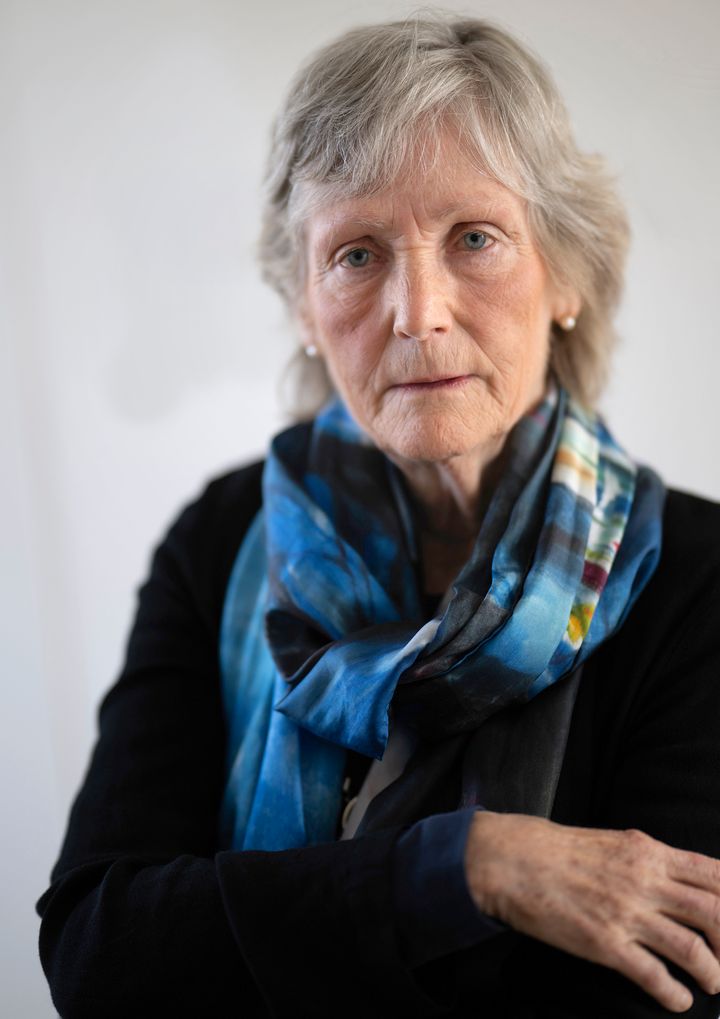
Professor Ashley Moffet is awarded KI’s honorary doctorate for a lifetime of research that has made groundbreaking discoveries concerning the biological mechanisms behind serious conditions associated with pregnancy. These include preeclampsia, intrauterine growth restriction (IUGR) and unexplained fetal death, which together affect up 10 per cent of all pregnancies.
Focus on diseases during pregnancy
Professor Moffet’s research has found that these diseases originate from critical interactions between natural killer (NK) cells in the decidua (the part of the uterus where the embryo is implanted) and the cells that form the placenta (trophoblasts), which derive from the fetus.
“I am deeply honoured to receive the honorary doctorate from Karolinska Institutet,” says Ashley Moffett, who is a doctor and specialist in obstetrics and gynaecology. “Karolinska Institutet was where NK cells were first discovered and described. These groundbreaking studies have been absolutely essential to my work as a researcher.”
Internationally, Professor Moffett has been recognised for her work in developing countries, such as Uganda, where she has helped to develop national programmes for research, education and information in the field of maternal healthcare.
Key research financier
Peter Thelin, the chair of the Swedish Brain Fund and co-founder of the financial company Brummer & Partners, has spent over a decade putting a great deal of his time and energy into research at Karolinska Institutet – a commitment that has resulted in long-term funding for many research groups at KI.
“I’m proud and delighted to receive this recognition,” he says. “I’ve had the privilege to work for KI for over 15 years and have been a private donor. As chair of the Brain Fund, I get regular confirmation of just how important KI’s research is. I shall do the title due justice.”
Thelin was an active participant in the anniversary campaign committee ahead of KI’s bicentenary celebrations in 2010. The committee raised SEK 1 bullion and KI forged new links with donors from many sections of society.
As a member of KI’s investment council, which decides on KI’s foundations and donations, Thelin has given prudent advice and played an important part in securing higher yields on KI’s investments.
Thelin is also a member of KI’s philanthropic council, and has served as an advisor in raising research funds for several KI presidents.
Increased funding for research on brain diseases
Grants from the Swedish Brain Fund support brain research in Sweden and KI. Since Peter Thelin became the chair of the Swedish Brain Fund in 2016, the raising and distribution of funds has increased markedly.
This has given rise to a greater understanding of complex brain processes and thus new therapeutic strategies for such diseases as stroke, Parkinson’s, ALS and Alzheimer’s.
Honorary doctorates at Karolinska Institutet
Karolinska Institutet (KI) confers honorary doctorates upon academics who have made vital scientific achievements or significant contributions to KI, or to individuals who have not achieved a doctoral degree formally but who have otherwise been instrumental in the advancement of research and development. Since the first appointments in 1910, 325 honorary doctorates have been awarded at Karolinska Institutet.
Contacts
Contact the Press Office and download photo: ki.se/pressroom
Images

Karolinska Institutet (http://ki.se/en) is one of the world’s leading medical universities. Our vision is to advance knowledge about life and strive towards better health for all. Karolinska Institutet accounts for the single largest share of all academic medical research conducted in Sweden and offers the country’s broadest range of education in medicine and health sciences. The Nobel Assembly at Karolinska Institutet selects the Nobel laureates in Physiology or Medicine.
Subscribe to releases from Karolinska Institutet - English
Subscribe to all the latest releases from Karolinska Institutet - English by registering your e-mail address below. You can unsubscribe at any time.
Latest releases from Karolinska Institutet - English
Using social media may impair children’s attention8.12.2025 06:01:00 CET | Press Release
Children who spend a significant amount of time on social media tend to experience a gradual decline in their ability to concentrate. This is according to a comprehensive study from Karolinska Institutet, published in Pediatrics Open Science, where researchers followed more than 8,000 children from around age 10 through age 14.
POTS common in patients with long COVID3.10.2025 11:33:37 CEST | Press Release
A new study from Karolinska Institutet in Sweden shows that an unusual heart rhythm disorder, POTS, is particularly common in people with long COVID. The majority of those affected are middle-aged women. The study is published in the scientific journal Circulation: Arrhythmia and Electrophysiology.
Simple test can predict risk of severe liver disease29.9.2025 09:00:00 CEST | Press Release
A new study from Karolinska Institutet, published in the scientific journal The BMJ, shows how a simple blood analysis can predict the risk of developing severe liver disease. The method may already start to be applied in primary care to enable the earlier detection of cirrhosis and cancer of the liver.
Press invitation: Announcement of the Nobel Prize in Physiology or Medicine 202523.9.2025 13:00:00 CEST | Press Invitation
The Nobel Prize in Physiology or Medicine 2025 will be announced on Monday October 6 at 11.30 am CEST (at the earliest).
How mutations in bodily tissues affect ageing20.8.2025 11:00:00 CEST | Pressmeddelande
Two new studies from Karolinska Institutet in Sweden have investigated how mutations that occur in muscles and blood vessels over time can affect ageing. The studies, which are published in Nature Aging, show that such mutations can reduce muscle strength and accelerate blood vessel ageing. The results can be of significance to the treatment of age-related diseases.
In our pressroom you can read all our latest releases, find our press contacts, images, documents and other relevant information about us.
Visit our pressroom