Antioxidants stimulate blood flow in tumours
31.8.2023 16:00:00 CEST | Karolinska Institutet - English | Press Release
Vitamin C and other antioxidants stimulate the formation of new blood vessels in lung cancer tumours, a new study from Karolinska Institutet published in The Journal of Clinical Investigation shows. The discovery corroborates the idea that dietary supplements containing antioxidants can accelerate tumour growth and metastasis.
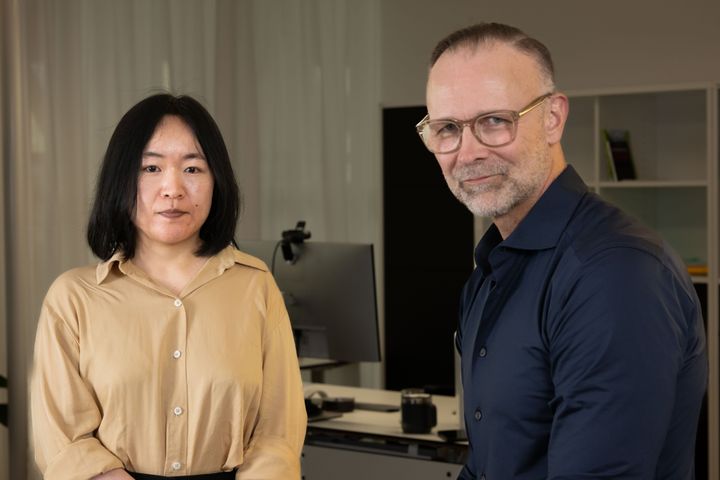
“We’ve found that antioxidants activate a mechanism that causes cancer tumours to form new blood vessels, which is surprising, since it was previously thought that antioxidants have a protective effect,” says study leader Martin Bergö, professor at the Department of Biosciences and Nutrition and vice president of Karolinska Institutet in Sweden. “The new blood vessels nourish the tumours and can help them grow and spread.”
Antioxidants neutralise free oxygen radicals, which can damage the body, and are therefore commonly found in dietary supplements. But overly high doses can be harmful.
“There’s no need to fear antioxidants in normal food but most people don’t need additional amounts of them,” says Professor Bergö. “In fact, it can be harmful for cancer patients and people with an elevated cancer risk.”
Previously unknown mechanism
Professor Bergö’s research group has previously shown that antioxidants like vitamin C and E accelerate the growth and spread of lung cancer by stabilising a protein called BACH1. BACH1 is activated when the level of free oxygen radicals drops, which happens, for example, when extra antioxidants are introduced via the diet or when spontaneous mutations in the tumour cells activate endogenous antioxidants. Now the researchers have been able to show that the activation of BACH1 induces the formation of new blood vessels (angiogenesis).
While low oxygen levels (hypoxia) are known to be required for angiogenesis to occur in cancer tumours, the new mechanism identified by the researchers demonstrates that tumours can form new blood vessels in the presence of normal oxygen levels as well. The study also shows that BACH1 is regulated in a similar way as the HIF-1α protein – a mechanism that was awarded the 2019 Nobel Prize in Physiology or Medicine and that allows cells to adapt to changes in oxygen levels. HIF-1α and BACH1 work together in the tumours, the new research shows.
Hoping for more effective drugs
“Many clinical trials have evaluated the efficacy of angiogenesis inhibitors, but the results have not been as successful as anticipated,” says Ting Wang, doctoral student in Professor Bergö’s group at Karolinska Institutet. “Our study opens the door to more effective ways of preventing angiogenesis in tumours; for example, patients whose tumours exhibit high levels of BACH1 might benefit more from anti-angiogensis therapy than patients with low BACH1 levels.”
The researchers used a range of cell-biological methods and concentrated most of their work on lung cancer tumours by studying organoids – small cultivated microtumours from patients. But they also studied mice and samples of human breast and kidney tumours. Tumours in which BACH1 was activated, either via ingested antioxidants or by overexpression of the BACH1 gene, produced more new blood vessels and were highly sensitive to angiogenesis inhibitors.
“The next step is to examine in detail how levels of oxygen and free radicals can regulate the BACH1 protein, and we will continue to determine the clinical relevance of our results,” says Ting Wang. “We’ll also be doing similar studies in other cancer forms such as breast, kidney and skin cancer.”
The study was conducted in close collaboration with KI researchers Susanne Schlisio, Staffan Strömblad and Eckardt Treuter and researchers at the First Affiliated Hospital of Zhengzhou University. The research was financed primarily by grants from the Swedish Cancer Society, the Swedish Research Council, the Sjöberg Foundation, the Knut and Alice Wallenberg Foundation, the Centre for Innovative Medicine (CIMED) and Karolinska Institutet. There are no reported conflicts of interest.
Publication: ”Antioxidants stimulate BACH1-dependent tumor angiogenesis”, Ting Wang, Yongqiang Dong, Zhiqiang Huang, Guoqing Zhang, Ying Zhao, Haidong Yao, Jianjiang Hu, Elin Tüksammel, Huan Cai, Ning Liang, Xiufeng Xu, Xijie Yang, Sarah Schmidt, Xi Qiao, Susanne Schlisio, Staffan Strömblad, Hong Qian, Changtao Jiang, Eckardt Treuter, Martin O. Bergo, The Journal of Clinical Investigation, online 31 August 2023, doi: 10.1172/JCI169671.
Contacts
For more information, please contact:
Martin Bergö, professor, vice president
Department of Biosciences and Nutrition, Karolinska Institutet
Email: martin.bergo@ki.se
Phone: + 46 8 524 870 98 (or KI’s press office: +46 8 524 860 77)
Images


Karolinska Institutet (https://ki.se/en) is one of the world’s leading medical universities. Our vision is to advance knowledge about life and strive towards better health for all. Karolinska Institutet accounts for the single largest share of all academic medical research conducted in Sweden and offers the country’s broadest range of education in medicine and health sciences. The Nobel Assembly at Karolinska Institutet selects the Nobel laureates in Physiology or Medicine.
Subscribe to releases from Karolinska Institutet - English
Subscribe to all the latest releases from Karolinska Institutet - English by registering your e-mail address below. You can unsubscribe at any time.
Latest releases from Karolinska Institutet - English
Karolinska Institutet receives half-billion donation for dementia research25.3.2026 11:00:39 CET | Press Release
Entrepreneur and inventor Leif Lundblad (1938–2025) has bequeathed SEK 538 million to Karolinska Institutet, the largest donation ever to have been made to a Swedish university in modern times. Much of the sum will go towards research on dementia diseases.
HPV vaccine provides long-term protection against cervical cancer26.2.2026 00:30:00 CET | Press Release
HPV vaccination reduces the risk of cervical cancer for at least 18 years, according to a new study from Karolinska Institutet published in The BMJ. There were no signs of waning protection over time.
Blood test reveals risk of multimorbidity7.1.2026 10:00:00 CET | Press Release
A small set of common blood biomarkers predicts which older adults will develop specific combinations of chronic diseases – and how quickly, a new study from Karolinska Institutet published in Nature Medicine reports.
Using social media may impair children’s attention8.12.2025 06:01:00 CET | Press Release
Children who spend a significant amount of time on social media tend to experience a gradual decline in their ability to concentrate. This is according to a comprehensive study from Karolinska Institutet, published in Pediatrics Open Science, where researchers followed more than 8,000 children from around age 10 through age 14.
POTS common in patients with long COVID3.10.2025 11:33:37 CEST | Press Release
A new study from Karolinska Institutet in Sweden shows that an unusual heart rhythm disorder, POTS, is particularly common in people with long COVID. The majority of those affected are middle-aged women. The study is published in the scientific journal Circulation: Arrhythmia and Electrophysiology.
In our pressroom you can read all our latest releases, find our press contacts, images, documents and other relevant information about us.
Visit our pressroom