New method reveals bacterial reaction to antibiotics in five minutes
Researchers at Karolinska Institutet in Sweden have developed a molecular method able to detect whether or not bacteria respond to antibiotics within minutes. The findings are presented in the journal Nature Microbiology and the researchers now hope to develop a simple test for doctors to use.
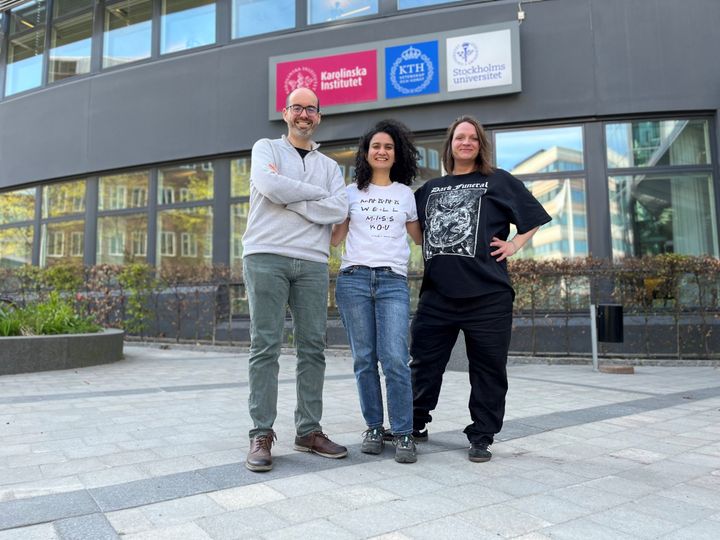
“We are confident and hope that this can be one of many tools that doctors need to tackle antibiotic resistance, which is a serious and growing problem,” says principal investigator Vicent Pelechano, associate professor at the Department of Microbiology, Tumor and Cell Biology, Karolinska Institutet.
The method is called 5PSeq, is simple to use, and is based on sequencing the messenger RNA (mRNA) that the bacteria break down as they synthesise proteins. The measurements reveal how the bacteria are affected by different environmental factors, such as antibiotic treatments and other types of stress.
Rapid test for clinical use
The researchers tested the method on a total of 96 bacterial species from different phyla in complex clinical samples taken, for example, from faecal matter and the vagina, but also in compost samples. After only a matter of minutes, they were able to see whether or not the bacteria responded to antibiotic treatment; the effect was most salient after about half an hour.
3N Bio is a company that Dr Pelechano and some of his colleagues have started up in the KI Innovations incubator to develop the method and create a rapid molecular test for clinical use. They have now received financing from the Swedish Research Council to demonstrate proof of concept for such a test in collaboration with the Karolinska University Hospital.
“It’s crucial that doctors can quickly find the right antibiotics for seriously ill patients with bacterial infections to reduce the unnecessary use of antibiotics,” says Dr Pelechano. “Current methods of testing antibiotic resistance can take hours or even days, but often treatment needs to be given more promptly than that to avoid serious consequences for the patient. Because of this, a broad-spectrum antibiotic is often prescribed, which increases the risk of resistance.”
Examine how bacteria interact
Apart from measuring antibiotic resistance, the method can be used to help researchers understand how bacteria handle stress and interact with each other and with their hosts. The researchers will continue to study complex gut samples to examine how the bacterial communities interact in our gut and contribute to health and disease.
The research was financed by the Ragnar Söderbergs foundation (Swedish Foundations’ Starting Grant), the Swedish Research Council, the Knut and Alice Wallenberg Foundation (a Wallenberg Academy Fellowship), EU’s Horizon 2020, among others. See the scientific article for a complete list. 3N Bio was co-founded by Vicent Pelechano and the two first authors of the paper, Susanne Huch and Lilit Nersisyan.
Publication: “Atlas of mRNA translation and decay for bacteria”, Susanne Huch, Lilit Nersisyan, Maria Ropat, Donal Barrett, Mengjun Wu, Jing Wang, Valerie D Valeriano, Nelli Vardazaryan, Jaime Huerta-Cepas, Wu Wei, Juan Du, Lars M Steinmetz, Lars Engstrand, Vicent Pelechano. Nature Microbiology, online 22 May 2023, doi: 10.1038/s41564-023-01393-z.
Contacts
For more information, please contact:
Vicent Pelechano, principal researcher, associate professor
Department of Microbiology, Tumor and Cell Biology, Karolinska Institutet, Sweden
Science for Life Laboratory (SciLifeLab), Sweden
Email: vicente.pelechano.garcia@ki.se
Phone: +46 72 856 4904
Images

Karolinska Institutet (https://ki.se/en) is one of the world’s leading medical universities. Our vision is to advance knowledge about life and strive towards better health for all. Karolinska Institutet accounts for the single largest share of all academic medical research conducted in Sweden and offers the country’s broadest range of education in medicine and health sciences. The Nobel Assembly at Karolinska Institutet selects the Nobel laureates in Physiology or Medicine.
Subscribe to releases from Karolinska Institutet - English
Subscribe to all the latest releases from Karolinska Institutet - English by registering your e-mail address below. You can unsubscribe at any time.
Latest releases from Karolinska Institutet - English
Using social media may impair children’s attention8.12.2025 06:01:00 CET | Press Release
Children who spend a significant amount of time on social media tend to experience a gradual decline in their ability to concentrate. This is according to a comprehensive study from Karolinska Institutet, published in Pediatrics Open Science, where researchers followed more than 8,000 children from around age 10 through age 14.
POTS common in patients with long COVID3.10.2025 11:33:37 CEST | Press Release
A new study from Karolinska Institutet in Sweden shows that an unusual heart rhythm disorder, POTS, is particularly common in people with long COVID. The majority of those affected are middle-aged women. The study is published in the scientific journal Circulation: Arrhythmia and Electrophysiology.
Simple test can predict risk of severe liver disease29.9.2025 09:00:00 CEST | Press Release
A new study from Karolinska Institutet, published in the scientific journal The BMJ, shows how a simple blood analysis can predict the risk of developing severe liver disease. The method may already start to be applied in primary care to enable the earlier detection of cirrhosis and cancer of the liver.
Press invitation: Announcement of the Nobel Prize in Physiology or Medicine 202523.9.2025 13:00:00 CEST | Press Invitation
The Nobel Prize in Physiology or Medicine 2025 will be announced on Monday October 6 at 11.30 am CEST (at the earliest).
How mutations in bodily tissues affect ageing20.8.2025 11:00:00 CEST | Pressmeddelande
Two new studies from Karolinska Institutet in Sweden have investigated how mutations that occur in muscles and blood vessels over time can affect ageing. The studies, which are published in Nature Aging, show that such mutations can reduce muscle strength and accelerate blood vessel ageing. The results can be of significance to the treatment of age-related diseases.
In our pressroom you can read all our latest releases, find our press contacts, images, documents and other relevant information about us.
Visit our pressroom