
AI can be used to detect and grade prostate cancer
Researchers at Karolinska Institutet in Sweden and Tampere University in Finland have developed a method based on artificial intelligence (AI) for histopathological diagnosis and grading of prostate cancer. The AI-system has the potential to solve one of the bottlenecks in today’s prostate cancer histopathology by providing more accurate diagnosis and better treatment decisions. The study, presented in the scientific journal The Lancet Oncology, shows that the AI-system is as good at identifying and grading prostate cancer as world-leading uro-pathologists.
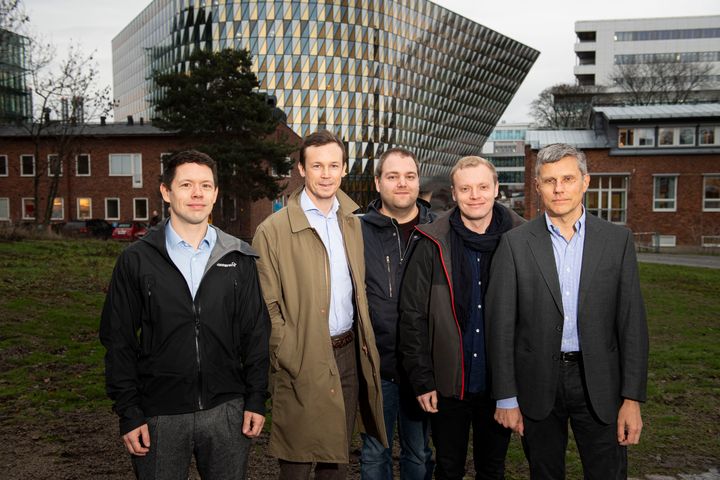
“Our results show that it is possible to train an AI-system to detect and grade prostate cancer on the same level as leading experts,” says Martin Eklund, associate professor at the Department of Medical Epidemiology and Biostatistics at Karolinska Institutet who led the study. “This has the potential to significantly reduce the workload of uro-pathologists and allow them to focus on the most difficult cases.”
A problem in today’s prostate pathology is that there is a certain degree of subjectivity in the assessments of the biopsies. Different pathologists can reach different conclusions even though they are studying the same samples. This leads to a clinical problem where the doctors must pick treatment based on ambiguous information. In this context, the researchers see significant potential to use the AI-technology to increase the reproducibility of the pathological assessments.
To train and test the AI system, the researchers digitized more than 8,000 biopsies taken from some 1,200 Swedish men in the ages of 50–69 to high-resolution images using digital pathology scanners. About 6,600 of the samples were used to train the AI system to spot the difference between biopsies with or without cancer. The remaining samples, and additional sets of samples collected from other labs, were used to test the AI system. Its results were also compared against the assessments of 23 world-leading uro-pathologists.
The findings showed that the AI-system was almost near-perfect in determining whether a sample contained cancer or not, as well as in estimating the length of the cancer tumor in the biopsy. When it comes to determining the severity of the prostate cancer, the so-called Gleason score, the AI system was on par with the international experts.
“When it comes to grading the severity of the prostate cancer, the AI is in the same range as international experts, which is very impressive, and when it comes to diagnostics, to determine whether or not it is cancer, the AI is simply outstanding,” says Lars Egevad, professor in pathology at Karolinska Institutet and co-author of the study.
The initial findings are promising but more validation is needed before the AI system may be rolled out broadly in clinical practice, according to the researchers. That is why a multicenter study spanning nine European countries is currently underway with completion slated by the end of 2020. That study, which is financed by EIT Health, aims to train the AI-system to recognize cancer in biopsies taken from different laboratories, with different types of digital scanners and with very rare growth patterns. In addition, a randomized study starting in 2020 will examine how the AI-model may be implemented in Sweden’s health care system.
“AI-based evaluation of prostate cancer biopsies could revolutionize future health care,” says Henrik Grönberg, professor in cancer epidemiology at Karolinska Institutet and head of the Prostate Cancer Center at S:t Göran Hospital in Stockholm. “It has the potential to improve the diagnostic quality, and thereby secure a more equitable care at a lower cost.”
“The idea is not that AI should replace the human involvement, but rather act as a safety net to ensure that pathologists don’t miss some cancers, and assist in standardization of grading,” says Martin Eklund. “It could also serve as an alternative in parts of the world where there is a complete lack of pathological expertise today.”
The study was funded by the Swedish Research Council, Swedish Cancer Society, Swedish Research Council for Health, Working Life, and Welfare (FORTE), Swedish eScience Research Center, Academy of Finland, Cancer Society of Finland, Emil Aaltonen Foundation, Finnish Foundation for Technology Promotion, Industrial Research Fund of Tampere University of Technology, KAUTE Foundation, Orion Research Foundation, Svenska Tekniska Vetenskapsakademien i Finland, Tampere University Foundation, Tampere University graduate school, The Finnish Society of Information Technology and Electronics, TUT on World Tour programme, the European Research Council and EIT Health.
Facts:
- Prostate cancer is the leading cause of cancer death in men in Sweden.
- More than 20 million prostate biopsies are examined every year in Europe and in the U.S.
- There is a shortage of pathologists in Sweden and internationally, and in many developing countries, the ratio is fewer than one pathologist per 1 million people.
- Efforts to reduce mortality in prostate cancer are often hampered by the difficulty in making objective and reproduceable pathological assessments of prostate biopsies.
Publication: “Artificial intelligence for diagnosis and grading of prostate cancer in biopsies: a population-based, diagnostic study”, Peter Ström, Kimmo Kartasalo, Henrik Olsson, Leslie Solorzano, Brett Delahunt, Daniel M Berney, David G Bostwick, Andrew J. Evans , David J Grignon, Peter A Humphrey, Kenneth A Iczkowski, James G Kench, Glen Kristiansen, Theodorus H van der Kwast, Katia RM Leite, Jesse K McKenney, Jon Oxley, Chin-Chen Pan, Hemamali Samaratunga, John R Srigley, Hiroyuki Takahashi, Toyonori Tsuzuki, Murali Varma, Ming Zhou, Johan Lindberg, Cecilia Lindskog, Pekka Ruusuvuori, Carolina Wählby, Henrik Grönberg, Mattias Rantalainen, Lars Egevad, Martin Eklund, The Lancet Oncology, Jan. 8, 2020, doi: 10.1016/S1470-2045(19)30738-7
For more information, contact:Martin Eklund, associate professorDepartment of Medical Epidemiology and Biostatistics, Karolinska InstitutetPhone: +46 (0)737121611Email: martin.eklund@ki.se
Contacts
Contact the Press Office and download photo: ki.se/pressroom
Images
Karolinska Institutet (http://ki.se/english) is one of the world’s leading medical universities. Our vision is to advance knowledge about life and strive towards better health for all. Karolinska Institutet accounts for the single largest share of all academic medical research conducted in Sweden and offers the country’s broadest range of education in medicine and health sciences. The Nobel Assembly at Karolinska Institutet selects the Nobel laureates in Physiology or Medicine.
Subscribe to releases from Karolinska Institutet - English
Subscribe to all the latest releases from Karolinska Institutet - English by registering your e-mail address below. You can unsubscribe at any time.
Latest releases from Karolinska Institutet - English
Using social media may impair children’s attention8.12.2025 06:01:00 CET | Press Release
Children who spend a significant amount of time on social media tend to experience a gradual decline in their ability to concentrate. This is according to a comprehensive study from Karolinska Institutet, published in Pediatrics Open Science, where researchers followed more than 8,000 children from around age 10 through age 14.
POTS common in patients with long COVID3.10.2025 11:33:37 CEST | Press Release
A new study from Karolinska Institutet in Sweden shows that an unusual heart rhythm disorder, POTS, is particularly common in people with long COVID. The majority of those affected are middle-aged women. The study is published in the scientific journal Circulation: Arrhythmia and Electrophysiology.
Simple test can predict risk of severe liver disease29.9.2025 09:00:00 CEST | Press Release
A new study from Karolinska Institutet, published in the scientific journal The BMJ, shows how a simple blood analysis can predict the risk of developing severe liver disease. The method may already start to be applied in primary care to enable the earlier detection of cirrhosis and cancer of the liver.
Press invitation: Announcement of the Nobel Prize in Physiology or Medicine 202523.9.2025 13:00:00 CEST | Press Invitation
The Nobel Prize in Physiology or Medicine 2025 will be announced on Monday October 6 at 11.30 am CEST (at the earliest).
How mutations in bodily tissues affect ageing20.8.2025 11:00:00 CEST | Pressmeddelande
Two new studies from Karolinska Institutet in Sweden have investigated how mutations that occur in muscles and blood vessels over time can affect ageing. The studies, which are published in Nature Aging, show that such mutations can reduce muscle strength and accelerate blood vessel ageing. The results can be of significance to the treatment of age-related diseases.
In our pressroom you can read all our latest releases, find our press contacts, images, documents and other relevant information about us.
Visit our pressroom