Pregnant women with type 1 diabetes are at risk of giving birth prematurely
[PRESS RELEASE 2019-04-23] Pregnant women with type 1 diabetes are at increased risk of delivering their baby prematurely. The risk increases as blood sugar levels rise, however women who maintain the recommended levels also risk giving birth prematurely. These are the findings from researchers at Karolinska Institutet and the Sahlgrenska Academy in Sweden, published in Annals of Internal Medicine.
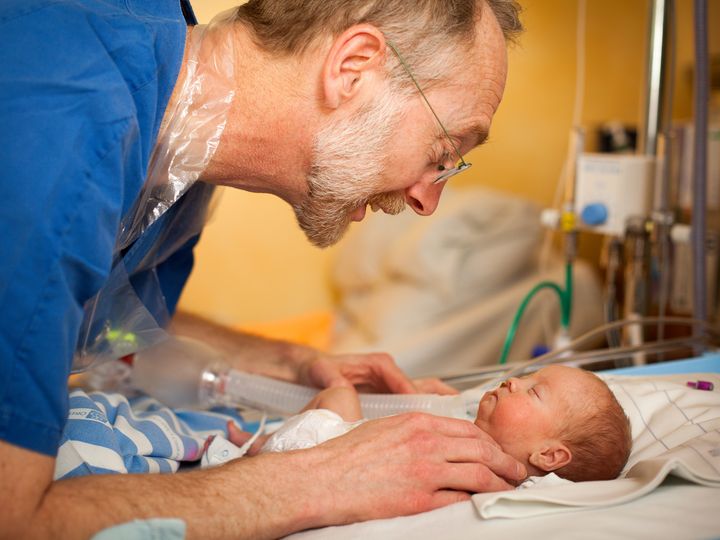
In a previous study published in The BMJ, the research group showed that pregnant women with type 1 diabetes were at an increased risk of having babies with heart defects. Now, a new study is published that shows how women with type 1 diabetes have an increased risk of giving birth prematurely.
”High long-term blood sugar, so called HbA1c, during pregnancy is linked to an increased risk for complications, including preterm birth. The risk is highest amongst those with HbA1c levels above 8-9 per cent (approximately 60-70 mmol/mol), but even those who maintain their HbA1c (below 6.5 per cent, equivalent to < 48 mmol/mol) are at an increased risk of giving birth prematurely,” explains Jonas F. Ludvigsson, Professor at the Department of Medical Epidemiology and Biostatistics at Karolinska Institutet and Senior Physician at the Department of Paediatrics at Örebro University Hospital.
The study involved linking the Swedish Medical Birth Register (MFR) to the Swedish National Diabetes Register (NDR) for the years 2003 to 2014. Researchers identified 2,474 infants born to women who recorded long-term glycosylated haemoglobin levels (HbA1c) during pregnancy. These were compared to 1.16 million infants born to women without diabetes.
Approximately 22 per cent of infants born to women with type 1 diabetes were born prematurely, which can be compared to below five per cent of infants born to women without type 1 diabetes. 37 per cent of women with type 1 diabetes and an HbA1c level above 9 per cent gave birth prematurely. Yet even 13 per cent of those with adhering to the current recommendations for blood sugar gave birth too early.
”This is the first study large enough to demonstrate a clear relationship between different HbA1c levels and preterm birth. Our study has been conducted nationally and thus provides a result that can be applied to the average woman with type 1 diabetes,” says Jonas F. Ludvigsson.
The study also found an increased risk of these newborns being ”large for gestational age”, being injured during childbirth, experiencing respiratory problems, low blood sugar and suffering from lack of oxygen (”asphyxia”) in addition to higher neonatal mortality rates amongst those exposed to high blood sugar during pregnancy. Also the risk of stillbirth was linked to HbA1c levels in pregnant women with type 1 diabetes.
”Now, we want to examine the long-term outcome of these children.” says Jonas F. Ludvigsson.
The study was conducted with support from the Swedish Diabetes Fund.
Publication: ”Maternal Glycemic Control in Type 1 Diabetes and the Risk for Preterm Birth”. Jonas F. Ludvigsson, Martin Neovius, Jonas Söderling, Soffia Gudbjörnsdottir, Ann-Marie Svensson, Stefan Franzén, Olof Stephansson, Björn Pasternak. Annals of Internal Medicine, online 23 April 2019, doi: 10.7326/M18-1974.
Contacts
For additional information, please contact:
Jonas F. Ludvigsson, Professor, Senior Physician
Department of Medical Epidemiology and Biostatistics at the Karolinska Institutet
Department of Paediatrics at Örebro University Hospital
Phone: +46 19 602 1000
Mobile: +46 (0) 730 296 318
Email: jonas.ludvigsson@ki.se
Images

Subscribe to releases from Karolinska Institutet - English
Subscribe to all the latest releases from Karolinska Institutet - English by registering your e-mail address below. You can unsubscribe at any time.
Latest releases from Karolinska Institutet - English
Using social media may impair children’s attention8.12.2025 06:01:00 CET | Press Release
Children who spend a significant amount of time on social media tend to experience a gradual decline in their ability to concentrate. This is according to a comprehensive study from Karolinska Institutet, published in Pediatrics Open Science, where researchers followed more than 8,000 children from around age 10 through age 14.
POTS common in patients with long COVID3.10.2025 11:33:37 CEST | Press Release
A new study from Karolinska Institutet in Sweden shows that an unusual heart rhythm disorder, POTS, is particularly common in people with long COVID. The majority of those affected are middle-aged women. The study is published in the scientific journal Circulation: Arrhythmia and Electrophysiology.
Simple test can predict risk of severe liver disease29.9.2025 09:00:00 CEST | Press Release
A new study from Karolinska Institutet, published in the scientific journal The BMJ, shows how a simple blood analysis can predict the risk of developing severe liver disease. The method may already start to be applied in primary care to enable the earlier detection of cirrhosis and cancer of the liver.
Press invitation: Announcement of the Nobel Prize in Physiology or Medicine 202523.9.2025 13:00:00 CEST | Press Invitation
The Nobel Prize in Physiology or Medicine 2025 will be announced on Monday October 6 at 11.30 am CEST (at the earliest).
How mutations in bodily tissues affect ageing20.8.2025 11:00:00 CEST | Pressmeddelande
Two new studies from Karolinska Institutet in Sweden have investigated how mutations that occur in muscles and blood vessels over time can affect ageing. The studies, which are published in Nature Aging, show that such mutations can reduce muscle strength and accelerate blood vessel ageing. The results can be of significance to the treatment of age-related diseases.
In our pressroom you can read all our latest releases, find our press contacts, images, documents and other relevant information about us.
Visit our pressroom