Immune system does not recover despite cured hepatitis C infection
[PRESS RELEASE 2018-06-11] Changes to the immune system remain many years after a hepatitis C infection heals, a new study by researchers at Karolinska Institutet and Hannover Medical School shows. The findings, presented in Nature Communications, increases understanding about chronic infection and the way it regulates and impacts composition of the immune system.
Infection with hepatitis C virus (HCV) turns almost always chronic and poses a major health problem around the world. The infection can lead to cirrhosis and cancer of the liver when the immune system fails to fight the virus. Eventually the immune system becomes exhausted. Since a couple of years, however, most patients with HCV can now be cured in a matter of a few weeks with revolutionary new medications.
The current study included 40 patients with chronic HCV infection whom researchers followed before, during and after treatment with these new medications to investigate impact on the composition and diversity of the immune system. Diversity is vital to the ability of the immune system to fight infections. Of particular importance are natural killer cells (NK), a type of white blood cells. The researchers used flow cytometry and a new measurement method to derive the composition of the immune system, as well as the appearance of NK cells and their function in the blood.
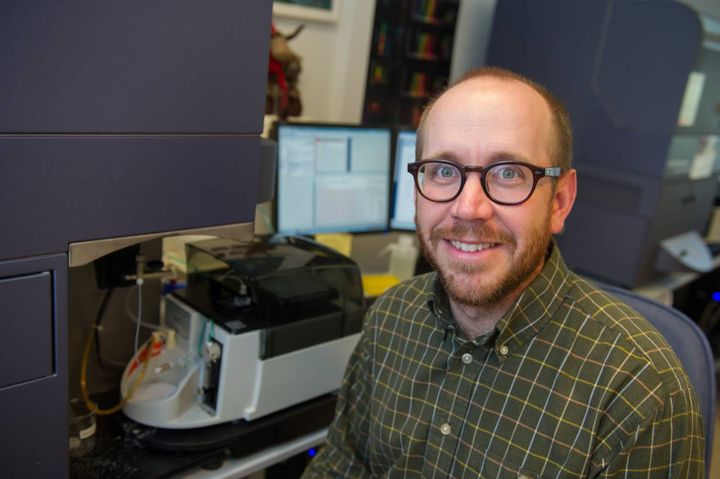
”Researchers in the field previously focused on analysing individual components but were unable to draw any comprehensive conclusions,” says Niklas Björkström, physician and associate professor at the Department of Medicine, Huddinge, Karolinska Institutet, who led the study. ”The immune system is extraordinarily complex, incorporating a large number of interacting parts. We adapted new methods in order to assess and analyse that complexity in a fresh manner.”
The results showed that the overall composition of the immune system was affected by the chronic infection, with significantly reduced diversity among the NK cells. Many of the changes remained long after the virus had been eliminated by means of medication. Researchers have not yet determined the long-term implications but are currently exploring whether patients have a harder time fighting future infection.
”One strength of our study is that we monitored patients for more than two years following elimination of the virus,” says Benedikt Strunz, physician and doctoral student at the same department. ”To the best of our knowledge, nobody has ever monitored over such a long term like this before.”
Nevertheless, a number of questions are outstanding. Researchers would like to investigate consequences for a good deal longer than two years, as well as identify strategies for rejuvenating the immune system and increasing its diversity.
The study was financed by the Swedish Research Council, Swedish Cancer Society, Strategic Research Foundation, Swedish Foundation for Medical Research, Radiumhemmet Research Foundation, Knut and Alice Wallenberg Foundation, NovoNordisk Foundation, Åke Wiberg Foundation, Centre for Innovative Medicine at Karolinska Institutet, Stockholm County Council, Karolinska Institutet, International Research Training Group with support by the German Research Foundation, Centre Research Grants, 900 with support of DFG, German Centre for Infection Research and German Liver Foundation.
Publication: ”Chronic hepatitis C virus infection irreversibly impacts human NK cell repertoire diversity”, Benedikt Strunz, Julia Hengst, Katja Deterding, Michael P. Manns, Markus Cornberg, Hans-Gustaf Ljunggren, Heiner Wedemeyer, and Niklas K. Björkström. Nature Communications, online 11 June, 2018, doi: 10.1038/s41467-018-04685-9.
Contacts
For more information, please contact:
Niklas Björkström, Physician, Associate Professor
Department of Medicine, Huddinge, Karolinska Institutet
Mobile: +46 70-697 71 95
Email: niklas.bjorkstrom@ki.se
Images
Karolinska Institutet (http://ki.se/english) is one of the world’s leading medical universities. Its vision is to significantly contribute to the improvement of human health. Karolinska Institutet accounts for the single largest share of all academic medical research conducted in Sweden and offers the country’s broadest range of education in medicine and health sciences. The Nobel Assembly at Karolinska Institutet selects the Nobel laureates in Physiology or Medicine.
Subscribe to releases from Karolinska Institutet - English
Subscribe to all the latest releases from Karolinska Institutet - English by registering your e-mail address below. You can unsubscribe at any time.
Latest releases from Karolinska Institutet - English
Using social media may impair children’s attention8.12.2025 06:01:00 CET | Press Release
Children who spend a significant amount of time on social media tend to experience a gradual decline in their ability to concentrate. This is according to a comprehensive study from Karolinska Institutet, published in Pediatrics Open Science, where researchers followed more than 8,000 children from around age 10 through age 14.
POTS common in patients with long COVID3.10.2025 11:33:37 CEST | Press Release
A new study from Karolinska Institutet in Sweden shows that an unusual heart rhythm disorder, POTS, is particularly common in people with long COVID. The majority of those affected are middle-aged women. The study is published in the scientific journal Circulation: Arrhythmia and Electrophysiology.
Simple test can predict risk of severe liver disease29.9.2025 09:00:00 CEST | Press Release
A new study from Karolinska Institutet, published in the scientific journal The BMJ, shows how a simple blood analysis can predict the risk of developing severe liver disease. The method may already start to be applied in primary care to enable the earlier detection of cirrhosis and cancer of the liver.
Press invitation: Announcement of the Nobel Prize in Physiology or Medicine 202523.9.2025 13:00:00 CEST | Press Invitation
The Nobel Prize in Physiology or Medicine 2025 will be announced on Monday October 6 at 11.30 am CEST (at the earliest).
How mutations in bodily tissues affect ageing20.8.2025 11:00:00 CEST | Pressmeddelande
Two new studies from Karolinska Institutet in Sweden have investigated how mutations that occur in muscles and blood vessels over time can affect ageing. The studies, which are published in Nature Aging, show that such mutations can reduce muscle strength and accelerate blood vessel ageing. The results can be of significance to the treatment of age-related diseases.
In our pressroom you can read all our latest releases, find our press contacts, images, documents and other relevant information about us.
Visit our pressroom