Cerebral palsy survey in Uganda fills knowledge gap
[PRESS RELEASE 2017-10-26] Cerebral palsy is more common and has higher mortality in Uganda than in high income countries. The underlying brain injury often occurs after the first month after birth, probably caused by malaria, a new population based study by researchers at Karolinska Institutet in Sweden and Makerere University in Uganda reports. The study, which is published in The Lancet Global Health, is the largest of its kind on cerebral palsy in Africa.
Registry and epidemiological studies from high income countries (HIC) show that about ten per cent of all children have some type of neurodevelopmental disorder and that two in every thousand have cerebral palsy. The corresponding information is lacking for low and middle-income countries (LMIC), as there are only few high quality population-based studies. To get a better understanding of the situation, researchers at Karolinska Institutet have charted cerebral palsy in Uganda in sub-Saharan Africa, generating data that can be used to develop national healthcare programmes and international initiatives for children with developmental disabilities.
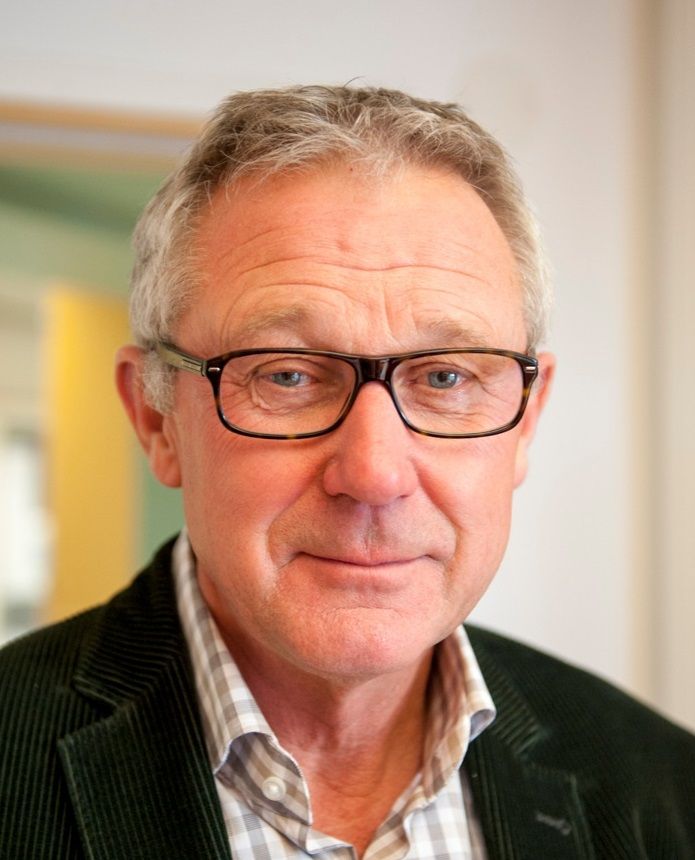
”Children with developmental disabilities are neglected and discriminated against in many countries, where they live under difficult circumstances,” says principal investigator Professor Hans Forssberg at the Department of Women's and Children's Health at Karolinska Institutet. ”A first step towards changing this is to show that children with disabilities exist and how common different neurodevelopmental conditions are.”
Uganda has no population registers and the authorities do not know how many children are born or how many develop disabilities. The researchers therefore used a health and demographic surveillance system (HDSS) that Karolinska Institutet helped to devise with Makerere University in Kampala, Uganda, with support from SIDA. Since 2005, field workers have been gathering vital data, e.g. on birth, death and migration for all people living in a rural part of eastern Uganda. The round of data collection that took place in 2015 included screening for cerebral palsy in over 30,000 children.
The results show that CP in 2-17 year-olds was about 50 per cent more common in Uganda than in HIC, and that the prevalence of CP was twice as high in Uganda in the young 2-7 year-old group than in the 8-17 year-old group.
”We interpret this as due to high mortality, particularly for children with severe functional disabilities. The incidence of cerebral palsy is therefore probably twice as high in Uganda as in HIC,” says Professor Forssberg. ”Our findings on increased mortality need to be followed up in a longitudinal study, and if corroborated, the new knowledge must lead to better care of children with cerebral palsy.”
The survey also shows that the cause of cerebral palsy differs to that in HIC, where some 40 per cent of children are born preterm while only two per cent of the children with CP in Uganda were born preterm, probably due to the low survival rate of preterm infants.
”This is important to consider now when programmes are initiated to increase survival rate of preterm born infants,” says Professor Forssberg. ”It's important that the brain is protected to prevent surviving infants from developing cerebral palsy.”
One in four babies born in Uganda acquired their brain damage after the first month of life, compared with only five per cent in HIC. In interviews, the care givers said that these children were born and developed normally until suddenly falling sick with fever seizures and convulsions. According to the researchers, the likely cause of the brain damage is cerebral malaria, which is preventable with prophylactic measures or better treatments.
The study was financed by the Swedish Research Council and the Promobilia Foundation.
Publication: ”Prevalence of cerebral palsy in Uganda: a population-based study”, Angelina Kakooza-Mwesige, Carin Andrews, Stefan Peterson, Fred Wabwire Mangen, Ann Christin Eliasson, Hans Forssberg. The Lancet Global Health, online 25 October 2017.
Contacts
For more information, contact:
Hans Forssberg, professor
Department of Women’s and Children’s Health, Karolinska Institutet
Phone: +46 8 5177 73 50
Mobile: +46 708 730 830
Email: Hans.Forssberg@ki.se
Images
Karolinska Institutet is one of the world’s leading medical universities. Its vision is to significantly contribute to the improvement of human health. Karolinska Institutet accounts for the single largest share of all academic medical research conducted in Sweden and offers the country’s broadest range of education in medicine and health sciences. The Nobel Assembly at Karolinska Institutet selects the Nobel laureates in Physiology or Medicine.
Subscribe to releases from Karolinska Institutet - English
Subscribe to all the latest releases from Karolinska Institutet - English by registering your e-mail address below. You can unsubscribe at any time.
Latest releases from Karolinska Institutet - English
Using social media may impair children’s attention8.12.2025 06:01:00 CET | Press Release
Children who spend a significant amount of time on social media tend to experience a gradual decline in their ability to concentrate. This is according to a comprehensive study from Karolinska Institutet, published in Pediatrics Open Science, where researchers followed more than 8,000 children from around age 10 through age 14.
POTS common in patients with long COVID3.10.2025 11:33:37 CEST | Press Release
A new study from Karolinska Institutet in Sweden shows that an unusual heart rhythm disorder, POTS, is particularly common in people with long COVID. The majority of those affected are middle-aged women. The study is published in the scientific journal Circulation: Arrhythmia and Electrophysiology.
Simple test can predict risk of severe liver disease29.9.2025 09:00:00 CEST | Press Release
A new study from Karolinska Institutet, published in the scientific journal The BMJ, shows how a simple blood analysis can predict the risk of developing severe liver disease. The method may already start to be applied in primary care to enable the earlier detection of cirrhosis and cancer of the liver.
Press invitation: Announcement of the Nobel Prize in Physiology or Medicine 202523.9.2025 13:00:00 CEST | Press Invitation
The Nobel Prize in Physiology or Medicine 2025 will be announced on Monday October 6 at 11.30 am CEST (at the earliest).
How mutations in bodily tissues affect ageing20.8.2025 11:00:00 CEST | Pressmeddelande
Two new studies from Karolinska Institutet in Sweden have investigated how mutations that occur in muscles and blood vessels over time can affect ageing. The studies, which are published in Nature Aging, show that such mutations can reduce muscle strength and accelerate blood vessel ageing. The results can be of significance to the treatment of age-related diseases.
In our pressroom you can read all our latest releases, find our press contacts, images, documents and other relevant information about us.
Visit our pressroom