New method reveals how the brain and inner ear are formed
3.4.2025 20:00:00 CEST | Karolinska Institutet - English | Pressmeddelande
Researchers at Karolinska Institutet have developed a method that shows how the nervous system and sensory organs are formed in an embryo. By labelling stem cells with a genetic ‘barcode’, they have been able to follow the cells’ developmental journey and discover how the inner ear is formed in mice. The discovery, published in Science, could provide important insights for future treatment of hearing loss.
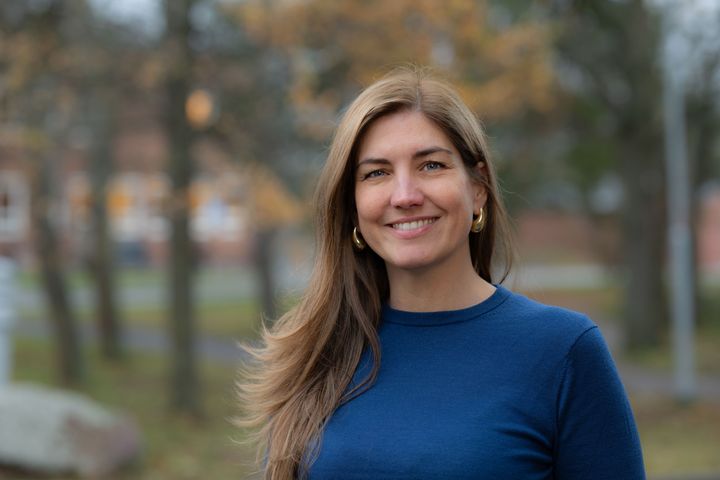
“Our study shows how different cell types arise from stem cells in the embryo and how they are organised to create important structures in the brain,” explains Emma Andersson, docent at the Department of Cell and Molecular Biology, Karolinska Institutet. “You could say that we have created a family tree for the cells of the nervous system and the inner ear.”
Replacing damaged cells
The researchers used a technique where they injected a virus into mouse stem cells at an early stage of development. The virus contained a genetic ‘barcode’ that was integrated into the DNA of the stem cells and then inherited as the cells divided. By following this code, the researchers could track how the cells developed into different types of neurons and cells in the inner ear.
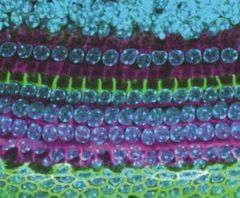
The results showed that cells in the inner ear, which are crucial for hearing, develop from two main types of stem cells. This knowledge could lead to new treatments for hearing loss.
“Tracing the origin and development of cells gives us a unique opportunity to understand the basic mechanisms behind hearing loss,” says Emma Andersson. “It can help us find new ways to repair or replace damaged cells in the inner ear.”
Exploring the nervous system
The team now plans to use the method to study other parts of the nervous system, but also how the rest of the body develops. They hope their work will lead to new insights and treatments for various genetic and developmental diseases.
“We are only at the beginning of understanding the complex processes behind nervous system development,” says Emma Andersson. “Our method opens up many exciting opportunities to explore how the nervous system and the rest of the body are formed during embryonic development. In addition, the technique can reduce the number of mice used in research.”
She led the study with Jingyan He, a postdoctoral fellow, and Sandra de Haan, a former PhD student in Emma Andersson’s research group. The research was funded by Karolinska Institutet, the European Union, the Erling-Persson Foundation, the Swedish Research Council, the Knut and Alice Wallenberg Foundation, the Hearing Research Fund, Horizon Europe and Wallenberg Bioinformatics Support. Co-author Jonas Frisén is a consultant for 10x Genomics. No other conflicts of interest are declared.
Publication: “Ectoderm barcoding reveals neural and cochlear compartmentalization”, Sandra de Haan, Jingyan He, Agustin A. Corbat, Lenka Belicova, Michael Ratz, Elin Vinsland, Jonas Frisén, Matthew W. Kelley, Emma R. Andersson, Science, online 3 April 2025, doi: 10.1126/science.adq9248.
Kontakter
Emma AnderssonSenior researcher and docent at the Department of Cell and Molecular Biology, Karolinska Institutet
Tel:+46 70 968 1816emma.andersson@ki.sePress OfficeKarolinska Institutet
Tel:+46 (0)8 524 860 77pressinfo@ki.seki.se/pressroomBilder

About Karolinska Institutet
Karolinska Institutet is one of the world’s leading medical universities. Our vision is to advance knowledge about life and strive towards better health for all. Karolinska Institutet accounts for the single largest share of all academic medical research conducted in Sweden and offers the country’s broadest range of education in medicine and health sciences. The Nobel Assembly at Karolinska Institutet selects the Nobel laureates in Physiology or Medicine.
Följ Karolinska Institutet - English
Abonnera på våra pressmeddelanden. Endast mejladress behövs och den används bara här. Du kan avanmäla dig när som helst.
Senaste pressmeddelandena från Karolinska Institutet - English
Controlled peanut intake may reduce allergies in toddlers7.5.2026 00:30:00 CEST | Press Release
Researchers at Karolinska Institutet have successfully treated children aged 1–3 years with peanut allergies. The children slowly became accustomed to eating peanuts by consuming small amounts of them daily, which were gradually increased over time. The results are presented in The Lancet Regional Health – Europe.
Karolinska Institutet receives half-billion donation for dementia research25.3.2026 11:00:39 CET | Press Release
Entrepreneur and inventor Leif Lundblad (1938–2025) has bequeathed SEK 538 million to Karolinska Institutet, the largest donation ever to have been made to a Swedish university in modern times. Much of the sum will go towards research on dementia diseases.
HPV vaccine provides long-term protection against cervical cancer26.2.2026 00:30:00 CET | Press Release
HPV vaccination reduces the risk of cervical cancer for at least 18 years, according to a new study from Karolinska Institutet published in The BMJ. There were no signs of waning protection over time.
Blood test reveals risk of multimorbidity7.1.2026 10:00:00 CET | Press Release
A small set of common blood biomarkers predicts which older adults will develop specific combinations of chronic diseases – and how quickly, a new study from Karolinska Institutet published in Nature Medicine reports.
Using social media may impair children’s attention8.12.2025 06:01:00 CET | Press Release
Children who spend a significant amount of time on social media tend to experience a gradual decline in their ability to concentrate. This is according to a comprehensive study from Karolinska Institutet, published in Pediatrics Open Science, where researchers followed more than 8,000 children from around age 10 through age 14.
I vårt pressrum kan du läsa de senaste pressmeddelandena, få tillgång till pressmaterial och hitta kontaktinformation.
Besök vårt pressrum