Long COVID biomarkers found – associated with respiratory problems
30.4.2025 17:00:00 CEST | Karolinska Institutet - English | Press Release
Researchers at Karolinska Institutet have identified biomarkers in the blood associated with symptoms of long COVID, particularly severe respiratory disorders. The discovery can pave the way for future diagnosis and treatment. The results are published in the top-ranking scientific journal Nature Immunology.
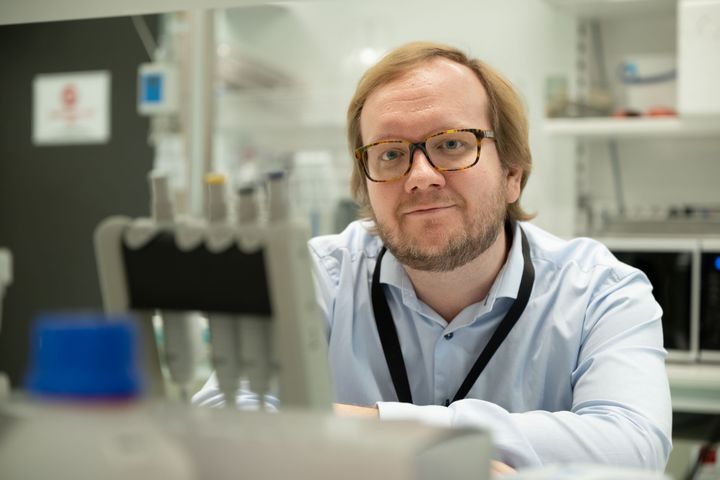
Long COVID, also known as Post COVID, is a condition characterised by persistent symptoms of previous COVID-19. A new study from Karolinska Institutet and Cardiff University, UK, led by Marcus Buggert, docent at the Department of Medicine, Karolinska Institutet (Huddinge), has identified a set of proteins in the blood of people with Long COVID.
“The proteins were mainly found in patients with Long COVID and severe respiratory problems,” says Dr Buggert. “This is a biomarker pattern that we know to be linked to inflammatory signal pathways involved in cell death and lung damage and that has also been observed in other patient groups with severe pulmonary disorders.”
Detailed analysis of blood samples
Severe and permanent symptoms of acute breathlessness is one of the most common and most typical symptoms of Long COVID. The researchers also studied samples from a group of patients that had recovered from their previous COVID-19 and who had, interestingly, none of these proteins in their blood.
The finding was based on a detailed analysis of blood samples from independent patient groups in Sweden and the UK, something that had not been done before.
All 265 patients who participated in the study had contracted COVID-19 during the early days of the pandemic when no vaccine was yet available. Using advanced techniques, the researchers measured thousands of proteins in the blood plasma, which they related to the patients’ symptoms. They also used flow cytometry to conduct immunological analyses.
“By identifying the proteins that are elevated in affected patients, we’re creating a platform from which to develop diagnostic tools and new targeted therapies,” Dr Buggert says. “This is especially important since there are no specific biomarkers and treatments for Long COVID.”
Symptom biology
The results of the study expose the underlying biological processes that can cause certain patients to experience severe symptoms long after previous COVID-19.
The next step in the research is to understand what underpins this pattern by studying lung and gastrointestinal tissue. In doing so, the researchers hope to locate the source of the identified proteins and find if there is any remaining inflammation or tissue damage in specific organs of patients with Long COVID.
The study was funded by the PolyBio Research Foundation, the Swedish Research Council, SciLifeLab/KAW National COVID-19 Research Program, the Knut and Alice Wallenberg Foundation and Karolinska Institutet. Some of the co-authors receive consultancy and lecture fees from pharmaceutical companies, but they are unconnected to this study.
Publication
“Identification of soluble biomarkers that associate with distinct manifestations of long COVID”, Yu Gao, Curtis Cai, Sarah Adamo, Elsa Biteus, Habiba Kamal, Lena Dager, Kelly L. Miners, Sian Llewellyn-Lacey, Kristin Ladell, Pragati S. Amratia, Kirsten Bentley, Simon Kollnberger, Jinghua Wu, Mily Akhirunnesa, Samantha A. Jones, Per Julin, Christer Lidman, Richard J. Stanton, Paul A. Goepfert, Michael J. Peluso, Steven G. Deeks, Helen E. Davies, Soo Aleman, Marcus Buggert & David A. Price, Nature Immunology, online 30 April 2025.
Keywords
Contacts
Marcus BuggertMSc, PhD and Assistant Professor at Department of Medicine, Huddinge Karolinska Institutet
marcus.buggert@ki.sePress OfficeKarolinska Institutet
Tel:+46 (0)8 524 860 77pressinfo@ki.seki.se/pressroomImages
About Karolinska Institutet
Karolinska Institutet is one of the world’s leading medical universities. Our vision is to advance knowledge about life and strive towards better health for all. Karolinska Institutet accounts for the single largest share of all academic medical research conducted in Sweden and offers the country’s broadest range of education in medicine and health sciences. The Nobel Assembly at Karolinska Institutet selects the Nobel laureates in Physiology or Medicine.
Alternative languages
Subscribe to releases from Karolinska Institutet - English
Subscribe to all the latest releases from Karolinska Institutet - English by registering your e-mail address below. You can unsubscribe at any time.
Latest releases from Karolinska Institutet - English
Controlled peanut intake may reduce allergies in toddlers7.5.2026 00:30:00 CEST | Press Release
Researchers at Karolinska Institutet have successfully treated children aged 1–3 years with peanut allergies. The children slowly became accustomed to eating peanuts by consuming small amounts of them daily, which were gradually increased over time. The results are presented in The Lancet Regional Health – Europe.
Karolinska Institutet receives half-billion donation for dementia research25.3.2026 11:00:39 CET | Press Release
Entrepreneur and inventor Leif Lundblad (1938–2025) has bequeathed SEK 538 million to Karolinska Institutet, the largest donation ever to have been made to a Swedish university in modern times. Much of the sum will go towards research on dementia diseases.
HPV vaccine provides long-term protection against cervical cancer26.2.2026 00:30:00 CET | Press Release
HPV vaccination reduces the risk of cervical cancer for at least 18 years, according to a new study from Karolinska Institutet published in The BMJ. There were no signs of waning protection over time.
Blood test reveals risk of multimorbidity7.1.2026 10:00:00 CET | Press Release
A small set of common blood biomarkers predicts which older adults will develop specific combinations of chronic diseases – and how quickly, a new study from Karolinska Institutet published in Nature Medicine reports.
Using social media may impair children’s attention8.12.2025 06:01:00 CET | Press Release
Children who spend a significant amount of time on social media tend to experience a gradual decline in their ability to concentrate. This is according to a comprehensive study from Karolinska Institutet, published in Pediatrics Open Science, where researchers followed more than 8,000 children from around age 10 through age 14.
In our pressroom you can read all our latest releases, find our press contacts, images, documents and other relevant information about us.
Visit our pressroom