
Rare hunting dogs’ unique noses may offer clue to cause of cleft lip and palate in humans
7.5.2025 13:27:08 CEST | KTH Royal Institute of Technology | Press Release
It’s not entirely understood why some children are born with orofacial clefts, such as cleft lip or palate. But a new study suggests a genetic clue may be found in a rare breed of hunting dog.
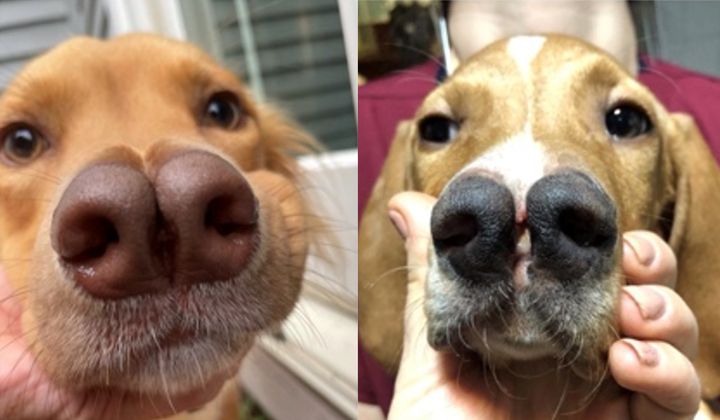
An international research team reports that it identified the genetic origins of the forked nose that distinguishes Turkish Pointers – or Catalburun – a breed that have been prized for their supposed superior sense of smell. Publishing in the scientific journal Genome Research, the researchers traced the dogs’ forked, or bifid, nose to a mutation of the gene PDFGRA.
Peter Savolainen, a canine genealogy authority at Stockholm's KTH Royal Institute of Technology, says the study raises the possibility that there may be a connection between the mutation of PDFGRA and cases of human orofacial clefts.
One indication is in the role PDFGRA was previously found to play in embryonic development of mice. PDFGRA is essential for connecting the halves of the mouth and nose during embryonic development, the study stated.
“This indicates that the gene might be involved in some cases of human orofacial clefts,” Savolainen says. “While there are several genetic and environmental reasons behind orofacial clefts in humans, this study offers a clue to another factor.”
A mutated variant of PDFGRA was also found to be behind unexpected forked-nose deformities in other breeds of dog. The researchers also found two mutations in another gene, LCORL, which code for large breeds and small breeds, respectively.
The work was a collaboration between KTH Royal Institute of Technology, the U.S. National Human Genome Research Institute; University of Ankara; Afyon Kocatepe University and University of Selcuk in Turkey; Utrecht University in the Netherlands; University of Helsinki and Folkhälsan Research Center in Finland; Cornell University in Ithaca, New York; and Embark Veterinary in Boston, Massachusetts.
Savolainen says the research demonstrates how studying the smaller gene pool of bred dogs provides valuable genomic insights for medical science. “Studying the very inbred dog breeds is an excellent tool for finding the genetic reason for many morphologic traits and diseases in humans,” he says.
“In humans there is just too much genetic variation, making it hard to identify exactly which genetic mutation causes a specific disease,” he says.
###
Analysis of canine gene constraint identifies new variants for orofacial clefts and stature, Genome Research, DOI: 10.1101/gr.280092.124
Subscribe to releases from KTH Royal Institute of Technology
Subscribe to all the latest releases from KTH Royal Institute of Technology by registering your e-mail address below. You can unsubscribe at any time.
Latest releases from KTH Royal Institute of Technology
With climate-resilient crops in mind, study tackles flaw in photosynthesis22.10.2026 13:56:58 CEST | Press Release
Rising temperatures and increasing drought are shortening crop growing seasons in many parts of the world. Now scientists in Sweden report new advances toward engineering more efficient photosynthesis, work that could eventually contribute to efforts to adapt crops for climate change.
Now multiple optical devices' stabilizing properties can be identified with a single reprogrammable chip14.10.2026 13:03:08 CEST | Press Release
In optical fibers, chips and other light-guiding devices, minor defects can scatter photons and disrupt their path. A new study demonstrates a way to reveal properties which, in certain systems, help light wave behavior withstand such flaws. The method could help speed up the search for new kinds of electronics and optical technologies, and contribute to more reliable quantum devices.
Researchers identify aggressive molecular features in low-risk prostate cancer7.10.2026 13:41:39 CEST | Press Release
A new study revealed molecular features linked to more aggressive prostate cancer in a subset of patients who had been classified as low risk, highlighting biological differences that may not be apparent from clinical measures alone. The results could lead to new therapeutic strategies.
Why do spruce take decades to reproduce? A genetic study offers new clues14.9.2026 17:41:41 CEST | Press Release
New techniques have enabled researchers in Sweden to begin decoding how one of Northern Europe's most important coniferous tree species switches from growing branches to producing cones – their seed-bearing reproductive organs.
KTH builds Swedish expertise in nitrocellulose2.9.2026 12:54:32 CEST | Press Release
Sweden wants to reduce its dependence on foreign suppliers for nitrocellulose, a raw material central to the production of conventional propellants. KTH is now launching a new competence centre to build up expertise across the entire chain – from forest-based raw materials and manufacturing to safe storage.
In our pressroom you can read all our latest releases, find our press contacts, images, documents and other relevant information about us.
Visit our pressroom