New research confirms that neurons form in the adult brain
3.7.2025 20:00:00 CEST | Karolinska Institutet - English | Pressmeddelande
A study in the journal Science presents compelling new evidence that neurons in the brain’s memory centre, the hippocampus, continue to form well into late adulthood. The research from Karolinska Institutet in Sweden provides answers to a fundamental and long-debated question about the human brain’s adaptability.
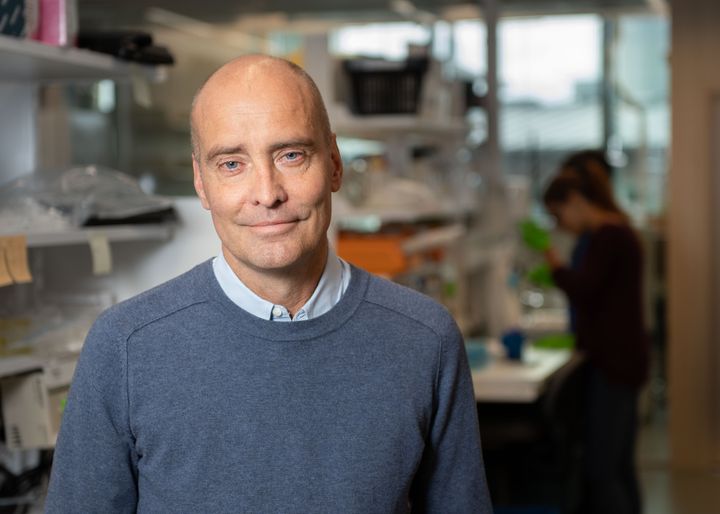
The hippocampus is a brain region that is essential for learning and memory and involved in emotion regulation. Back in 2013, Jonas Frisén’s research group at Karolinska Institutet showed in a high-profile study that new neurons can form in the hippocampus of adult humans. The researchers then measured carbon-14 levels in DNA from brain tissue, which made it possible to determine when the cells were formed.
Identifying cells of origin
However, the extent and significance of this formation of new neurons (neurogenesis) are still debated. There has been no clear evidence that the cells that precede new neurons, known as neural progenitor cells, actually exist and divide in adult humans.
“We have now been able to identify these cells of origin, which confirms that there is an ongoing formation of neurons in the hippocampus of the adult brain,” says Jonas Frisén, Professor of Stem Cell Research at the Department of Cell and Molecular Biology, Karolinska Institutet, who led the research.
From 0 to 78 years of age
In the new study, the researchers combined several advanced methods to examine brain tissue from people aged 0 to 78 years from several international biobanks. They used a method called single-nucleus RNA sequencing, which analyses gene activity in individual cell nuclei, and flow cytometry to study cell properties. By combining this with machine learning, they were able to identify different stages of neuronal development, from stem cells to immature neurons, many of which were in the division phase.
To localise these cells, the researchers used two techniques that show where in the tissue different genes are active: RNAscope and Xenium. These methods confirmed that the newly formed cells were located in a specific area of the hippocampus called the dentate gyrus. This area is important for memory formation, learning and cognitive flexibility.
Hope for new treatments
The results show that the progenitors of adult neurons are similar to those of mice, pigs and monkeys, but that there are some differences in which genes are active. There were also large variations between individuals – some adult humans had many neural progenitor cells, others hardly any at all.
“This gives us an important piece of the puzzle in understanding how the human brain works and changes during life,” explains Jonas Frisén. “Our research may also have implications for the development of regenerative treatments that stimulate neurogenesis in neurodegenerative and psychiatric disorders.”
The study was conducted in close collaboration with Ionut Dumitru, Marta Paterlini and other researchers at Karolinska Institutet, as well as researchers at Chalmers University of Technology in Sweden.
The research was funded by the Swedish Research Council, the European Research Council (ERC), the Swedish Cancer Society, the Knut and Alice Wallenberg Foundation, the Swedish Foundation for Strategic Research, the StratRegen programme, the EMBO Long-Term Fellowship, Marie Sklodowska-Curie Actions and SciLifeLab. Jonas Frisén is a consultant for the company 10x Genomics. See the scientific article for a complete list of potential conflicts of interest.
Publication:
“Identification of proliferating neural progenitors in the adult human hippocampus”, Ionut Dumitru, Marta Paterlini, Margherita Zamboni, Christoph Ziegenhain, Sarantis Giatrellis, Rasool Saghaleyni, Åsa Björklund, Kanar Alkass, Mathew Tata, Henrik Druid, Rickard Sandberg, Jonas Frisén, Science, online 3 July 2025, doi: 10.1126/science.adu9575.
Kontakter
Jonas FrisénProfessor at the Department of Cell and Molecular Biology, Karolinska Institutet.
Tel:+46 70 445 11 42jonas.frisen@ki.sePress OfficeKarolinska Institutet
Tel:+46 (0)8 524 860 77pressinfo@ki.seki.se/pressroomBilder
About Karolinska Institutet
Karolinska Institutet is one of the world’s leading medical universities. Our vision is to advance knowledge about life and strive towards better health for all. Karolinska Institutet accounts for the single largest share of all academic medical research conducted in Sweden and offers the country’s broadest range of education in medicine and health sciences. The Nobel Assembly at Karolinska Institutet selects the Nobel laureates in Physiology or Medicine.
Följ Karolinska Institutet - English
Abonnera på våra pressmeddelanden. Endast mejladress behövs och den används bara här. Du kan avanmäla dig när som helst.
Senaste pressmeddelandena från Karolinska Institutet - English
Karolinska Institutet receives half-billion donation for dementia research25.3.2026 11:00:39 CET | Press Release
Entrepreneur and inventor Leif Lundblad (1938–2025) has bequeathed SEK 538 million to Karolinska Institutet, the largest donation ever to have been made to a Swedish university in modern times. Much of the sum will go towards research on dementia diseases.
HPV vaccine provides long-term protection against cervical cancer26.2.2026 00:30:00 CET | Press Release
HPV vaccination reduces the risk of cervical cancer for at least 18 years, according to a new study from Karolinska Institutet published in The BMJ. There were no signs of waning protection over time.
Blood test reveals risk of multimorbidity7.1.2026 10:00:00 CET | Press Release
A small set of common blood biomarkers predicts which older adults will develop specific combinations of chronic diseases – and how quickly, a new study from Karolinska Institutet published in Nature Medicine reports.
Using social media may impair children’s attention8.12.2025 06:01:00 CET | Press Release
Children who spend a significant amount of time on social media tend to experience a gradual decline in their ability to concentrate. This is according to a comprehensive study from Karolinska Institutet, published in Pediatrics Open Science, where researchers followed more than 8,000 children from around age 10 through age 14.
POTS common in patients with long COVID3.10.2025 11:33:37 CEST | Press Release
A new study from Karolinska Institutet in Sweden shows that an unusual heart rhythm disorder, POTS, is particularly common in people with long COVID. The majority of those affected are middle-aged women. The study is published in the scientific journal Circulation: Arrhythmia and Electrophysiology.
I vårt pressrum kan du läsa de senaste pressmeddelandena, få tillgång till pressmaterial och hitta kontaktinformation.
Besök vårt pressrum