How mutations in bodily tissues affect ageing
20.8.2025 11:00:00 CEST | Karolinska Institutet - English | Pressmeddelande
Two new studies from Karolinska Institutet in Sweden have investigated how mutations that occur in muscles and blood vessels over time can affect ageing. The studies, which are published in Nature Aging, show that such mutations can reduce muscle strength and accelerate blood vessel ageing. The results can be of significance to the treatment of age-related diseases.
Somatic mutations are non-hereditary genetic changes in cells and occur during a lifetime as a result of environmental factors or through random errors when a cell copies its DNA before dividing. The mutations can give rise to cancer, but otherwise their effect has been disputed.
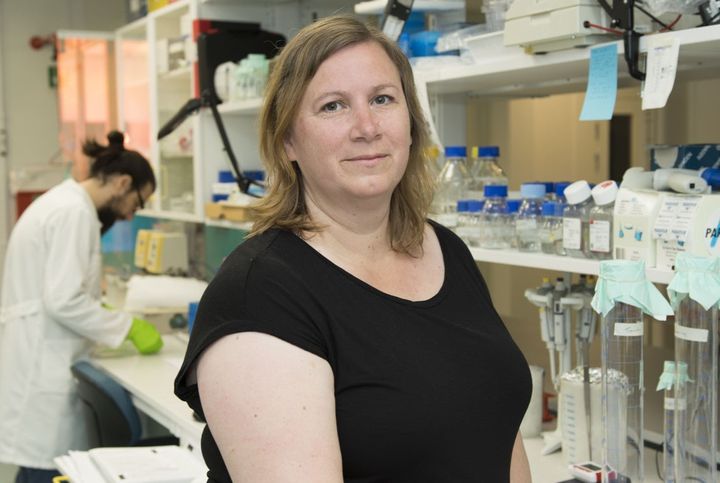
“We’ve discovered that mutations that accumulate in muscle cells and blood vessels can affect the tissue’s function and ability to regenerate – i.e. to replace damaged tissue with new healthy cells – an ability that also declines with age,” says principal investigator Maria Eriksson, professor at the Department of Medicine in Huddinge, Karolinska Institutet.
The same mutation as in progeria
In 2003, Professor Eriksson discovered the genetic cause of progeria, an inherited and extremely rare disease in children characterised by rapid ageing and cardiovascular complications. The child carries a mutation that leads to the formation of a pathogenic protein called progerin. Her research group has now been able to demonstrate the presence of the same mutation and protein in the blood vessels of some patients with chronic kidney disease.
“A somatic mutation has occurred in the patients’ vascular walls and we suspect that it’s related to the vascular damage that often accompanies kidney disease,” says the study’s first author Gwladys Revêchon, postdoc in Professor Eriksson’s group.
In complementary experiments in mice, the researchers discovered that cells that form progerin can propagate and cluster into groups of mutated cells that spread along the vascular walls, which can contribute to tissue damage and early vascular ageing.
The study combines basic and clinical research and was conducted in collaboration with Peter Stenvinkel, professor of nephrology at the Department of Clinical Science, Intervention and Technology at Karolinska Institutet and consultant at Karolinska University Hospital. He has established a large biobank of well-characterised material from patients, which has been crucial to the study.
“I’m very happy that we can now learn more about why people with kidney disease so easily become vascular compromised,” says Professor Stenvinkel.
Mutations affect muscle strength
In the second study, Professor Eriksson and her doctoral student Lara G. Merino and former postdoc Peter Vrtačnik used a mouse model to study how somatic mutations in muscles affect muscle strength. Such mutations accumulate during muscle regeneration, which is to say when muscles are rebuilt after having been damaged or strained.
An accumulation of somatic mutations in the muscles of mice led to impaired muscle regeneration, smaller muscle cells, lower muscle mass and reduced grip strength.
The results from both studies indicate that somatic mutations can reduce muscle strength and accelerate the ageing of the blood vessels.
“A better understanding of how somatic mutations affect the function of different tissues can help us develop new biomarkers and treatments for age-related diseases,” says Professor Eriksson. “Our findings also demonstrate the value of studying rare diseases since it can provide new approaches to more common conditions.”
The studies were primarily financed by grants from the Swedish Research Council, the Swedish Cancer Society, the European Research Council (ERC), the Center for Innovative Medicine (CIMED), the Loo and Hans Osterman Foundation for Medical Research and the Erik Rönnberg Award for Scientific Studies of Ageing and Age-related diseases. There are no reported conflicts of interest.
Publications
“Recurrent somatic mutation and progerin expression in early vascular aging of chronic kidney disease”, Gwladys Revêchon, Anna Witasp, Nikenza Viceconte, Hafdis T. Helgadottir, Piotr Machtel, Fabiana Stefani, Daniel Whisenant, Agustin Sola-Carvajal, Dagmara McGuinness, Nadia O. Abutaleb, Gonzalo Artiach, Emelie Wallén Arzt, Inga Soveri, Anne Babler, Susanne Ziegler, Rafael Kramann, Magnus Bäck, Anders Thorell, George A. Truskey, Lars Wennberg, Paul G. Shiels, Annika Wernerson, Peter Stenvinkel, Maria Eriksson, Nature Aging, online 10 June 2025, doi: 10.1038/s43587-025-00882-6.
“Induced somatic mutation accumulation during skeletal muscle regeneration reduces muscle strength”, Peter Vrtačnik, Lara G. Merino, Santhilal Subhash, Hafdis T Helgadottir, Matthieu Bardin, Fabiana Stefani, Depin Wang, Ping Chen, Irene Franco, Gwladys Revêchon, Maria Eriksson, Nature Aging, online 20 August 2025, doi: 10.1038/s43587-025-00941-y.
Kontakter
Maria ErikssonProfessor at the Department of Medicine, Huddinge, Karolinska Institutet
Tel:+46 70 827 89 69maria.eriksson.2@ki.sePress OfficeKarolinska Institutet
Tel:+46 (0)8 524 860 77pressinfo@ki.seki.se/pressroomBilder

About Karolinska Institutet
Karolinska Institutet is one of the world’s leading medical universities. Our vision is to advance knowledge about life and strive towards better health for all. Karolinska Institutet accounts for the single largest share of all academic medical research conducted in Sweden and offers the country’s broadest range of education in medicine and health sciences. The Nobel Assembly at Karolinska Institutet selects the Nobel laureates in Physiology or Medicine.
Följ Karolinska Institutet - English
Abonnera på våra pressmeddelanden. Endast mejladress behövs och den används bara här. Du kan avanmäla dig när som helst.
Senaste pressmeddelandena från Karolinska Institutet - English
Controlled peanut intake may reduce allergies in toddlers7.5.2026 00:30:00 CEST | Press Release
Researchers at Karolinska Institutet have successfully treated children aged 1–3 years with peanut allergies. The children slowly became accustomed to eating peanuts by consuming small amounts of them daily, which were gradually increased over time. The results are presented in The Lancet Regional Health – Europe.
Karolinska Institutet receives half-billion donation for dementia research25.3.2026 11:00:39 CET | Press Release
Entrepreneur and inventor Leif Lundblad (1938–2025) has bequeathed SEK 538 million to Karolinska Institutet, the largest donation ever to have been made to a Swedish university in modern times. Much of the sum will go towards research on dementia diseases.
HPV vaccine provides long-term protection against cervical cancer26.2.2026 00:30:00 CET | Press Release
HPV vaccination reduces the risk of cervical cancer for at least 18 years, according to a new study from Karolinska Institutet published in The BMJ. There were no signs of waning protection over time.
Blood test reveals risk of multimorbidity7.1.2026 10:00:00 CET | Press Release
A small set of common blood biomarkers predicts which older adults will develop specific combinations of chronic diseases – and how quickly, a new study from Karolinska Institutet published in Nature Medicine reports.
Using social media may impair children’s attention8.12.2025 06:01:00 CET | Press Release
Children who spend a significant amount of time on social media tend to experience a gradual decline in their ability to concentrate. This is according to a comprehensive study from Karolinska Institutet, published in Pediatrics Open Science, where researchers followed more than 8,000 children from around age 10 through age 14.
I vårt pressrum kan du läsa de senaste pressmeddelandena, få tillgång till pressmaterial och hitta kontaktinformation.
Besök vårt pressrum