Karolinska Institutet receives half-billion donation for dementia research
25.3.2026 11:00:39 CET | Karolinska Institutet - English | Press Release
Entrepreneur and inventor Leif Lundblad (1938–2025) has bequeathed SEK 538 million to Karolinska Institutet, the largest donation ever to have been made to a Swedish university in modern times. Much of the sum will go towards research on dementia diseases.
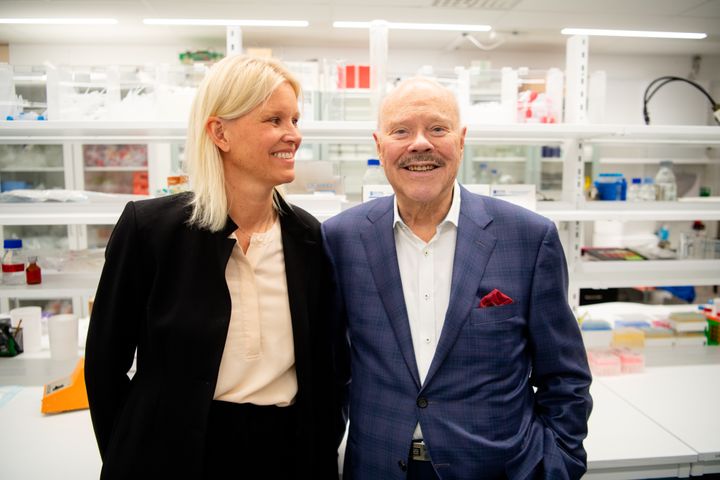
Leif Lundblad passed away in October 2025 at the age of 87. He was known as the father of the bank-note dispenser found in ATMs, an invention that revolutionised cash handling and bank services around the world. Over the years, he helped finance many research projects at KI in such fields as pain, Alzheimer’s disease, COVID-19 and AI.
In his testament, he has bequeathed the unprecedented sum of SEK 538 million, primarily for research into neurodegenerative (dementia) diseases, of which Alzheimer’s disease is the most common.
The donation is also to go towards research on diseases with a major impact on public health, including chronic pain and autoimmune diseases.
“It’s an incredibly generous gift that Leif Lundblad has made to Karolinska Institutet and we are exceedingly grateful for his intention and engagement,” says KI president Annika Östman Wernerson. “The donation will be of enormous benefit to research into dementia and other diseases that affect large sections of society.”
Genuine interest in innovative research
Leif Lundblad was a philanthropist and it was his curiosity as an inventor that drew him to medial research. He was made an honorary doctor at Karolinska Institutet in 2025.
“My father had a genuine interest in innovative scientific ideas and the problems they could solve,” says daughter Ulrika Lundblad. “The enthusiasm he felt when meeting researchers at Karolinska Institutet was palpable. By virtue of this donation, we, his family, are very much looking forward to following and being part of future breakthroughs.”
“Dementia diseases” is an umbrella term for diseases the affect cognitive functions such as memory, language, planning and orientation skills. They affect approximately 140,000 people in Sweden, a figure that is expected to double by 2050.
Early diagnosis and novel treatments
Aims of the research being done in this field include improving methods of early diagnosis, developing novel treatments and increasing knowledge of the diseases’ underlying mechanisms.
“This is the largest donation to have been made to a Swedish university in modern times,” says head of the Development Office Jenny Löhr, who works with donor relations at KI. “We’re seeing a growing interest in philanthropy in Sweden, and more and more people seeking to get involved in helping to solve the world’s greatest health challenges. Leif Lundblad’s generosity will enable innovative projects and make a profound impact on Swedish dementia research.”
Of the 538 million kronor donation, 500 million will go towards research funding, awarded annually on a competitive basis to KI researchers; 30 million will go towards a professorship; and 8 million will go towards KI’s Prize for Innovation and Utilisation.
Contacts
Jenny LöhrKarolinska Institutet, Development Office
Tel:+46-765-80 23 53jenny.lohr@ki.sePress OfficeKarolinska Institutet
Tel:+46 (0)8 524 860 77pressinfo@ki.seki.se/pressroomImages
About Karolinska Institutet
Karolinska Institutet is one of the world’s leading medical universities. Our vision is to advance knowledge about life and strive towards better health for all. Karolinska Institutet accounts for the single largest share of all academic medical research conducted in Sweden and offers the country’s broadest range of education in medicine and health sciences. The Nobel Assembly at Karolinska Institutet selects the Nobel laureates in Physiology or Medicine.
Subscribe to releases from Karolinska Institutet - English
Subscribe to all the latest releases from Karolinska Institutet - English by registering your e-mail address below. You can unsubscribe at any time.
Latest releases from Karolinska Institutet - English
Controlled peanut intake may reduce allergies in toddlers7.5.2026 00:30:00 CEST | Press Release
Researchers at Karolinska Institutet have successfully treated children aged 1–3 years with peanut allergies. The children slowly became accustomed to eating peanuts by consuming small amounts of them daily, which were gradually increased over time. The results are presented in The Lancet Regional Health – Europe.
HPV vaccine provides long-term protection against cervical cancer26.2.2026 00:30:00 CET | Press Release
HPV vaccination reduces the risk of cervical cancer for at least 18 years, according to a new study from Karolinska Institutet published in The BMJ. There were no signs of waning protection over time.
Blood test reveals risk of multimorbidity7.1.2026 10:00:00 CET | Press Release
A small set of common blood biomarkers predicts which older adults will develop specific combinations of chronic diseases – and how quickly, a new study from Karolinska Institutet published in Nature Medicine reports.
Using social media may impair children’s attention8.12.2025 06:01:00 CET | Press Release
Children who spend a significant amount of time on social media tend to experience a gradual decline in their ability to concentrate. This is according to a comprehensive study from Karolinska Institutet, published in Pediatrics Open Science, where researchers followed more than 8,000 children from around age 10 through age 14.
POTS common in patients with long COVID3.10.2025 11:33:37 CEST | Press Release
A new study from Karolinska Institutet in Sweden shows that an unusual heart rhythm disorder, POTS, is particularly common in people with long COVID. The majority of those affected are middle-aged women. The study is published in the scientific journal Circulation: Arrhythmia and Electrophysiology.
In our pressroom you can read all our latest releases, find our press contacts, images, documents and other relevant information about us.
Visit our pressroom