
New molecules can offer breakthrough in fight against antibiotic resistance
19.5.2026 08:00:00 CEST | Umeå University | Press Release
Researchers at Umeå University together with international partners have developed a new class of compounds that can both eliminate harmful bacteria and reduce their ability to cause infection. The findings could, in the longer term, contribute to addressing one of the most pressing global health challenges – antibiotic resistance. The study is published in the journal Science Advances.
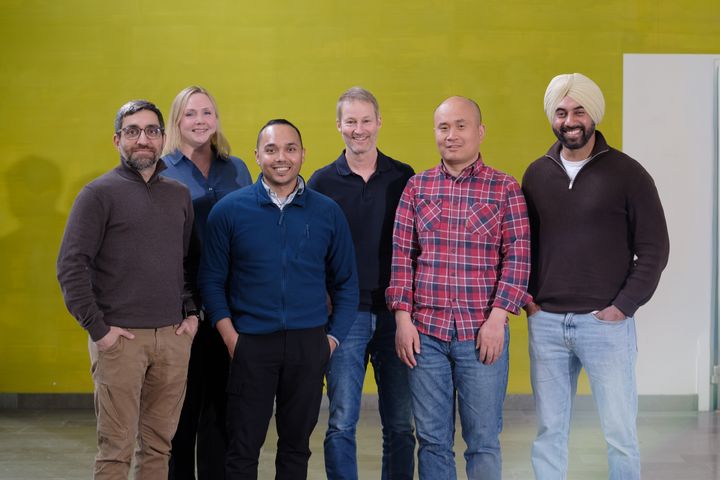
In a new study, researchers show how so‑called TriPcides can target the bacterium Staphylococcus aureus, including antibiotic‑resistant strains such as MRSA. The compounds disrupt the bacteria’s ability to cause infection and can also kill dormant bacterial cells, which are often difficult to treat with existing antibiotics.
“We have developed an entirely new class of compounds with very promising antibacterial properties. What stands out is that the bacteria we have studied do not easily develop resistance to these synthetic antibiotics. We have also not observed any existing resistance in a wide range of clinical isolates, which is encouraging” says Fredrik Almqvist, Professor at the Department of Chemistry at Umeå University.
Antibiotic resistance is widely recognised as a growing global threat to public health. As bacteria become resistant to existing drugs, the risk increases of infections that are difficult to treat, longer hospital stays and higher mortality rates. There is therefore an urgent need for new strategies that can complement or replace current antibiotics.
The new compounds act by affecting bacterial cell membranes and interfering with processes that are essential for establishing infection. In laboratory studies, they have shown activity against several Gram‑positive bacteria, including resistant strains.
An important finding is that the compounds are also effective against so‑called persister cell – bacteria in a dormant state that often survive antibiotic treatment. These cells can later cause a relapse of the infection.
“Persister cells are bacteria that enter a state similar to dormancy, in which they do not divide and are metabolically inactive. A small fraction of the bacteria causing an infection are in this state and can therefore survive antibiotic treatment. Once treatment ends, they can resume growth and cause the infection to return. Our TriPcides also showed activity against persister cells, which is very exciting” says Fredrik Almqvist.
The discovery could, in the longer term, contribute to new treatment approaches for severe infections, although further research is required before the findings can be applied clinically.
In addition to antibiotic resistance, the findings are also relevant to another societal challenge: the strain on healthcare systems. More effective treatments could reduce the need for care and free up resources, particularly in cases where infections currently require prolonged treatment and repeated interventions.
“This study is the first to investigate this new type of antibiotic and offers hope that we can continue developing effective new treatments. There is a significant global need for new types of antibiotics to which bacteria have not already developed resistance, and this discovery is a positive step forward. We may be moving towards a new and effective option for combating infectious diseases” says Fredrik Almqvist.
The study is based on an international collaboration. Three research groups at Umeå University contributed, and the Umeå Centre for Microbial Research (UCMR) played an important role in bringing together complementary expertise.
The study has been published in the scientific journal Science Advances.
About the scientific article
Hasan Tükenmez, Taylor M. Nye, Pardeep Singh, Aaron Mychack, Mari Bonde, Suzanne Hickerson, Chloe L. P. Obernuefemann, Jerome S. Pinkner, Shaochun Zhu, Souvik Sarkar, Jaideep B. Bharate, Ingeborg van der Lingen, Anh Quoc Ntuyenm, V. U. Bhaskara Rao, Anders E. G. Lindgren, Hanna Klein, Zongsen Zou, Karen W. Dodson, Suzanne Walker, Andre Mateus, Jörgen Johansson, Michael G. Caparon, Fredrik Almqvist, Scott J. Hultgren, Tunable TriPcides suppress virulence factor secretion during Staphylococcus aureus infection and kill dormant cells, Science Advances VOL. 12, NO. 19, DOI: 10.1126/sciadv.aec9100
Contacts
Fredrik AlmqvistProfessorDepartment of Chemistry, Umeå University
Tel:+46 90 786 6925fredrik.almqvist@umu.seAnna-Lena LindskogCommunication officerFaculty of Science & Technology
Tel:+46706422956anna-lena.lindskog@umu.seImages

About us
Umeå University is a comprehensive university and one of Sweden’s largest higher education institutions with around 38,000 students and 4,600 staff. We have a diverse range of high-quality educational programmes and research within all disciplinary domains and the arts. The University offers world-class educational and research environments and helps expand knowledge of global significance. This is where the groundbreaking discovery was made of the CRISPR-Cas9 gene-editing tool, which was awarded the Nobel Prize in Chemistry. At Umeå University, everything is just around the corner. Our tightly knit campus makes it easy to meet, collaborate and share knowledge, something that encourages a dynamic and open culture.
Subscribe to releases from Umeå University
Subscribe to all the latest releases from Umeå University by registering your e-mail address below. You can unsubscribe at any time.
Latest releases from Umeå University
Katarina Pierre steps down after 16 years as artistic director of Bildmuseet11.9.2026 13:23:51 CEST | Press Release
With an unfailing eye for artistic quality and a deep belief in the importance of art, Katarina Pierre has developed Bildmuseet into one of Sweden’s leading venues for international contemporary art. After 16 years as artistic director, she is now retiring.
A few minutes of freezing can change the fate of iron in nature27.8.2026 09:00:00 CEST | Press Release
Just a few minutes of freezing and thawing can have a decisive impact on how ferrihydrite, the most reactive iron mineral in cold soils, permafrost and glaciers, transforms, according to researchers at Umeå University in a paper published in the journal Science. As climate warming intensifies freeze-thaw cycles and extends them into new regions, ice is becoming an increasingly important driver of Earth's ecosystems.
New study maps how gut bacteria help and hinder each other's growth24.8.2026 09:00:00 CEST | Press Release
Researchers at Umeå University have mapped interactions between common gut bacteria, creating one of the most comprehensive datasets of its kind. Published in Nature Communications, the study reveals that most bacteria compete with one another, but also identifies mechanisms through which some bacteria promote the growth of others.
Thawing permafrost may trigger overlooked carbon sink in rivers17.6.2026 17:00:00 CEST | Press Release
A new study published in Nature study shows that rock weathering increasingly counteracts river CO₂ emissions as permafrost degrades. The study has been carried out by a collaborative team of researchers from Umeå University, Sweden, and East China Normal University.
Potatoes benefit when two soil bacteria team up16.6.2026 09:00:00 CEST | Press Release
Researchers at Umeå University have shown that two soil bacteria can work together to influence potato development. The bacterial partnership triggered distinct responses in potato plants and was associated with earlier tuber initiation and improved yield under greenhouse conditions. The findings suggest that combinations of beneficial soil bacteria could become a valuable tool for potato growers in the future.
In our pressroom you can read all our latest releases, find our press contacts, images, documents and other relevant information about us.
Visit our pressroom