
Crisis communication, healthcare at home and future mobility at UID26
26.5.2026 08:00:00 CEST | Umeå University | Press Release
On 2–3 June 2026, Umeå Institute of Design (UID), part of Umeå University, presents UID26 | Design Talks & Degree Show. Graduating students from MFA Advanced Product Design, MFA Interaction Design, MFA Transportation Design, and the BFA Programme in Industrial Design share their final projects through talks and a public exhibition.
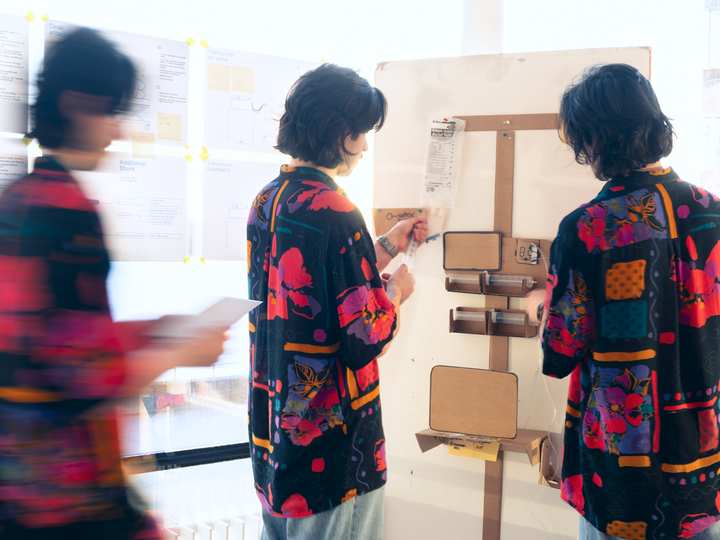
On 2–3 June 2026, Umeå Institute of Design (UID), part of Umeå University, presents UID26 | Design Talks & Degree Show. Graduating students from MFA Advanced Product Design, MFA Interaction Design, MFA Transportation Design, and the BFA Programme in Industrial Design share their final projects through talks and a public exhibition.
This year’s student-chosen theme, TRACES, explores what design leaves behind: in materials, systems, and people’s lives. It reflects the journey behind each project, from early research and fieldwork to tangible proposals, and invites discussion about the long-term impact of design on society and the planet.
Design proposals grounded in real-world challenges
UID26 presents design proposals that respond to current challenges across healthcare, mobility, sustainability, and everyday life. The projects move beyond concepts to address how systems work in practice, from hospital workflows and infrastructure to domestic routines and public spaces.
The exhibition brings together work that explores:
- how care is moving from hospitals into the home
- how cities adapt to changing mobility needs and climate conditions
- how everyday products can support independence, dignity, and inclusion
- how design can strengthen resilience in uncertain or fragile systems
Highlights from the Class of 2026
In MFA Advanced Product Design, Cosima Pauli explores how people can stay connected when digital infrastructure fails, proposing a discreet communication device designed for censorship, shutdowns, and crisis situations.
Also in Advanced Product Design, Pierre Brand develops a multisensory learning system that supports children with dyslexia through haptic feedback, translating reading into tactile cues that reduce cognitive overload and build confidence.
In the same programme, projects also address healthcare systems directly, from a next-generation anaesthesia platform that reduces complexity and material waste in operating rooms, to concepts that make long-term treatment in the home more manageable and less intrusive in everyday life. At the same time, other projects shift focus to everyday rituals, including a tactile music system designed to counter digital fatigue and restore a sense of presence at home.
In MFA Interaction Design, Ece Günesen questions how women’s health technologies represent the body, proposing more open and interpretative ways of engaging with health data that prioritise lived experience over constant optimisation.
“I would love to explore women’s health data as something that is to be lived with, and not something to be fixed,” says Günesen.
Across the Interaction Design programme, projects also explore how design can support attention, inclusion, and participation in everyday life, from gaze-aware interfaces in cars to tools that help people feel more confident navigating unfamiliar public spaces.
In MFA Transportation Design, David Dahlberg explores how long-distance rail travel could become more attractive by improving the social and emotional experience of night trains, balancing privacy with safe and optional interaction.
Other mobility projects in the programme address urgent challenges such as emergency response in remote terrain, climate adaptation in extreme heat, and how shared mobility can support more inclusive and service-oriented travel experiences.
In the BFA Programme in Industrial Design, students focus on everyday systems and lived experience, developing tangible solutions for areas such as home-based healthcare, food storage and preparedness, workplace safety, and access to nature. These projects show how design can make systemic challenges more manageable in daily life, without requiring large-scale change to existing infrastructure.
A platform for critical conversation
UID26 is both a public showcase and a moment to reflect on the responsibilities behind design decisions.
For Demian Horst, Head of Institute at Umeå Institute of Design, the theme highlights process as well as impact.
“TRACES reminds us that design is never only what we make, but also what we change through the act of making. At UID26, our students show how careful research, collaboration, and craft can lead to work that is inclusive, sustainability-minded, and honest about the imprint design leaves on the world,” says Horst.
Global access: digital exhibition and live programme
For online audiences, UID26 is accessible beyond the physical exhibition.
The UID26 | Project Gallery is now live with teaser content, offering an early glimpse of the graduation projects ahead of the full launch at 09.00 on 2 June, when all projects will be presented in detail with images, videos, and extended descriptions.
The event is also available through the UID26 | Live Stream, broadcasting talks and presentations from 2–3 June. This enables media and audiences worldwide to follow the programme in real time or engage with selected content during and after the event.
Public exhibition: welcome to visit
On Wednesday 3 June, 16.00-19.00, UID opens its doors for the public degree exhibition at the Arts Campus by the Ume River. Visitors can explore projects through physical models, digital visualisations, and interactive elements, and meet the designers behind the work.
- What: Public exhibition of graduation projects
- When: Wednesday 3 June, 16.00–19.00
- Where: Umeå Institute of Design, Östra Strandgatan 30, Umeå
- Who: Everyone is welcome
Links
- UID26 event page: UID26 | Design Talks & Degree Show
- Digital gallery: UID26 | Project Gallery
- Programme: UID26 | Programme
Contacts
Jens PerssonCommunications officerUmeå Institute of Design
Tel:+46 736 26 35 51jens.persson@umu.seImages
About us
Umeå University is a comprehensive university and one of Sweden’s largest higher education institutions with around 38,000 students and 4,600 staff. We have a diverse range of high-quality educational programmes and research within all disciplinary domains and the arts. The University offers world-class educational and research environments and helps expand knowledge of global significance. This is where the groundbreaking discovery was made of the CRISPR-Cas9 gene-editing tool, which was awarded the Nobel Prize in Chemistry. At Umeå University, everything is just around the corner. Our tightly knit campus makes it easy to meet, collaborate and share knowledge, something that encourages a dynamic and open culture.
Subscribe to releases from Umeå University
Subscribe to all the latest releases from Umeå University by registering your e-mail address below. You can unsubscribe at any time.
Latest releases from Umeå University
Ice may release more iron than climate models predict26.5.2026 10:00:00 CEST | Press Release
Most people think of ice as frozen and lifeless, but research at Umeå University shows the opposite. A new study published in PNAS demonstrates that ice actively speeds up the breakdown of iron minerals and may release more iron than current environmental models account for. This is crucial for predicting how nutrient cycles, carbon storage, and water quality will change in polar and mountain regions as the planet warms.
Same data, different answer? A new Nature study counts the gap25.5.2026 08:00:00 CEST | Press Release
Same data, a different result? A new study published in Nature measures how much published findings depend on who analyses them — and a recently arrived researcher at Umeå University was part of the work.
New AI makes satellite data understandable – can speed up crisis decision-making22.5.2026 08:00:00 CEST | Press Release
Large volumes of environmental data are collected today, but much of it remains unused. Now, Arka Ghosh at Umeå University has developed an AI solution that makes complex data from satellite images and weather maps directly usable for decision-makers.
New molecules can offer breakthrough in fight against antibiotic resistance19.5.2026 08:00:00 CEST | Press Release
Researchers at Umeå University together with international partners have developed a new class of compounds that can both eliminate harmful bacteria and reduce their ability to cause infection. The findings could, in the longer term, contribute to addressing one of the most pressing global health challenges – antibiotic resistance. The study is published in the journal Science Advances.
Sweden’s image abroad may influence democracy ahead of the election19.5.2026 07:47:00 CEST | Press Release
Sweden has long had a strong international reputation as an open, modern and democratic country. But that image is changing. Research from Umeå University shows how foreign political actors use the image of Sweden to advance their own ideological agendas, particularly on social media and in digital environments ahead of elections.
In our pressroom you can read all our latest releases, find our press contacts, images, documents and other relevant information about us.
Visit our pressroom