Method extracts antioxidant nutrients from corn processing waste
8.2.2023 12:00:00 CET | KTH Royal Institute of Technology | Press Release
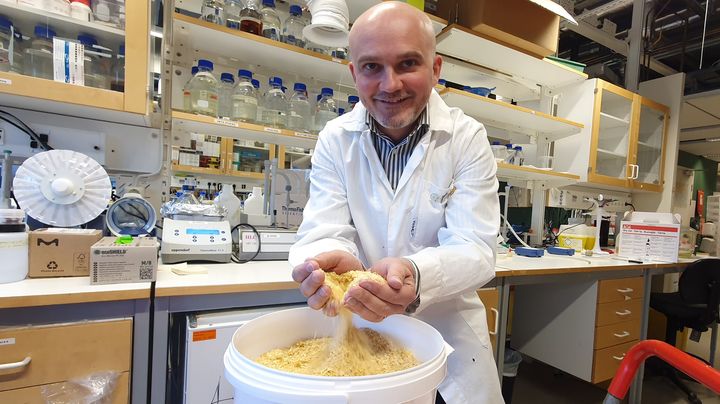
A process for extracting nutritious antioxidant dietary fibers from corn starch production waste could turn tons of nearly-worthless bran into a valuable, circular resource.
Corn bran is rich in the potent antioxidant, ferulic acid. Unfortunately this anti-inflammatory is trapped in an insoluble material matrix that humans can’t digest. That is until now.
Researchers at KTH Royal Institute of Technology have reported a way to unlock soluble ferulic acid-rich dietary fibers from this insoluble matrix, and they developed a hydrogel that delivers it to the intestines where it can prevent cell oxidation and improve gut health.
Due to its insolubility, corn bran is a low-value sidestream from cornstarch production, which is otherwise discarded or sold off for animal feed. But instead of letting it go to waste, the researchers used a method called subcritical water extraction to isolate the soluble fiber part of the bran that contains ferulic acid.
Francisco Vilaplana, Associate Professor in the Division of Glycoscience at KTH Royal Institute of Technology, says the next step is to create a hydrogel by crosslinking this soluble ferulic acid-rich dietary fiber part using natural enzymes (laccase and peroxidase). The hydrogel can be digested as a prebiotic for gut health, or even used as a treatment for wounds, since it counteracts oxidative stress and contributes to healing.
The method was published in the scientific journal, Green Chemistry.
The global market for cornstarch is estimated at more than 120 million metric tons, and is expected to increase to 160 million metric tons by 2026. In cornstarch processing, as much as 15 percent of the kernel is discarded as fiber, or corn bran, Vilaplana says. “That’s a huge industrial sidestream.”
He says the new technique addresses the worldwide concern about food waste, in terms of sustainability and greenhouse gas emissions.
“We showed that we can upgrade a food side stream into a valuable material for both food and biomedical applications that could mitigate inflammatory processes.”
Keywords
Images
Links
About KTH Royal Institute of Technology

Founded in 1827, KTH Royal Institute of Technology in Stockholm is one of the world's leading technical and engineering universities, as well as a key center of intellectual talent and innovation.
Subscribe to releases from KTH Royal Institute of Technology
Subscribe to all the latest releases from KTH Royal Institute of Technology by registering your e-mail address below. You can unsubscribe at any time.
Latest releases from KTH Royal Institute of Technology
New chip offers way to make use of quantum system ‘imperfections’19.5.2026 14:30:22 CEST | Press Release
Quantum technologies promise powerful new kinds of computers, giving scientists new tools to mimic and explore nature at its tiniest scales. At those levels, everything in nature—from atoms and electrons to light itself—follows the strange rules of quantum mechanics. But the real world is never perfectly clean: signals fade, energy leaks away and systems pick up noise from their surroundings.
How to save computing energy? This study shows a way to engineer materials so magnetic signals can carry information6.5.2026 13:06:14 CEST | Press Release
A recent study shows a new and potentially more energy efficient way for information to be transmitted inside electronic systems, including computers and phones—without relying on electric currents or external magnetic fields.
Cause of common heart valve defect revealed in genetic study28.4.2026 11:18:02 CEST | Press Release
New clues from genetic research may help explain what causes the most common heart defect present at birth. Researchers in Sweden have identified rare DNA changes during fetal development that can lead to a condition known as bicuspid aortic valve (BAV).
Study offers new way to stop global potato pathogen once linked to Ireland’s Great Famine23.4.2026 11:46:21 CEST | Press Release
Scientists in Sweden have taken an important step toward fighting potato late blight, a plant disease that once triggered an historic famine in Ireland and now threatens to spread globally due to climate change.
Why do incomplete spinal cord injuries cause unstable movements? New study reveals disrupted muscle coordination14.4.2026 12:09:09 CEST | Press Release
Even when people with incomplete spinal cord injuries can walk, everyday functions like standing, balancing or producing steady force may remain difficult. A new study shows why.
In our pressroom you can read all our latest releases, find our press contacts, images, documents and other relevant information about us.
Visit our pressroom