
New sepsis diagnostic could reduce critical time to save patients
28.8.2025 15:46:22 CEST | KTH Royal Institute of Technology | Press Release
A new diagnostic method would confirm sepsis infections earlier, cutting critical hours in the “race against time” to save patients’ lives.
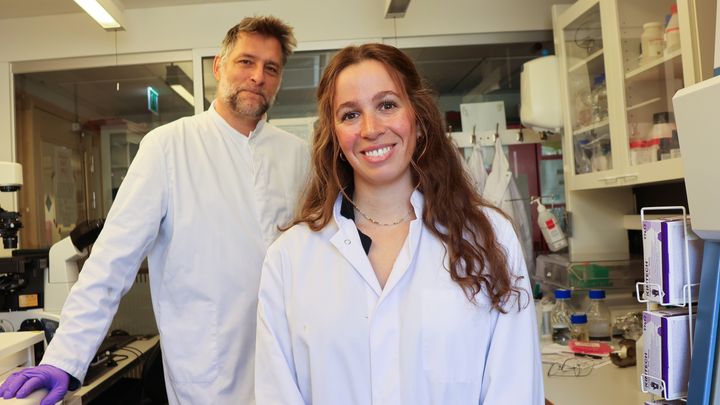
Publishing in Nature Publishing Journal Digital Medicine, a team from KTH Royal Institute of Technology and Uppsala University say their diagnostic process offers a speedier alternative to the bacteria culturing process hospitals routinely use to identify suspected bloodstream infections.
The process uses a centrifuge to separate bacteria from blood cells, and automatic microscopy for detection, enabling a clinic to confirm bacterial infection in as little as two hours using software trained by artificial intelligence (AI), says Henar Marino Miguelez, a doctoral student at KTH Royal Institute of Technology. She and doctoral student Mohammad Osaid were the study’s lead authors.
By contrast, hospital labs generally need at least a day of incubation before the growth of infectious bacteria begins to reveal itself in blood cultures.
“Diagnosing sepsis is a race against time,” Marino Miguelez says. “With every hour of delayed treatment of patients in septic shock, survival rates drop by 8 percent.”
By enabling prompt identification of pathogens, the appropriate antibiotic treatment can be started sooner, says Wouter van der Wijngaart, a professor at KTH Royal Institute of Technology who leads research in microfluidic and biomedical systems.
Typically a clinic will put a patient on a broad-spectrum antibiotic when sepsis is suspected, at least until they identify the pathogen. But that precaution carries its own risks, due to the inherent drug toxicity, attacking beneficial gut bacteria and promoting the emergence of antibiotic-resistant strains.
“It takes a hospital two to four days before they are sure which antibiotic to treat a bloodstream infection with,” van der Wijngaart says. “We’re trying to do this in four to six hours.”
In tests using blood samples spiked with bacteria, the system successfully detected E. coli, K. pneumoniae, and E. faecalis at clinically relevant levels, as low as 7 to 32 bacterial colony-forming units per milliliter of blood.
While the method proved to work well with these bacteria, it did not for staphylococcus aureus, which hides in blood clots. Miguelez says the researchers are working on ways to fix that.
The technique employs a “smart centrifugation”, which spins blood samples on top of an agent that causes bacteria to float upwards while blood cells sediment downwards, leading to a clear, liquid layer containing bacteria but no blood cells. This liquid is then injected into a chip with microscale channels, where it flows easily.
Miniscule traps in the chip capture the separated bacteria, and any bacteria growth quickly becomes visible in automated time-lapse microscopy images analyzed by the machine learning software.
The work was a collaboration between the teams of van der Wijngaart at KTH, and Johan Elf and Carolina Wählby at Uppsala University.
Contacts
Wouter van der WijngaartProfessorKTH Division of Micro and Nanosystems
Professor in micro and nanosystems with a research focus on microfluidic and lab-on-a-chip systems,
Images
Subscribe to releases from KTH Royal Institute of Technology
Subscribe to all the latest releases from KTH Royal Institute of Technology by registering your e-mail address below. You can unsubscribe at any time.
Latest releases from KTH Royal Institute of Technology
With climate-resilient crops in mind, study tackles flaw in photosynthesis22.10.2026 13:56:58 CEST | Press Release
Rising temperatures and increasing drought are shortening crop growing seasons in many parts of the world. Now scientists in Sweden report new advances toward engineering more efficient photosynthesis, work that could eventually contribute to efforts to adapt crops for climate change.
Now multiple optical devices' stabilizing properties can be identified with a single reprogrammable chip14.10.2026 13:03:08 CEST | Press Release
In optical fibers, chips and other light-guiding devices, minor defects can scatter photons and disrupt their path. A new study demonstrates a way to reveal properties which, in certain systems, help light wave behavior withstand such flaws. The method could help speed up the search for new kinds of electronics and optical technologies, and contribute to more reliable quantum devices.
Researchers identify aggressive molecular features in low-risk prostate cancer7.10.2026 13:41:39 CEST | Press Release
A new study revealed molecular features linked to more aggressive prostate cancer in a subset of patients who had been classified as low risk, highlighting biological differences that may not be apparent from clinical measures alone. The results could lead to new therapeutic strategies.
Why do spruce take decades to reproduce? A genetic study offers new clues14.9.2026 17:41:41 CEST | Press Release
New techniques have enabled researchers in Sweden to begin decoding how one of Northern Europe's most important coniferous tree species switches from growing branches to producing cones – their seed-bearing reproductive organs.
KTH builds Swedish expertise in nitrocellulose2.9.2026 12:54:32 CEST | Press Release
Sweden wants to reduce its dependence on foreign suppliers for nitrocellulose, a raw material central to the production of conventional propellants. KTH is now launching a new competence centre to build up expertise across the entire chain – from forest-based raw materials and manufacturing to safe storage.
In our pressroom you can read all our latest releases, find our press contacts, images, documents and other relevant information about us.
Visit our pressroom