
Researchers uncover how immune cells use zinc to fight infections — challenging long-held beliefs
5.9.2025 07:43:00 CEST | Umeå University | Press Release
A research team from Umeå University, Sweden, in collaboration with Ghent University, Belgium, has made a groundbreaking discovery about how the body's first immune defense, neutrophils, orchestrate the mobilization of zinc to fight microbes. The study is published in the Journal of Biological Chemistry.
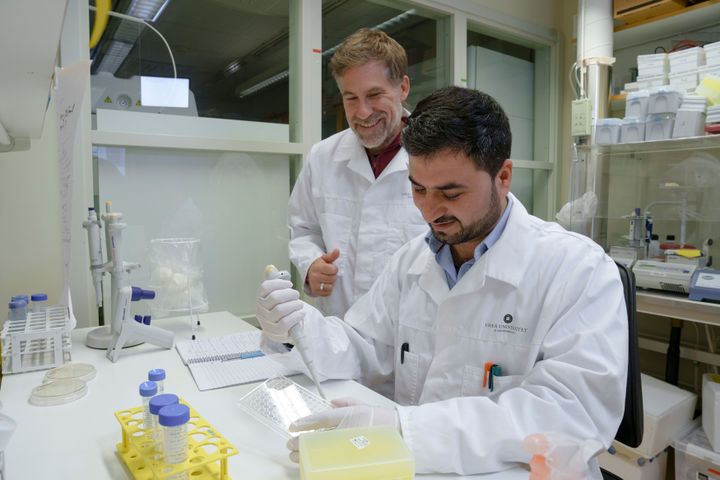
“We show that immune cells drain microbes of zinc, making them more vulnerable. At the same time, the ability of neutrophils to kill microbes is clearly affected by how much zinc is available. Our results reveal the delicate balance of trace metals in the immune system,” says Constantin Urban, professor at the Department of Clinical Microbiology at Umeå University.
Neutrophils are specialized immune cells that respond rapidly to infections by capturing and destroying microbes – a process called phagocytosis. During phagocytosis, the cell surrounds the microbe with its membrane and forms a fluid-filled vesicle, a phagosome, where the microbe is digested.
Trace metals such as zinc, copper, and manganese are vital for the survival of all living organisms, from animals to microbes. During an infection, an intense struggle for these metals occurs, with both disease-causing microbes and the body's immune system trying to gain access to them. This phenomenon is called "nutritional immunity."
Until now, it has been uncertain whether neutrophils can extract zinc ions from microbes inside the phagosome. The prevailing hypothetical model suggests that neutrophils intoxicate microbes by pumping excess zinc into the phagosome.
To answer this question, Constantin Urban and his colleagues used cutting-edge high-resolution chemical imaging techniques to monitor the redistribution of zinc in real-time in neutrophils during phagocytosis. The study used the common model organism Saccharomyces cerevisiae – yeast.
Surprisingly, their data showed that the prevailing theory is incorrect.
“We can show that the movement of zinc is tightly coordinated by the neutrophils, which dynamically regulate the availability of zinc in the phagosome,” says Nadeem Ullah, postdoctoral fellow at the Department of Clinical Microbiology at Umeå University.
The study shows that zinc levels affect the efficiency of neutrophils. When zinc levels were low, yeast cells were killed more efficiently, while high zinc levels in the phagocytized yeast cell significantly impaired the neutrophil's ability to fight microbes. This highlights the importance of a carefully regulated balance of trace metals for a strong immune response.
“Our findings open up new ways to strengthen the immune system,” says Nadeem Ullah. By adjusting zinc levels, we could help neutrophils fight infections more effectively. Understanding how metals, especially zinc, affect immune cells could lead to new treatments for infections and conditions where immune function is weakened.
The research group now plans to continue with studies that focus on the molecular mechanisms behind zinc mobilization.
“In upcoming projects, we want to identify the membrane transporters that control the flow of zinc ions between the phagosome and the microbe,” says Constantin Urban.
About the study
Ullah N., et al. Nanoscale Chemical Imaging of Phagocytosis: A Battle for Metals between Host and Microbe. Journal of Biological Chemistry (2025). https://doi.org/10.1016/j.jbc.2025.110485
Contacts
Constantin Urban
Professor
Department of Clinical Microbiology, Umeå University
+46 90 785 27 02
constantin.urban@umu.se
Nadeem Ullah
Postdoc
Department of Clinical Microbiology, Umeå University
nadeem.ullah@umu.se
Ingrid Söderbergh
Research Coordinator
Umeå Centre for Microbial Research, UCMR, Umeå University
+ 46 70 60 40 334
General Press InquiriesPress Officer
Tel:+46 90 786 50 89press@umu.seImages
About us
Umeå University is a comprehensive university and one of Sweden’s largest higher education institutions with around 38,000 students and 4,600 staff. We have a diverse range of high-quality educational programmes and research within all disciplinary domains and the arts. The University offers world-class educational and research environments and helps expand knowledge of global significance. This is where the groundbreaking discovery was made of the CRISPR-Cas9 gene-editing tool, which was awarded the Nobel Prize in Chemistry. At Umeå University, everything is just around the corner. Our tightly knit campus makes it easy to meet, collaborate and share knowledge, something that encourages a dynamic and open culture.
Subscribe to releases from Umeå University
Subscribe to all the latest releases from Umeå University by registering your e-mail address below. You can unsubscribe at any time.
Latest releases from Umeå University
New findings on drug treatment for Compulsive Sexual Behaviour Disorder8.10.2026 07:45:00 CEST | Press Release
Medication used to treat addiction is no more effective than antidepressants in treating Compulsive Sexual Behaviour Disorder (CSBD). This is shown in a new study from Umeå University and Karolinska Institutet. However, the medications differ in terms of side effects and the way symptoms improve over time.
First country to turn around type 2 diabetes trend7.10.2026 14:13:59 CEST | Press Release
Mauritius is the first country in the world to have successfully reduced the prevalence of type 2 diabetes after decades of rising rates, according to a new study involving researchers from Umeå University. The decline has been observed across all population groups and among both women and men.
3D printers can make advanced research more accessible5.10.2026 08:00:00 CEST | Press Release
Developing new research equipment is often expensive and time-consuming. In his doctoral thesis, Daniel Nilsson at Umeå University demonstrates how standard 3D printers can be used to rapidly manufacture advanced scientific instruments directly in the laboratory.
Researchers discover major ecological shift in the Gulf of Bothnia2.10.2026 10:00:00 CEST | Press Release
For decades, scientists have regarded phosphorus as the main nutrient limiting biological production in the Gulf of Bothnia. Now, a new study led by researchers at Umeå University shows that a fundamental change is underway. The Bothnian Sea has shifted to nitrogen limitation, while the Bothnian Bay is rapidly moving in the same direction.
Bildmuseet: Anneli Furmark / You Are the Centre of the Earth1.10.2026 15:29:11 CEST | Press Release
Anneli Furmark’s works, graphic novels as well as painting, often explore the ways people relate to one another, to the landscape, and to the place. Her narratives frequently unfold in northern settings, with particular attention to houses and built environments. Bildmuseet presents drawings, comics, paintings and sketchbooks from the past fifteen years. Also on view is a film created especially for the exhibition, in which actors give voice to short stories from Furmark’s graphic novels.
In our pressroom you can read all our latest releases, find our press contacts, images, documents and other relevant information about us.
Visit our pressroom