
Human cilia study offers clues to childhood diseases
2.10.2025 11:57:20 CEST | KTH Royal Institute of Technology | Press Release
A new study reveals insights into the "antennae" - or primary cilia - that human cells use for signal processing. This atlas of human cilia may contribute to a better understanding of a range of genetic disorders.
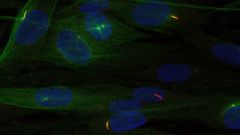
Attached to nearly every human cell is an antenna-like structure known as the primary cilium, which senses the cell’s environment and controls how it responds to signals from its surroundings. New research from the U.S. and Sweden has mapped and identified hundreds of proteins that comprise these structures, contributing new insights for future research into ciliary biology, disease mechanisms and potential therapies.
Publishing in the journal, Cell, researchers from KTH Royal Institute of Technology and Stanford University used advanced imaging and antibody-based techniques to map proteins inside primary cilia across three types of human cells. They analyzed more than 128,000 individual cilia and identified 715 proteins that are located in different parts of the cilium responsible for sensing mechanical or chemical signals, such as hormones. These primary cilia are distinct from motile cilia, which are responsible for movement of fluids or cells.
Professor Emma Lundberg, a researcher in cellular and clinical proteomics at KTH Royal Institute of Technology, says the study also identified a possible gene behind various disorders linked to malfunctions of the cilium. These can lead to disorders affecting many parts of the body, from the brain and eyes to the kidneys and bones.
In addition, the researchers discovered 91 proteins that had never before been linked to cilia.
The study expands the current understanding of cilia, casting then as highly adaptable and versatile processors of information, which tune their protein composition to suit the needs of the cell they belong to.
“Cells seem to customize the protein composition of their cilia to have them perform specific sensing tasks,” she says. “These newly-discovered ciliary proteins inspire many new hypotheses about cilia.”
With clinicians from Karolinska Institute in Stockholm, the team explored the clinical relevance of their findings by comparing their protein list with genetic data from patients with undiagnosed syndromes. In doing so, they found a gene variant, CREB3, in a child with symptoms resembling ciliopathies.
The study’s lead author, Jan Hansen, a researcher with the lab Lundberg leads at Stanford, says this discovery opens the door to identifying new disease-causing genes and better understanding of rare disorders.
It may also lead to improved accuracy in diagnosing ciliopathies, a class of genetic disorders where a diseased gene leads to cilia dysfunction.
“Patients present with diverse symptoms, such as six fingers per hand, mental deficits, blindness, or kidney defects.” Hansen says. But linking rare diseases to cilia has been limited because of the difficulty in studying the cilia protein makeup. “Our spatial atlas of cilia proteins can contribute towards a better understanding and diagnosis of rare ciliopathy disorders, in which patients present with very diverse symptoms.”
The data from the study is publicly available through the Human Protein Atlas, an open resource for scientists and clinicians worldwide. “I’m a strong believer in open science, and we’re proud to share these results openly to the research community,” Lundberg says.
Contacts
Emma LundbergProfessor, KTH Royal Institute of Technology
emmalu@stanford.eduImages
Subscribe to releases from KTH Royal Institute of Technology
Subscribe to all the latest releases from KTH Royal Institute of Technology by registering your e-mail address below. You can unsubscribe at any time.
Latest releases from KTH Royal Institute of Technology
With climate-resilient crops in mind, study tackles flaw in photosynthesis22.10.2026 13:56:58 CEST | Press Release
Rising temperatures and increasing drought are shortening crop growing seasons in many parts of the world. Now scientists in Sweden report new advances toward engineering more efficient photosynthesis, work that could eventually contribute to efforts to adapt crops for climate change.
Now multiple optical devices' stabilizing properties can be identified with a single reprogrammable chip14.10.2026 13:03:08 CEST | Press Release
In optical fibers, chips and other light-guiding devices, minor defects can scatter photons and disrupt their path. A new study demonstrates a way to reveal properties which, in certain systems, help light wave behavior withstand such flaws. The method could help speed up the search for new kinds of electronics and optical technologies, and contribute to more reliable quantum devices.
Researchers identify aggressive molecular features in low-risk prostate cancer7.10.2026 13:41:39 CEST | Press Release
A new study revealed molecular features linked to more aggressive prostate cancer in a subset of patients who had been classified as low risk, highlighting biological differences that may not be apparent from clinical measures alone. The results could lead to new therapeutic strategies.
Why do spruce take decades to reproduce? A genetic study offers new clues14.9.2026 17:41:41 CEST | Press Release
New techniques have enabled researchers in Sweden to begin decoding how one of Northern Europe's most important coniferous tree species switches from growing branches to producing cones – their seed-bearing reproductive organs.
KTH builds Swedish expertise in nitrocellulose2.9.2026 12:54:32 CEST | Press Release
Sweden wants to reduce its dependence on foreign suppliers for nitrocellulose, a raw material central to the production of conventional propellants. KTH is now launching a new competence centre to build up expertise across the entire chain – from forest-based raw materials and manufacturing to safe storage.
In our pressroom you can read all our latest releases, find our press contacts, images, documents and other relevant information about us.
Visit our pressroom