
Pan-disease atlas maps molecular fingerprints of health, disease and aging
10.10.2025 09:52:54 CEST | KTH Royal Institute of Technology | Press Release
A new study has mapped the distinct molecular “fingerprints” that 59 diseases leave in an individual’s blood protein – which would enable blood tests to discern troubling signs from those that are more common.
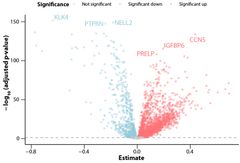
Publishing Thursday in Science, an international team of researchers mapped how thousands of proteins in human blood shift as a result of aging and serious diseases, such as cancer and cardiovascular and autoimmune diseases.
The Human Disease Blood Atlas also reveals that each individual’s blood profile has a unique molecular fingerprint, which changes through childhood and stabilizes in adulthood. This provides a baseline for comparison that healthcare providers could one day use to flag early deviations.
The study’s senior author, Mathias Uhlén, and lead author, María Bueno Álvez, say the study used machine learning that enables information critical for building blood panels that would not misclassify patients in real world settings.
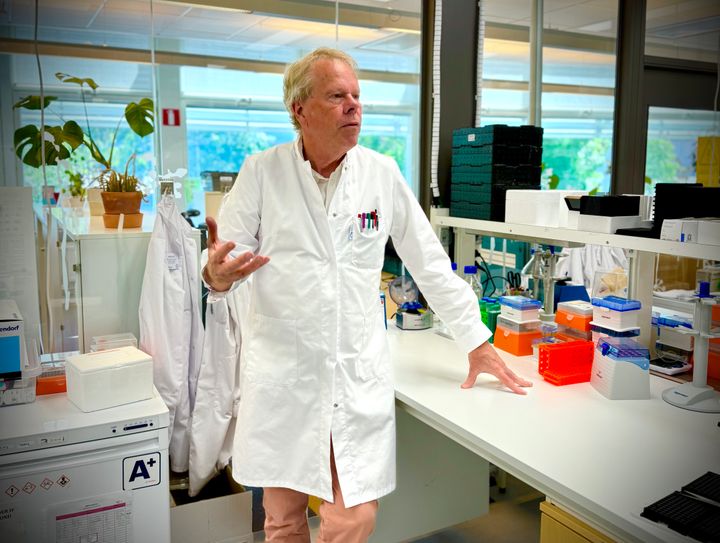
“By comparing these diseases side by side, we can separate universal false alarm bells of inflammation from truly disease specific signals, says Uhlén, a professor at Stockholm’s KTH Royal Institute of Technology and the director of the Human Protein Atlas project.
“The mapping of molecular fingerprints of disease is a crucial step for building blood tests that work in the clinic,” Uhlén says.
For example, many proteins that rise in cancer or autoimmunity also rise in infections, reflecting shared inflammatory pathways, while other patterns such as liver-related conditions are clustered by organ systems. This dual view helps focus on truly disease specific markers, he says.
The Disease Blood Atlas offers a path to solve the problem of identifying reliable, reproducible biomarkers for diseases – a process that to date has typically involved comparing new protein markers against a control, that is, a healthy profile. The researchers point to the study’s success in identifying common biomarkers that are consistently altered in various conditions.
These shared molecular features could serve as universal diagnostic, prognostic or therapeutic targets.
“Every day, around 70 new biomarker studies are published worldwide, but most compare disease against controls,” says Bueno Álvez, a PhD student at KTH and the first author on the paper.
“Because many proteins show variability across multiple conditions, such narrow comparisons often produce results that cannot be reproduced, contributing to the wider reproducibility crisis in today’s science,” she says.
Among the findings was that specific protein profiles can change substantially as individuals approach a cancer diagnosis, with some proteins showing higher concentrations prior to diagnosis. These findings suggest more study should be devoted to investigating the potential of using proteomics for early cancer detection.
The study was carried out through SciLifeLab in Stockholm and involved collaboration with more than 100 researchers worldwide.
Images
Links
Subscribe to releases from KTH Royal Institute of Technology
Subscribe to all the latest releases from KTH Royal Institute of Technology by registering your e-mail address below. You can unsubscribe at any time.
Latest releases from KTH Royal Institute of Technology
With climate-resilient crops in mind, study tackles flaw in photosynthesis22.10.2026 13:56:58 CEST | Press Release
Rising temperatures and increasing drought are shortening crop growing seasons in many parts of the world. Now scientists in Sweden report new advances toward engineering more efficient photosynthesis, work that could eventually contribute to efforts to adapt crops for climate change.
Now multiple optical devices' stabilizing properties can be identified with a single reprogrammable chip14.10.2026 13:03:08 CEST | Press Release
In optical fibers, chips and other light-guiding devices, minor defects can scatter photons and disrupt their path. A new study demonstrates a way to reveal properties which, in certain systems, help light wave behavior withstand such flaws. The method could help speed up the search for new kinds of electronics and optical technologies, and contribute to more reliable quantum devices.
Researchers identify aggressive molecular features in low-risk prostate cancer7.10.2026 13:41:39 CEST | Press Release
A new study revealed molecular features linked to more aggressive prostate cancer in a subset of patients who had been classified as low risk, highlighting biological differences that may not be apparent from clinical measures alone. The results could lead to new therapeutic strategies.
Why do spruce take decades to reproduce? A genetic study offers new clues14.9.2026 17:41:41 CEST | Press Release
New techniques have enabled researchers in Sweden to begin decoding how one of Northern Europe's most important coniferous tree species switches from growing branches to producing cones – their seed-bearing reproductive organs.
KTH builds Swedish expertise in nitrocellulose2.9.2026 12:54:32 CEST | Press Release
Sweden wants to reduce its dependence on foreign suppliers for nitrocellulose, a raw material central to the production of conventional propellants. KTH is now launching a new competence centre to build up expertise across the entire chain – from forest-based raw materials and manufacturing to safe storage.
In our pressroom you can read all our latest releases, find our press contacts, images, documents and other relevant information about us.
Visit our pressroom