
Study explains why new kinds of steel needed to build lead cooled reactors
11.12.2025 14:23:59 CET | KTH Royal Institute of Technology | Press Release
Safer operation, better fuel efficiency and lower waste mark lead-cooled nuclear power as a potentially dramatic shift from the water-cooled nuclear stations the world has relied on since the mid 20th century. A recent Swedish study casts new light on how to avoid corrosion in the steel used to build these next-generation nuclear facilities.
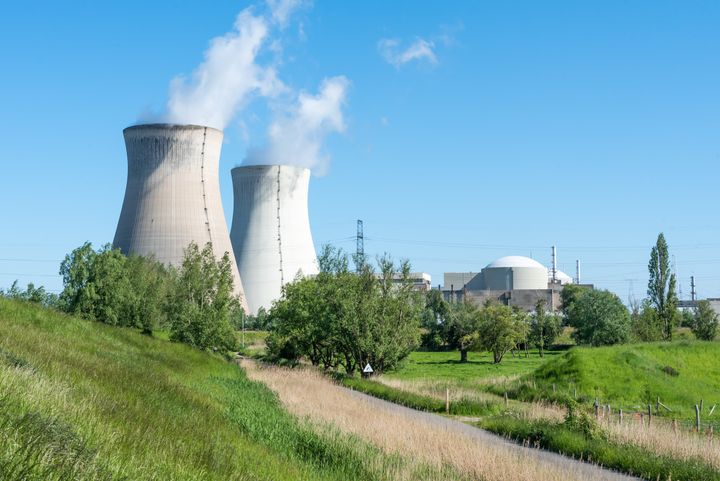
Safer operation, better fuel efficiency and lower waste mark lead-cooled nuclear power as a potentially dramatic shift from the water-cooled nuclear stations the world has relied on since the mid 20th century. A recent Swedish study casts new light on how to avoid corrosion in the steel used to build these next-generation nuclear facilities.
Researchers at Stockholm’s KTH Royal Institute of Technology report new details about how stainless steel corrosion occurs when exposed to liquid lead, revealing why some classes of steel may work better than others, so reactor parts last longer.
The findings were published in the journal, Corrosion Science.
Because liquid lead is highly corrosive to conventional structural steel, development of new steel composites for power plants has been a high priority for the industry.
The new study focused on an alloy known as AISI 316L, whih is preferred for water-cooled nuclear facilities on account of several qualities, including mechanical strength at high temperatures and the ease with which they can be fabricated and welded for complex reactor parts. It is referred to as an austenitic stainless steel, on account of its high nickel content as well as chromium and other elements.
The researchers found that corrosion is initiated by the formation of an ultrathin liquid-lead film—as thin as one micron—that drives rapid dissolution at the steel surface. This finding contradicts assumptions about the corrosion mechanism. And it confirms what many have suspected about why steel deterioration accelerates so dramatically when exposed to liquid lead.
A number of experts in the field have held that ferrite—a type of soft, magnetic iron oxide—grows directly on top of the austenite with liquid lead infiltrating later. The researchers found rather that the austenitic structure destabilizes and begins to decompose at the elemental scale, says Kin Wing Wong and Peter Szakálos, researchers in the Division of Nuclear Science and Engineering at KTH.
Wong says nickel atoms, which are highly soluble in liquid lead, diffuse out of the steel and dissolve into the surrounding metal. The remaining iron and chromium reorganize into a ferritic phase—but this newly formed ferrite is weak and highly porous.
“Under flowing lead, these porous, lead-filled paths are easily torn away, dramatically accelerating material loss,” he says. This explains why liquid flowing lead strips away metal at such a high rate—sometimes several millimeters per year—faster than anyone thought.”
The findings also explain why developing a single “corrosion-proof” austenitic steel is unlikely to work. Liquid lead doesn’t lay on the surface; it seeps in and strips away chromium and nickel from the inside, the structure of austenitic steel gradually falls apart—no matter how its composition is tweaked. Instead, the researchers say the future lies in combining different types of steel so each layer does what it does best.
Wong says one promising option is the new class of alumina-forming ferritic steels (FeCrAl), recently developed at KTH Royal Institute of Technology by Szakálos, which form a thin, self-healing alumina film (Al₂O₃) that demonstrated excellent corrosion resistance even at temperatures up to 800 °C. —well above typical reactor operating temperatures.
“When used together with conventional austenitic steels as layered materials, these materials could provide the long-lasting protection needed for tomorrow’s lead-cooled reactors,” he says.
Images
Subscribe to releases from KTH Royal Institute of Technology
Subscribe to all the latest releases from KTH Royal Institute of Technology by registering your e-mail address below. You can unsubscribe at any time.
Latest releases from KTH Royal Institute of Technology
Now multiple optical devices' stabilizing properties can be identified with a single reprogrammable chip14.10.2026 13:03:08 CEST | Press Release
In optical fibers, chips and other light-guiding devices, minor defects can scatter photons and disrupt their path. A new study demonstrates a way to reveal properties which, in certain systems, help light wave behavior withstand such flaws. The method could help speed up the search for new kinds of electronics and optical technologies, and contribute to more reliable quantum devices.
Researchers identify aggressive molecular features in low-risk prostate cancer7.10.2026 13:41:39 CEST | Press Release
A new study revealed molecular features linked to more aggressive prostate cancer in a subset of patients who had been classified as low risk, highlighting biological differences that may not be apparent from clinical measures alone. The results could lead to new therapeutic strategies.
Why do spruce take decades to reproduce? A genetic study offers new clues14.9.2026 17:41:41 CEST | Press Release
New techniques have enabled researchers in Sweden to begin decoding how one of Northern Europe's most important coniferous tree species switches from growing branches to producing cones – their seed-bearing reproductive organs.
KTH builds Swedish expertise in nitrocellulose2.9.2026 12:54:32 CEST | Press Release
Sweden wants to reduce its dependence on foreign suppliers for nitrocellulose, a raw material central to the production of conventional propellants. KTH is now launching a new competence centre to build up expertise across the entire chain – from forest-based raw materials and manufacturing to safe storage.
'Like uprooting tree stumps' – a simpler method to manufacture biosensors27.8.2026 15:42:00 CEST | Press Release
A new manufacturing method could help move the production of nanoscale sensors from specialized fabrication facilities to conventional semiconductor manufacturing plants.
In our pressroom you can read all our latest releases, find our press contacts, images, documents and other relevant information about us.
Visit our pressroom