
Using agricultural waste to clean wastewater
8.6.2026 08:00:00 CEST | Umeå University | Press Release
Water pollution caused by pharmaceuticals, pesticides, and other organic contaminants is an increasing global issue, especially in regions with limited wastewater treatment infrastructure. A new doctoral thesis from Umeå University, Sweden, offers an innovative and sustainable solution by demonstrating how agricultural waste can be converted into effective materials for water purification.
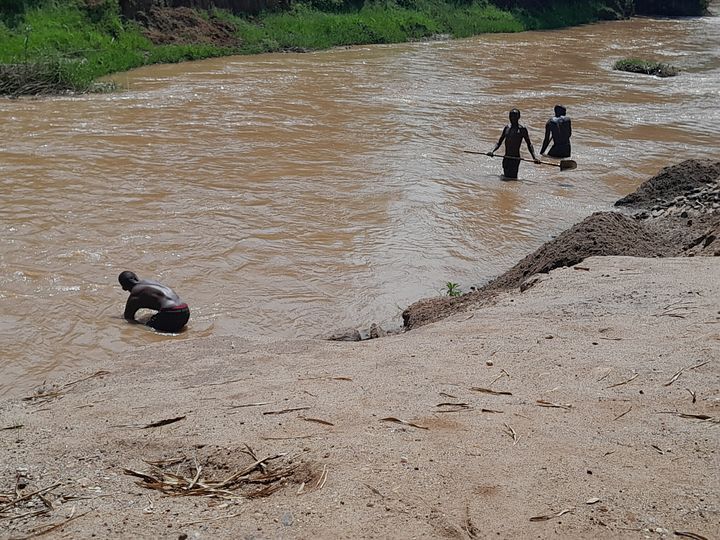
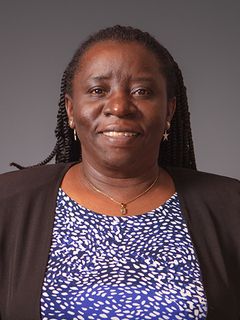
In her doctoral research in Chemistry, Brigitte Mukarunyana demonstrates how biochars and hydrochars, carbon-based materials produced from biomass such as coffee husks, coffee pulp, wood, and sugarcane residues, can effectively remove harmful contaminants from wastewater. The research combines advanced laboratory experiments with field studies to address real-world water pollution challenges.
“Wastewater bears our mark; biomass restores,” says Brigitte Mukarunyana. “This research shows that locally available materials can become part of the solution to protect water resources and public health.”
Traps and adsorbs pollutants
The work focuses on water systems in Rwanda, where rapid urbanization, agriculture, and limited wastewater treatment contribute to widespread pollution. Field investigations revealed high levels of organic contaminants in both hospital wastewater and rivers. In hospital effluent, pharmaceutical concentrations reached 244,000 nanograms per litre, while river samples contained more than 50 different pharmaceutical compounds, alongside pesticides and plant-derived substances. These patterns showed that urban areas are mainly affected by pharmaceutical pollution, while rural and agricultural regions are more impacted by pesticides and natural organic compounds.
To address these challenges, the thesis investigates how agricultural waste can be transformed into water treatment materials through thermochemical processes such as pyrolysis and hydrothermal carbonization. The resulting biochars and hydrochars act as adsorbents, meaning they trap and retain contaminants from water. Experiments using real wastewater demonstrated that these materials can remove between 14 and 66 per cent of pharmaceuticals, approximately 75 per cent of pesticides, and, in some cases, achieve complete removal of specific compounds such as polyphenols. Under optimal conditions, some materials reached removal efficiencies above 90 per cent.
Reduces wastes and costs
A key contribution of the research is explaining why these materials are effective. Their performance depends on several factors, including the type of biomass used, the production process, and the resulting surface structure and chemistry. Rather than being driven by a single factor, pollutant removal is governed by a combination of mechanisms such as chemical interactions, hydrophobic attraction, and trapping within microscopic pores.
The study emphasizes the potential of transforming waste into a valuable resource, endorsing a circular approach where agricultural by-products are reused for environmental safety. This process reduces waste, lowers the cost of water treatment, and creates opportunities for local production of purification materials. It is particularly important for regions where centralized treatment systems are not feasible, as these materials can be produced locally and used in decentralized or small-scale applications.
The research, conducted at the Department of Chemistry at Umeå University in collaboration with international partners, provides a foundation for future development of sustainable water treatment technologies. Continued work will focus on scaling up production, testing the materials in real-life systems, and integrating them with existing treatment methods.
About the thesis defence
On June 12 Brigitte Mukarunyana defends her doctoral thesis titled Biochars and hydrochars for the adsorption of organic contaminants from wastewater. The location is Stora hörsalen, KBC Building, Umeå University. Faculty opponent is docent Sahar Dalahmeh, KTH Royal Institute of Technology.
Contacts
Brigitte Mukarunyanadoctoral studentDepartment of Chemistry, Umeå University
Tel:+46728473193Tel:+250788306427brigitte.mukarunyana@umu.seAnna-Lena LindskogCommunication officerFaculty of Science & Technology
Tel:+46706422956anna-lena.lindskog@umu.seImages
About us
Umeå University is a comprehensive university and one of Sweden’s largest higher education institutions with around 38,000 students and 4,600 staff. We have a diverse range of high-quality educational programmes and research within all disciplinary domains and the arts. The University offers world-class educational and research environments and helps expand knowledge of global significance. This is where the groundbreaking discovery was made of the CRISPR-Cas9 gene-editing tool, which was awarded the Nobel Prize in Chemistry. At Umeå University, everything is just around the corner. Our tightly knit campus makes it easy to meet, collaborate and share knowledge, something that encourages a dynamic and open culture.
Subscribe to releases from Umeå University
Subscribe to all the latest releases from Umeå University by registering your e-mail address below. You can unsubscribe at any time.
Latest releases from Umeå University
Thawing permafrost may trigger overlooked carbon sink in rivers17.6.2026 17:00:00 CEST | Press Release
A new study published in Nature study shows that rock weathering increasingly counteracts river CO₂ emissions as permafrost degrades. The study has been carried out by a collaborative team of researchers from Umeå University, Sweden, and East China Normal University.
Potatoes benefit when two soil bacteria team up16.6.2026 09:00:00 CEST | Press Release
Researchers at Umeå University have shown that two soil bacteria can work together to influence potato development. The bacterial partnership triggered distinct responses in potato plants and was associated with earlier tuber initiation and improved yield under greenhouse conditions. The findings suggest that combinations of beneficial soil bacteria could become a valuable tool for potato growers in the future.
After the war, Mostar is shaped by struggles over memory and the future2.6.2026 13:02:00 CEST | Press Release
What should be preserved, rebuilt or forgotten after a war? A new study from Umeå University shows how conflicts over history, identity and the future continue to shape the Bosnian city of Mostar, three decades after the Bosnian War.
Continuous cover forestry favour hair lichens1.6.2026 08:00:00 CEST | Press Release
Industrial forestry has through clearcutting caused a large-scale decline of hair lichens in Sweden’s forests. Researchers in Umeå University, University of Northern British Columbia, Canada, and Norwegian University of Life Sciences have in a large-scaled field-experiment shown that partial cutting can increase abundance of hair lichens. The study is published in Forest Ecology and Management which publishes original research in forest ecology.
Whole organ 3D imaging reveals remaining insulin producing cells in type 1 diabetes26.5.2026 21:21:47 CEST | Press Release
Researchers at Umeå University have conducted a unique three-dimensional mapping of an entire human pancreas. The study shows that insulin-producing cells can remain long after the onset of type 1 diabetes – a finding that suggests the disease progression is more complex than previously assumed.
In our pressroom you can read all our latest releases, find our press contacts, images, documents and other relevant information about us.
Visit our pressroom