
Potatoes benefit when two soil bacteria team up
16.6.2026 09:00:00 CEST | Umeå University | Press Release
Researchers at Umeå University have shown that two soil bacteria can work together to influence potato development. The bacterial partnership triggered distinct responses in potato plants and was associated with earlier tuber initiation and improved yield under greenhouse conditions. The findings suggest that combinations of beneficial soil bacteria could become a valuable tool for potato growers in the future.
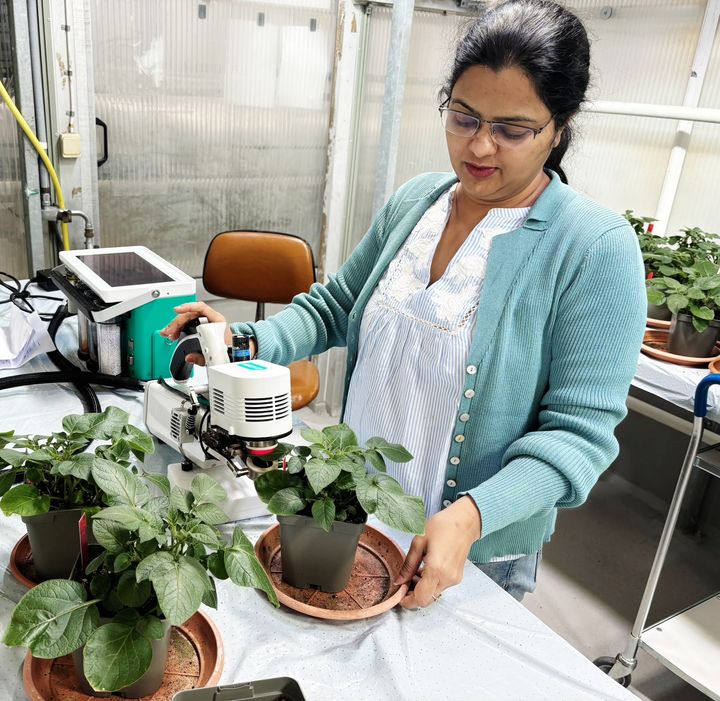
Potato is one of the world's most important food crops and feeds millions of people. Yet maintaining high yields often requires substantial chemical inputs such as fertilisers. Benedicte Albrectsen and her group at the Department of Plant Physiology and Umeå Plant Science Centre therefore investigated whether naturally occurring soil microbes could help support potato production in a more sustainable way.
"We wanted to know if two types of helpful bacteria work even better together than alone," says Benedicte Albrectsen.
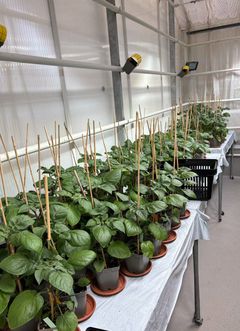
The researchers focused on Pseudomonas protegens and Pseudomonas simiae, two well studied naturally occurring beneficial soil bacteria known to promote plant growth and health. They tested the bacteria individually and in combination to see how they affected potato plants and included different potato cultivars in the study.
Bacteria influence each other
When introduced to potato plants, the bacteria quickly established in the roots and influenced signals involved in tuber formation. The treated plants showed earlier signs of tuber formation than untreated plants, and gene expression analyses revealed increased activity of genes associated with tuber formation. In several cases, the combined treatment produced distinct responses that differed from those observed for the individual bacterial strains.
"We were pleasantly surprised. We anticipated positive effects but the synergistic interactions between the two bacterial strains were more pronounced than we expected," says Benedicte Albrectsen.
To better understand how the two bacterial strains interacted, the researchers analysed both the compounds produced by the bacteria and the responses triggered in the potato plants. With help from the Swedish Metabolomics Centre, they found that the bacteria released a unique mix of compounds when grown together, suggesting that the bacteria influence each other's behaviour.
Affected plant defence
The bacterial treatments affected not only plant growth but also genes involved in tuber formation and plant defence against stress and disease. This suggests that the bacteria influence both potato development and the plant’s ability to respond to challenges in its environment.
The researchers also found changes in tuber quality, including starch and vitamin C content. However, the responses varied between the potato cultivars ‘Mandel’ and ‘Désirée’, both of which are commonly grown in Sweden.
“We now want to test natural combinations of beneficial bacteria under field conditions to see if the greenhouse results translate to agricultural systems. What I find particularly fascinating is how the diversity of soil bacteria can shape potato growth and development. Understanding these interactions could also provide insights relevant to other crop systems,” says Benedicte Albrectsen.
About the study
Arti Mishra, Lovely Mahawar, Angeliki Tsitouri, Jasim Basheer, Benedicte Riber Albrectsen, Plant growth-promoting Pseudomonas strains modulate potato tuberisation signalling and development, Journal of Experimental Botany 2026, DOI: https://doi.org/10.1093/jxb/erag237
Contacts
Benedicte Albrectsenassociate professorDepartment of Plant Physiology, Umeå university
Tel:+46 90 786 70 11benedicte.albrectsen@umu.seAnna-Lena LindskogCommunication officerFaculty of Science & Technology
Tel:+46706422956anna-lena.lindskog@umu.seImages
About us
Umeå University is a comprehensive university and one of Sweden’s largest higher education institutions with around 38,000 students and 4,600 staff. We have a diverse range of high-quality educational programmes and research within all disciplinary domains and the arts. The University offers world-class educational and research environments and helps expand knowledge of global significance. This is where the groundbreaking discovery was made of the CRISPR-Cas9 gene-editing tool, which was awarded the Nobel Prize in Chemistry. At Umeå University, everything is just around the corner. Our tightly knit campus makes it easy to meet, collaborate and share knowledge, something that encourages a dynamic and open culture.
Subscribe to releases from Umeå University
Subscribe to all the latest releases from Umeå University by registering your e-mail address below. You can unsubscribe at any time.
Latest releases from Umeå University
First country to turn around type 2 diabetes trend7.10.2026 14:13:59 CEST | Press Release
Mauritius is the first country in the world to have successfully reduced the prevalence of type 2 diabetes after decades of rising rates, according to a new study involving researchers from Umeå University. The decline has been observed across all population groups and among both women and men.
3D printers can make advanced research more accessible5.10.2026 08:00:00 CEST | Press Release
Developing new research equipment is often expensive and time-consuming. In his doctoral thesis, Daniel Nilsson at Umeå University demonstrates how standard 3D printers can be used to rapidly manufacture advanced scientific instruments directly in the laboratory.
Researchers discover major ecological shift in the Gulf of Bothnia2.10.2026 10:00:00 CEST | Press Release
For decades, scientists have regarded phosphorus as the main nutrient limiting biological production in the Gulf of Bothnia. Now, a new study led by researchers at Umeå University shows that a fundamental change is underway. The Bothnian Sea has shifted to nitrogen limitation, while the Bothnian Bay is rapidly moving in the same direction.
Bildmuseet: Anneli Furmark / You Are the Centre of the Earth1.10.2026 15:29:11 CEST | Press Release
Anneli Furmark’s works, graphic novels as well as painting, often explore the ways people relate to one another, to the landscape, and to the place. Her narratives frequently unfold in northern settings, with particular attention to houses and built environments. Bildmuseet presents drawings, comics, paintings and sketchbooks from the past fifteen years. Also on view is a film created especially for the exhibition, in which actors give voice to short stories from Furmark’s graphic novels.
Bildmuseet: Nina Mangalanayagam / Blank Pages1.10.2026 15:25:46 CEST | Press Release
Drawing on photography, film and sound installation, Nina Mangalanayagam explores questions of belonging and composite identities, often with an autobiographical approach. In a compelling, thought-provoking exhibition at Bildmuseet, she presents new works examining Sweden’s colonial past and its relevance today.
In our pressroom you can read all our latest releases, find our press contacts, images, documents and other relevant information about us.
Visit our pressroom