
New study maps how gut bacteria help and hinder each other's growth
24.8.2026 09:00:00 CEST | Umeå University | Press Release
Researchers at Umeå University have mapped interactions between common gut bacteria, creating one of the most comprehensive datasets of its kind. Published in Nature Communications, the study reveals that most bacteria compete with one another, but also identifies mechanisms through which some bacteria promote the growth of others.
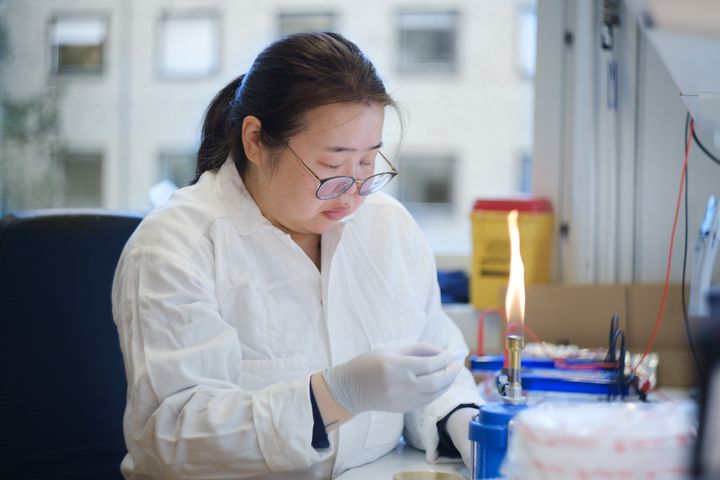
The human gut contains hundreds of microbial species that form complex communities linked to digestion, immune function, and resistance to infection. Despite their importance, the interactions between many microbial species remain poorly understood.
By testing more than 1,200 interactions between 36 representative gut bacterial species, the researchers created one of the most comprehensive datasets of its kind.
Making the environment more acid for others
The results showed that most interactions were negative, meaning that one species limited the growth of another. A major reason was that bacteria altered their environment, particularly by changing its pH, making it more acid.
”Our results show that competition is a dominant feature of the gut microbiome. At the same time, we found specific examples of cooperation and identified the molecular mechanisms behind them,” says Bolor Buyanbadrakh, Postdoctoral Fellow at the Department of Chemistry at Umeå University and first author of the study.
One finding was that Clostridium perfringens promotes the growth of Mediterraneibacter gnavus through the release of extracellular vesicles, tiny particles released by bacteria that can carry molecules between cells. The study provides evidence that such vesicles can directly influence the growth of another bacterial species.
The researchers also discovered that Veillonella parvula can increase the pH of its surroundings, counteracting acidification caused by other bacteria. This change allowed acid-sensitive species, such as Parabacteroides merdae, to grow more effectively, even in more complex microbial communities.
Key to understanding out gut
”Understanding how bacteria influence each other is essential if we want to predict or eventually manipulate microbiome composition in a rational way. Our work provides both a large interaction dataset and mechanistic insights that move the field in that direction,” says André Mateus, assistant professor at the Department of Chemistry and senior author of the study.
About the scientific study
Buyanbadrakh et al., Systematic profiling of growth interactions in human gut microbiome species. Nature Communications 2026.
Contacts
André MateusAssistant ProfessorDepartment of Chemistry
andre.mateus@umu.seSara-Lena BrännströmCommunications officerFaculty of Science & Technology
Tel:+46 90 786 72 24sara-lena.brannstrom@umu.seGeneral Press InquiriesPress Officer
Tel:+46 90 786 50 89press@umu.seImages
About us
Umeå University is a comprehensive university and one of Sweden’s largest higher education institutions with around 38,000 students and 4,600 staff. We have a diverse range of high-quality educational programmes and research within all disciplinary domains and the arts. The University offers world-class educational and research environments and helps expand knowledge of global significance. This is where the groundbreaking discovery was made of the CRISPR-Cas9 gene-editing tool, which was awarded the Nobel Prize in Chemistry. At Umeå University, everything is just around the corner. Our tightly knit campus makes it easy to meet, collaborate and share knowledge, something that encourages a dynamic and open culture.
Subscribe to releases from Umeå University
Subscribe to all the latest releases from Umeå University by registering your e-mail address below. You can unsubscribe at any time.
Latest releases from Umeå University
New findings on drug treatment for Compulsive Sexual Behaviour Disorder8.10.2026 07:45:00 CEST | Press Release
Medication used to treat addiction is no more effective than antidepressants in treating Compulsive Sexual Behaviour Disorder (CSBD). This is shown in a new study from Umeå University and Karolinska Institutet. However, the medications differ in terms of side effects and the way symptoms improve over time.
First country to turn around type 2 diabetes trend7.10.2026 14:13:59 CEST | Press Release
Mauritius is the first country in the world to have successfully reduced the prevalence of type 2 diabetes after decades of rising rates, according to a new study involving researchers from Umeå University. The decline has been observed across all population groups and among both women and men.
3D printers can make advanced research more accessible5.10.2026 08:00:00 CEST | Press Release
Developing new research equipment is often expensive and time-consuming. In his doctoral thesis, Daniel Nilsson at Umeå University demonstrates how standard 3D printers can be used to rapidly manufacture advanced scientific instruments directly in the laboratory.
Researchers discover major ecological shift in the Gulf of Bothnia2.10.2026 10:00:00 CEST | Press Release
For decades, scientists have regarded phosphorus as the main nutrient limiting biological production in the Gulf of Bothnia. Now, a new study led by researchers at Umeå University shows that a fundamental change is underway. The Bothnian Sea has shifted to nitrogen limitation, while the Bothnian Bay is rapidly moving in the same direction.
Bildmuseet: Anneli Furmark / You Are the Centre of the Earth1.10.2026 15:29:11 CEST | Press Release
Anneli Furmark’s works, graphic novels as well as painting, often explore the ways people relate to one another, to the landscape, and to the place. Her narratives frequently unfold in northern settings, with particular attention to houses and built environments. Bildmuseet presents drawings, comics, paintings and sketchbooks from the past fifteen years. Also on view is a film created especially for the exhibition, in which actors give voice to short stories from Furmark’s graphic novels.
In our pressroom you can read all our latest releases, find our press contacts, images, documents and other relevant information about us.
Visit our pressroom