
A few minutes of freezing can change the fate of iron in nature
27.8.2026 09:00:00 CEST | Umeå University | Press Release
Just a few minutes of freezing and thawing can have a decisive impact on how ferrihydrite, the most reactive iron mineral in cold soils, permafrost and glaciers, transforms, according to researchers at Umeå University in a paper published in the journal Science. As climate warming intensifies freeze-thaw cycles and extends them into new regions, ice is becoming an increasingly important driver of Earth's ecosystems.
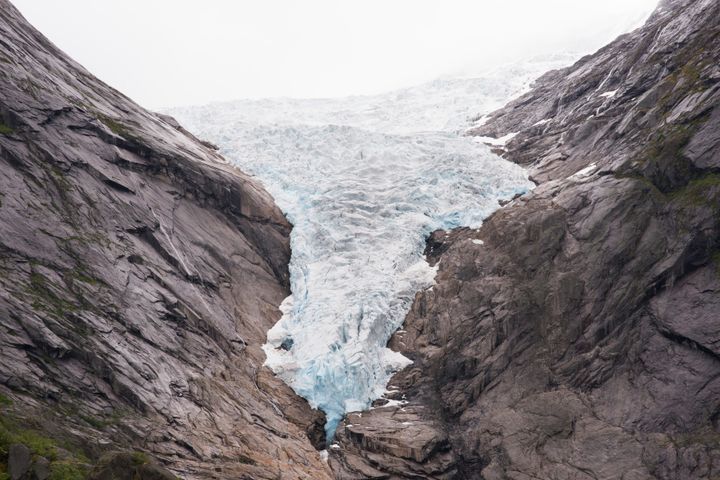
“Ice is not a passive freezer but an active geochemical reactor that can alter how an iron mineral transforms in just a few minutes,” says Professor Jean-François Boily of the Department of Chemistry at Umeå University, who led the study.
Ice is not simply a frozen block of water. In nature, ice can lock in a wide range of compounds, including minerals and organic carbon. Among the most consequential of these are the iron minerals, because what happens to them while they are trapped in ice determines how iron behaves once the ice melts.
Iron is one of the most abundant elements in Earth's crust and an essential metal for most living organisms. As rocks weather, iron is released and reacts with oxygen and water to form secondary iron minerals.
Cascading effects throughout ecosystems
These iron oxides are found across vast areas of the Earth's surface. They can be seen as rust-coloured coatings on rocks and as fine particles in soil, but they are also present in aquatic environments and in the atmosphere. Changes in how iron is released can have cascading effects throughout ecosystems, from mountain streams to Arctic coastal regions.
In the current study, the researchers investigated ferrihydrite, a poorly ordered iron oxide only a few nanometres in size. Ferrihydrite is the dominant reactive iron phase in glacial sediments, icebergs and cold soils. Its large surface area allows it to bind substantial amounts of nutrients, pollutants and organic carbon. Whether ferrihydrite retains its reactive surface or transforms into a less reactive mineral determines how much bioavailable iron reaches polar oceans and how much carbon remains stored in frozen ground.
When water freezes, microscopic pockets of liquid form between the growing ice crystals. Substances that cannot be incorporated into the ice become concentrated within these pockets. The researchers found that this confinement, together with the force that draws unfrozen water towards the advancing ice front, presses the ferrihydrite particles together, strips away the layer of water and hydroxyl groups that normally surrounds them, and joins them into much larger aggregates.
“The particles emerge from the ice bonded together, not simply clumped,” says Jean-François Boily. “We could expose them to ultrasound and keep them in acid for a month without them falling apart.”
Analyses using electron microscopy and other techniques showed that a single freeze cycle at −20 °C increased ferrihydrite particle size by around thirty times. Micrometre-sized flakes formed, inheriting their flattened shape from the grain boundaries of the ice that created them. Freezing the material again made little difference, as most of the transformation occurred during the very first freezing event.
The researchers then allowed both fresh and freeze-treated samples to age in water for a full year. Ferrihydrite that had never been frozen transformed into goethite, the yellow-brown rust commonly found in cool, moist soils. Ferrihydrite that had been frozen only once produced no goethite at all and, under accelerated ageing conditions, transformed instead into hematite, the red rust associated with warm, dry soils.
Light-driven iron-cycling can be accelerated
This reversal in mineral formation has implications far beyond the laboratory. The ratio of goethite to hematite in ancient soils is often used to reconstruct past climates, while the oxygen isotopes preserved in these minerals are used to estimate historical temperatures. Both of these climate proxies, however, assume that mineral transformations occurred in liquid water.
Hematite also absorbs a broader range of solar wavelengths than goethite. As a result, a freeze-driven shift towards greater hematite formation could accelerate light-driven iron cycling wherever polar soils thaw under sunlight.
In an accompanying commentary published in the same issue of Science, geochemist Kevin M. Rosso of Pacific Northwest National Laboratory in the United States writes that understanding ice as an active geochemical reactor is no longer a niche concern for ice and snow researchers, but a central challenge in understanding the geochemical cycling of iron at the Earth's surface.
Read Kevin M. Rosso's commentary
As freeze-thaw cycles become more frequent and spread geographically in a warming climate, understanding how ice affects the transformation of iron minerals, and how this in turn influences ecosystems, is becoming increasingly important.
About the study
Tao Luo, Tao Chen, Tra My Bui Thi, James Behan, Crispin Hetherington, Khalil Hanna and Jean-François Boily, A single freeze cycle redirects iron mineral transformation, Science, Vol. 393, No. 6807, DOI 10.1126/science.aee9519.
Contacts
Jean-François BoilyProfessorDepartment of Chemistry, Umeå University
Tel:+46 90 786 52 70jean-francois.boily@umu.seAnna-Lena LindskogCommunication officerFaculty of Science & Technology
Tel:+46706422956anna-lena.lindskog@umu.seImages
About us
Umeå University is a comprehensive university and one of Sweden’s largest higher education institutions with around 38,000 students and 4,600 staff. We have a diverse range of high-quality educational programmes and research within all disciplinary domains and the arts. The University offers world-class educational and research environments and helps expand knowledge of global significance. This is where the groundbreaking discovery was made of the CRISPR-Cas9 gene-editing tool, which was awarded the Nobel Prize in Chemistry. At Umeå University, everything is just around the corner. Our tightly knit campus makes it easy to meet, collaborate and share knowledge, something that encourages a dynamic and open culture.
Subscribe to releases from Umeå University
Subscribe to all the latest releases from Umeå University by registering your e-mail address below. You can unsubscribe at any time.
Latest releases from Umeå University
New findings on drug treatment for Compulsive Sexual Behaviour Disorder8.10.2026 07:45:00 CEST | Press Release
Medication used to treat addiction is no more effective than antidepressants in treating Compulsive Sexual Behaviour Disorder (CSBD). This is shown in a new study from Umeå University and Karolinska Institutet. However, the medications differ in terms of side effects and the way symptoms improve over time.
First country to turn around type 2 diabetes trend7.10.2026 14:13:59 CEST | Press Release
Mauritius is the first country in the world to have successfully reduced the prevalence of type 2 diabetes after decades of rising rates, according to a new study involving researchers from Umeå University. The decline has been observed across all population groups and among both women and men.
3D printers can make advanced research more accessible5.10.2026 08:00:00 CEST | Press Release
Developing new research equipment is often expensive and time-consuming. In his doctoral thesis, Daniel Nilsson at Umeå University demonstrates how standard 3D printers can be used to rapidly manufacture advanced scientific instruments directly in the laboratory.
Researchers discover major ecological shift in the Gulf of Bothnia2.10.2026 10:00:00 CEST | Press Release
For decades, scientists have regarded phosphorus as the main nutrient limiting biological production in the Gulf of Bothnia. Now, a new study led by researchers at Umeå University shows that a fundamental change is underway. The Bothnian Sea has shifted to nitrogen limitation, while the Bothnian Bay is rapidly moving in the same direction.
Bildmuseet: Anneli Furmark / You Are the Centre of the Earth1.10.2026 15:29:11 CEST | Press Release
Anneli Furmark’s works, graphic novels as well as painting, often explore the ways people relate to one another, to the landscape, and to the place. Her narratives frequently unfold in northern settings, with particular attention to houses and built environments. Bildmuseet presents drawings, comics, paintings and sketchbooks from the past fifteen years. Also on view is a film created especially for the exhibition, in which actors give voice to short stories from Furmark’s graphic novels.
In our pressroom you can read all our latest releases, find our press contacts, images, documents and other relevant information about us.
Visit our pressroom