
Recreating heatwaves in the lab to help older people stay well at home
5.11.2026 12:00:00 CET | Umeå University | Press Release
A climate chamber, virtual environments and technology that monitors the body and brain. Using these resources, researchers at Umeå University will identify ways to protect older adults’ mental well-being during heatwaves at home in northern Sweden.
The project has received nearly SEK 9 million from Formas, the Swedish research council for sustainable development. It is led by Weizhuo Lu, professor and director of the Intelligent Human-Buildings Interaction Lab, IHBI.
In the IHBI, researchers use a climate chamber and virtual environments designed to look and feel like ordinary homes. This allows participants to feel as if they are at home, while researchers can carefully control the indoor climate.
How the body and brain respond
The lab is also equipped with physiological sensors and equipment for monitoring brain activity. Together with people’s own accounts of how they feel, the technology helps researchers investigate the links between indoor heat, physiological responses, stress, fatigue and mental well-being.
“The strength of our lab is that we can study the indoor environment and human responses together. Our equipment allows us to investigate how people experience heat and which adaptations make a meaningful difference to their well-being,” says Weizhuo Lu, who works at the Department of Applied Physics and Electronics.
The project brings together building research, psychology and neuroscience in the same experimental setting. By recreating and comparing indoor conditions, the researchers can gain a stronger basis for understanding the effects of heat and evaluating measures to reduce its impact.
Helping older people adapt at home
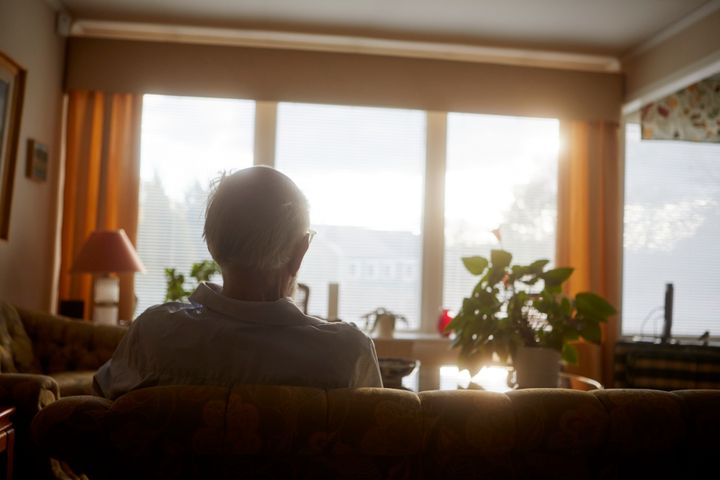
As many older people continue living in their own homes, adapting ordinary housing to a warmer climate is an important public health challenge. For older residents, heat can affect sleep, mood and the ability to cope with everyday life. The researchers will look in particular at differences in housing conditions, mobility, financial resources and social support, all of which influence people’s ability to respond to heat.
“A home should remain a place where people can rest, recover and manage everyday life, even during a heatwave. We want to provide advice that works in different homes and is realistic for people with different needs and resources,” says Weizhuo Lu.
The project focuses on northern Sweden, where homes have traditionally been designed to retain warmth through cold winters, with good insulation and energy-efficient building envelopes. This can make them more difficult to keep cool in summer.
The results will support practical guidance on measures such as solar shading and ventilation, as well as on everyday ways of managing indoor heat. The advice will be developed in dialogue with older people, relatives, senior citizens’ organisations and Umeå Municipality. It is intended both to help residents make informed choices and support municipalities and housing organisations in planning effective and accessible climate adaptation.
About the project
The project “Ageing at Home During Heatwaves in Northern Sweden: Protecting Mental Well-being through Evidence-Based Indoor Climate Adaptation” runs from 2026 to 2030.
Journalists are welcome to visit the lab and cover the experiments. Small-scale internal pilot tests are expected to begin in early December or January.
The research team includes Weizhuo Lu and Kailun Feng at the Department of Applied Physics and Electronics, and Linus Andersson, Johan Eriksson and Gustaf Wadenholt at the Department of Psychology.
The IHBI Lab was included in the Royal Swedish Academy of Engineering Sciences’ IVA 100 List in 2023, recognising research with strong potential to benefit society.
Contacts
Weizhuo LuProfessor and director of the IHBI LabDepartment of Applied Physics and Electronics
Tel:+46 90 786 62 57weizhuo.lu@umu.seSara-Lena BrännströmCommunications officerFaculty of Science & Technology
Tel:+46 90 786 72 24sara-lena.brannstrom@umu.seGeneral Press InquiriesPress Officer
Tel:+46 70-610 08 05press@umu.seImages

About us
Umeå University is a comprehensive university and one of Sweden’s largest higher education institutions with around 38,000 students and 4,600 staff. We have a diverse range of high-quality educational programmes and research within all disciplinary domains and the arts. The University offers world-class educational and research environments and helps expand knowledge of global significance. This is where the groundbreaking discovery was made of the CRISPR-Cas9 gene-editing tool, which was awarded the Nobel Prize in Chemistry. At Umeå University, everything is just around the corner. Our tightly knit campus makes it easy to meet, collaborate and share knowledge, something that encourages a dynamic and open culture.
Subscribe to releases from Umeå University
Subscribe to all the latest releases from Umeå University by registering your e-mail address below. You can unsubscribe at any time.
Latest releases from Umeå University
Bildmuseet: New book on AI, art and agency4.11.2026 08:00:00 CET | Press Release
The use of AI raises fundamental questions about who or what has agency. What happens when decision-making power shifts away from the individual? What does it mean for artists, for society, for the planet and for the future of humanity? A new publication from Bildmuseet at Umeå University explores these urgent questions.
New findings on drug treatment for Compulsive Sexual Behaviour Disorder8.10.2026 07:45:00 CEST | Press Release
Medication used to treat addiction is no more effective than antidepressants in treating Compulsive Sexual Behaviour Disorder (CSBD). This is shown in a new study from Umeå University and Karolinska Institutet. However, the medications differ in terms of side effects and the way symptoms improve over time.
First country to turn around type 2 diabetes trend7.10.2026 14:13:59 CEST | Press Release
Mauritius is the first country in the world to have successfully reduced the prevalence of type 2 diabetes after decades of rising rates, according to a new study involving researchers from Umeå University. The decline has been observed across all population groups and among both women and men.
3D printers can make advanced research more accessible5.10.2026 08:00:00 CEST | Press Release
Developing new research equipment is often expensive and time-consuming. In his doctoral thesis, Daniel Nilsson at Umeå University demonstrates how standard 3D printers can be used to rapidly manufacture advanced scientific instruments directly in the laboratory.
Researchers discover major ecological shift in the Gulf of Bothnia2.10.2026 10:00:00 CEST | Press Release
For decades, scientists have regarded phosphorus as the main nutrient limiting biological production in the Gulf of Bothnia. Now, a new study led by researchers at Umeå University shows that a fundamental change is underway. The Bothnian Sea has shifted to nitrogen limitation, while the Bothnian Bay is rapidly moving in the same direction.
In our pressroom you can read all our latest releases, find our press contacts, images, documents and other relevant information about us.
Visit our pressroom