
Disabling cells’ ‘clean-up crew’ could speed drug target production
18.11.2026 14:34:29 CET | KTH Royal Institute of Technology | Press Release
With an unusual genetic modification which disabled cells’ recycling systems, researchers found a way to make cells produce significantly larger amounts of the proteins used to discover and develop new medicines. The findings could help speed up drug development while reducing research and development costs.
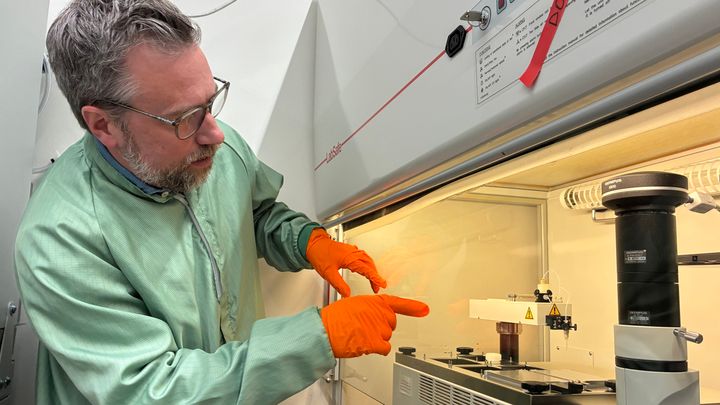
- KTH Royal Institute of Technology and AstraZeneca researchers disabled autophagy initating gene, ULK1
- Production of target proteins GIPR, GPR75 and P2X3 increased by 30, 80 and 100 Percent, respectively.
- The modified cell line produced significantly more usable protein, including several membrane proteins
Researchers at KTH Royal Institute of Technology, in collaboration with AstraZeneca, reported significantly higher production of membrane proteins in a human cell line widely used in pharmaceutical research. They did so by disabling the pathway that cells normally rely on to recycle their own proteins. The result was increased production of three difficult-to-make target proteins – GIPR, GPR75 and P2X3 – by 30, 80 and 100 percent, respectively.
Published in the journal, Cell Systems, the study addresses a persistent bottleneck in drug discovery: producing enough membrane proteins for research and development. Even though membrane proteins are the targets of around 60 percent of approved medicines, they’re notoriously difficult to manufacture in useful quantities. (DOI: https://doi.org/10.1016/j.cels.2026.101779)
The team pursued the gene modification based on an unconventional hypothesis, says Johan Rockberg, professor of directed evolution at KTH. Rather than follow the well-worn path of trying to boost the production machinery in cells, the team instead disabled what Rockberg calls a cell’s “clean-up crew” – or more specifically, the gene ULK1.
ULK1 initiates autophagy, the process by which cells break down and recycle proteins and organelle. It’s generally considered necessary for cell health, but the study shows removing the gene did no harm to the cells.
“The modified cell line produced significantly more usable protein, including several membrane proteins,” Rockberg says.
"We expected cells without working autophagy to struggle,” he says. “Instead, they produced more, and they did best with exactly the proteins that are usually hardest to obtain.”
To understand how the cells coped with the removal of such a central part of their machinery, Alice Karlsson, doctoral student in biotechnology at KTH, took a deep dive into activity within the cells.
"The most rewarding part was seeing the effect of knocking out ULK1 and that it led to clear signs in the transcriptome with downregulation of autophagy and downstream processes,” Karlsson says.
“The biggest surprise was that it also translated into higher yields of our model proteins,” she says.
The finding points to autophagy as a target for host cell engineering more broadly, alongside the established approaches of strengthening the secretory machinery.
Beyond manufacturing, the observed effects on cellular metabolism and protein turnover may also be of interest where those processes play a central role, such as in neurodegenerative conditions marked by protein aggregation and impaired clearance.
-----------------------------------------
The study is a collaboration between KTH and AstraZeneca, with PhD student Alice Karlsson (KTH) as first author with Melanie Dannemeyer (AZ) and Robert G. Roth (AZ) and Johan Rockberg (KTH) as corresponding authors. The work was funded by the Knut and Alice Wallenberg Foundation, AstraZeneca and the Swedish innovation agency Vinnova through GeneNova, AAVNova, CellNova and AdBIOPRO.
Images
Links
Subscribe to releases from KTH Royal Institute of Technology
Subscribe to all the latest releases from KTH Royal Institute of Technology by registering your e-mail address below. You can unsubscribe at any time.
Latest releases from KTH Royal Institute of Technology
Five top Nordic universities join forces to scale deeptech startups18.11.2026 15:21:59 CET | Press Release
Today at Slush in Helsinki, five leading technical universities are launching a new collaboration that will let research-based deep tech startups access opportunities across the region to help them scale faster and compete globally.
Beyond food: Bran-based gels show potential for targeted drug delivery11.11.2026 14:02:45 CET | Press Release
When it comes to colon health, the benefits of wheat and rye bran in wholegrain foods are well-known. Now researchers in Sweden have shown how these fibers may have a therapeutic use, too. A new study demonstrates the potential to marshal bran fiber for direct delivery of drugs treating colon diseases like ulcerative colitis, Crohn's or colorectal cancer.
With climate-resilient crops in mind, study tackles flaw in photosynthesis22.10.2026 13:56:58 CEST | Press Release
Rising temperatures and increasing drought are shortening crop growing seasons in many parts of the world. Now scientists in Sweden report new advances toward engineering more efficient photosynthesis, work that could eventually contribute to efforts to adapt crops for climate change.
Now multiple optical devices' stabilizing properties can be identified with a single reprogrammable chip14.10.2026 13:03:08 CEST | Press Release
In optical fibers, chips and other light-guiding devices, minor defects can scatter photons and disrupt their path. A new study demonstrates a way to reveal properties which, in certain systems, help light wave behavior withstand such flaws. The method could help speed up the search for new kinds of electronics and optical technologies, and contribute to more reliable quantum devices.
Researchers identify aggressive molecular features in low-risk prostate cancer7.10.2026 13:41:39 CEST | Press Release
A new study revealed molecular features linked to more aggressive prostate cancer in a subset of patients who had been classified as low risk, highlighting biological differences that may not be apparent from clinical measures alone. The results could lead to new therapeutic strategies.
In our pressroom you can read all our latest releases, find our press contacts, images, documents and other relevant information about us.
Visit our pressroom