
New report: How funeral practices have changed in the past 10 years
11.11.2021 17:15:51 CET | Svenska kyrkan | Press Release
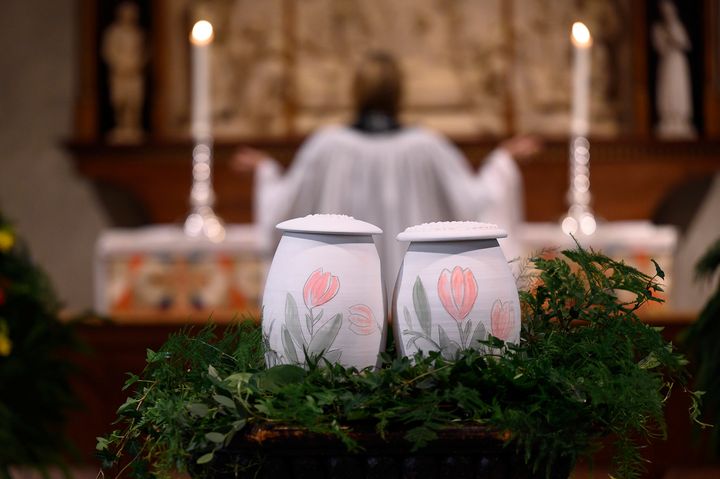
During the 2010–2020 period, the percentage of funerals held according to the Church of Sweden’s order of service fell from 81 to 65 percent of the total number of funerals in Sweden. Over the same period, civil funerals increased from 8 to 14 percent*. ‘Direct’ or ‘unattended’ funerals, in which the remains of the deceased are buried without a recognised ceremony, have also increased during this period, from 2 to 11 percent.
These figures are presented in a report entitled A ‘Real’ Funeral: Changes in Funeral Practices in the Church of Sweden, 2010–2020.
The report looks at changes in funeral practices and interviews employees of the Church of Sweden and funeral directors about their views on these developments.
A general finding is that the modern emphasis on individualisation and freedom of choice in society is also reflected in funeral practices.
“The ability to be actively involved and influence the final farewell really matters to a lot of people these days. It’s a way of affirming the relationship with their loved one,” said Kristina Helgesson Kjellin, researcher at the research and analysis unit of the Central Church Office in Uppsala, which produced the report.
This can include the choice of location and venue, music and decorations, and the opportunity for attendees to actively participate in the funeral ceremony, for instance by saying a few words to remember the deceased. According to the report, it appears it is this freedom of choice, rather than a desire to avoid religious elements, that is making the option of a civil funeral more common.
“There are examples of civil funerals also containing clear Christian elements, such as hymns and prayers. The key thing seems to be a perception of greater freedom to personalise the ceremony,” said Kristina Helgesson Kjellin.
Increase in direct funerals
The increase in ‘direct’ or ‘unattended’ funerals has attracted attention in recent years. It has usually been attributed to factors such as a lack of time or a reluctance to confront death.
But the report shows that the picture is more complex. In the case of direct funerals, it’s not uncommon for there to also be ceremonial elements. This may involve gathering around the deathbed for a communal farewell or private moments of remembrance, which aren’t reflected in the statistics. This is why the funeral industry has started using the term ‘funeral with no recognised ceremony’ for this type of funeral.
New forms of burial ground
The report also looks at the emergence of new burial grounds such as gardens of remembrance. There may be practical reasons for this development, such as not having to tend a gravestone. But it’s important for the location to be significant, and that it fulfils the deceased’s wishes and the needs of the relatives.
The coronavirus pandemic
The report also highlights the impact of the coronavirus pandemic on funeral practices. Cremation and urn ceremonies increased during the pandemic, often as there was no alternative. New ways of marking our farewell and celebrating the life of the deceased have also arisen, as restrictions have meant that relatives were unable to come together for a funeral service as usual. Live streaming of funerals is also something that both the funeral industry and Church of Sweden parishes agree is here to stay, which places new demands on digital infrastructure in churches.
Communication challenges
The report highlights how the funeral industry and the Church of Sweden’s communication with the public is reinforcing the image that civil funerals are personalised, while a church funeral tends to appear less flexible than it actually is.
“For the Church of Sweden, it’s a balancing act between emphasising the power of the traditional ceremony and being open to the wishes of relatives. New forms may have to be created in response to these developments,” said Kristina Helgesson Kjellin.
About the report
The report A ‘Real’ Funeral: Changes in Funeral Practices in the Church of Sweden, 2010–2020 was written by researchers Andreas Sandberg, Lena Sjöberg and Kristina Helgesson Kjellin at the Central Church Office in Uppsala. It is based on statistics from the funeral industry, Statistics Sweden and the Church of Sweden, as well as in-depth interviews with employees in six Church of Sweden parishes around Sweden and representatives of funeral directors near these parishes. The report has also analysed material from the websites of the Church of Sweden and funeral directors.
The report is attached to this press release.
*The figures on civil funerals and direct funerals are based on the funeral industry’s statistics, which are not comprehensive but provide an approximate idea of changes during the 2010s.
Keywords
Contacts
Press secretary on duty
Tel:+46 18 16 94 75Images
Documents
About Svenska kyrkan

The Church of Sweden is a national church, open to everyone living in Sweden regardless of nationality. It is a place for church services, meetings and dialogue. The Church of Sweden is an Evangelical Lutheran church with 5,9 million members. There are 3500 churches in Sweden, and 13 dioceses.
The international work
Collaborating and cooperating with other churches and organisations is at the core of the Church of Sweden´s international mission. As a church, we are part of the worldwide community of churches.
Subscribe to releases from Svenska kyrkan
Subscribe to all the latest releases from Svenska kyrkan by registering your e-mail address below. You can unsubscribe at any time.
Latest releases from Svenska kyrkan
Opinion: Uphold the UNCRC and prioritise preventive measures30.3.2026 13:20:43 CEST | Press Release
On behalf of the General Synod, the Church of Sweden is expressing concern that increasingly younger children are being engaged in serious crime and reacting to the Swedish Government’s proposals to establish youth prisons and lower the age of criminal responsibility. The opinion emphasises the importance of policies that uphold the Convention on the Rights of the Child and prioritise preventive measures over repressive measures.
Uttalande: Värna barnkonventionen och prioritera förebyggande insatser30.3.2026 09:14:44 CEST | Pressmeddelande
På uppdrag av kyrkomötet uttrycker Svenska kyrkan oro över att allt yngre barn dras in i grov kriminalitet och reagerar på regeringens förslag om ungdomsfängelser och sänkt straffbarhetsålder. I uttalandet betonas vikten av att politiken värnar barnkonventionen och prioriterar förebyggande insatser framför repressiva åtgärder.
Kronprinsessan Victoria besökte Act Svenska kyrkan26.3.2026 08:59:44 CET | Pressmeddelande
På onsdagen träffade Kronprinsessan Victoria Act Svenska kyrkan på kyrkokansliet i Uppsala för att få en uppdatering om verksamheten och ta del av aktuella frågor som rör arbetet med partnerorganisationer runt om i världen.
Youth Film Award for drama about responsibility and reconciliation13.3.2026 14:43:55 CET | Press Release
The film Olmo, by director Fernando Eimbcke, is the winner of the Church of Sweden Youth Film Award 2026. The award was presented this evening, Thursday, duringthe children and youth film festival, BUFF, currently being held in Malmö.
Ungdomsfilmpris till drama om ansvar och försoning12.3.2026 20:39:27 CET | Pressmeddelande
Filmen Olmo, av regissören Fernando Eimbcke får Svenska kyrkans ungdomsfilmpris 2026. Priset delades ut ikväll torsdag under den pågående Barn- och ungdomsfilmfestivalen, BUFF, i Malmö.
In our pressroom you can read all our latest releases, find our press contacts, images, documents and other relevant information about us.
Visit our pressroom