Gel from mucus improves bone graft results and promotes healing
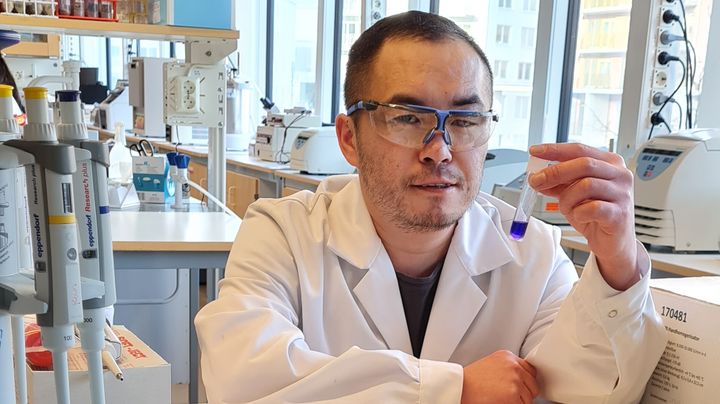
Molecules from mucus can be used to produce synthetic bone graft material and help with the healing of larger bone loss, a new study found.
Researchers at KTH Royal Institute of Technology in Stockholm report the development of a bioactive gel which they say could replace the clinical gold standard of autografting, in which lost bone is replaced with healthy bone taken from another part of the patient’s body.
Hongji Yan, a researcher at KTH Royal Institute of Technology, says the gel contains mucins, molecules which were derived from cow mucus. The mucins are processed into gels which are combined with monetite granules, a commonly-used synthetic bone graft material. The synthetic gel can be injected to the site of the bone loss.
In tests on lab rats with cranial injuries, researchers found that this biomaterial can help solve two key requirements for successful healing of bone defects. It promotes formation of bone and blood vessels and it interacts with the immune system. The results were published in the scientific journal, Bioactive Materials.
As the main solid components of mucus, mucins give mucus its viscosity, and can balance the reaction of the immune system. Mucins can for example modulate immune cells and mitigate inflammation. But Yan says this is the first study to show how these qualities work with tissue repair.
Bodily tissue is loaded with blood vessels and bones are no exception. When bone defects are on the mend, newly formed bone needs to be engulfed into the host bone’s vasculature—that network of blood vessels that connect the new bone to the heart.
Yan says the research raises hopes for better outcomes in a wide range of procedures for treating larger bone loss.
“Mucus protects the body from invaders such as bacteria and viruses, and maintains hemostasis in tissues, where mucins play an important role,” Yan says. “The regenerative approach, using the body's own cells through synthetic active material, offers a way to promote bone healing.
“Grafting from a patient’s own bone tissue has limits. There may be an inadequate supply of healthy tissue, and it can be especially risky for people with poor bone quality such as the elderly,” he says.
The material is however not ready for clinical use, and further studies with larger animals are planned by the research group.
The research was carried out together with groups led by Song Chen and Bin Li at Soochow University, China, and Håvard J. Haugen at the University of Oslo, Norway.
Keywords
Images
Links
About KTH Royal Institute of Technology

Founded in 1827, KTH Royal Institute of Technology in Stockholm is one of the world's leading technical and engineering universities, as well as a key center of intellectual talent and innovation.
Subscribe to releases from KTH Royal Institute of Technology
Subscribe to all the latest releases from KTH Royal Institute of Technology by registering your e-mail address below. You can unsubscribe at any time.
Latest releases from KTH Royal Institute of Technology
Study explains why new kinds of steel needed to build lead cooled reactors11.12.2025 14:23:59 CET | Press Release
Safer operation, better fuel efficiency and lower waste mark lead-cooled nuclear power as a potentially dramatic shift from the water-cooled nuclear stations the world has relied on since the mid 20th century. A recent Swedish study casts new light on how to avoid corrosion in the steel used to build these next-generation nuclear facilities.
Alternative to BPA passes toxicity and sustainability standards set by EU innovation guidelines4.12.2025 11:07:37 CET | Press Release
Polyester and a host of other plastic products could potentially be manufactured with non-toxic and sustainable BPA alternatives identified in a multidisciplinary study published today by researchers in Sweden.
Study shows potential for more affordable and efficient hydrogen gas production3.12.2025 15:29:35 CET | Press Release
A recent advance in the science of hydrogen fuel production could enable higher output and more sustainable production of this renewable energy source, researchers with Stockholm’s KTH Royal Institute of Technology report.
Calcium-sensitive switch designed to boost efficacy of cancer drugs24.11.2025 21:11:53 CET | Press Release
Cancer-fighting antibody drugs are designed to penetrate tumor cells and release a lethal payload deep within, but too often they don’t make it that far. A new study shows how this Trojan Horse strategy works better by exploiting calcium differences outside and inside cells.
Potential treatment may prevent brain damage in premature babies11.11.2025 11:10:46 CET | Press Release
A treatment that could protect premature babies from brain damage showed promise in a recent study in Sweden. Using a first-of-its-kind prenatal brain model created with human cells, researchers observed new details about the effects of cerebral hemorrhages on stem cells during premature birth. And they successfully tested an antidote that reduced the damage.
In our pressroom you can read all our latest releases, find our press contacts, images, documents and other relevant information about us.
Visit our pressroom