
Wheat bran research shows fiber- and protein-rich food gels can be entirely plant-based
18.3.2026 12:56:57 CET | KTH Royal Institute of Technology | Press Release
Scientists in Sweden have for the first time created a fully wheat-based gel made entirely from wheat bran fiber and wheat gluten protein—an advance that could turn one of the grain industry’s least valued by products into a nutritious, sustainable ingredient in food products.
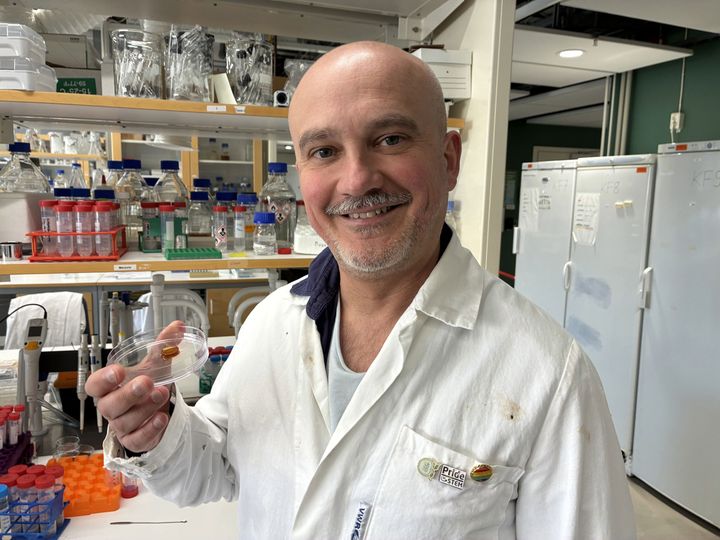
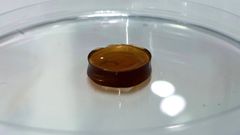
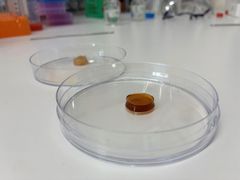
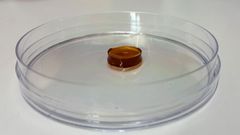
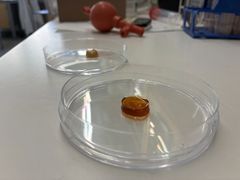
Millions of tons of wheat bran are left over when flour is milled, and bran often ends up as feed for chickens and other livestock despite the fact that it’s loaded with valuable dietary fiber. Research at KTH Royal Institute of Technology shows this leftover part of the grain can be transformed into soft, jelly like hydrogels—materials widely used to give structure, thickness, and texture to many foods.
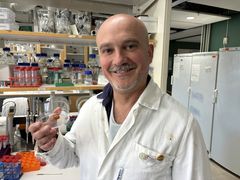
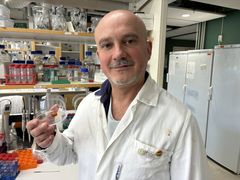
“That’s in contrast to the rough and fibrous mouth-feel of wheat bran, which normally prevents us from enjoying it in healthy food products,” says Francisco Vilaplana, professor in glycoscience at KTH and director of the PLENTY research center at KTH.
Vilaplana says gels created with this technology could potentially be used to thicken, stabilize or add texture to foods, such as plant-based meat and dairy alternatives, high-fiber snacks, sauces or sports and medical nutrition products. He says early tests show the method may also work with other plant proteins, such as pea or soy.
The study marks the first time wheat gluten protein—rather than animal-based protein—has been successfully incorporated into hydrogels based on wheat bran arabinoxylan (AX), and systematically studied in this way.
The research team extracted arabinoxylan, a natural fiber found in wheat bran, and mixed it with proteins from wheat. “We developed new functional food ingredients that combine two of the most nutritious components in our diets, the protein and the fiber,” Vilaplana says.
To make the gel, the researchers used an enzyme called laccase, which links the fibre molecules (the arabinoxylan, which also contains natural antioxidants like ferulic acid) together. The result is a stable gel. When the protein is added, it simply gets trapped inside the fiber network. Vilaplana says this actually improves how the protein behaves, because it cannot form a gel as easily as the fiber molecules can.
When plant proteins try to gel independently, the result can be brittle, uneven or sensitive to salt, pH, or temperature, he says. This is a problem for food texture and for using them as reliable ingredients.
The work was carried out by postdoctoral researcher Niklas Wahlström under a funded project by Lantmännen Research Foundation.
“Now, are expanding these biotechnological approaches to valorise agrifood side streams through PLENTY at KTH,” he says. PLENTY is a Formas-funded center dedicated towards resource optimization and circular supply chains reducing food losses and waste.
“This could add new value to agricultural side streams that are already produced in huge amounts but not used in human food,” Vilaplana says.
The results were published this month in the scientific journal, Food Hydrocolloids, by KTH researchers Wahlström, Marjorie Ladd Parada, Secil Yilmaz-Turan, Pramod Sivan, Mikael S. Hedenqvist and Vilaplana.
Contacts
Francisco VilaplanaKTH Royal Institute of Technology
ffranvila@kth.seImages
Subscribe to releases from KTH Royal Institute of Technology
Subscribe to all the latest releases from KTH Royal Institute of Technology by registering your e-mail address below. You can unsubscribe at any time.
Latest releases from KTH Royal Institute of Technology
Why do spruce take decades to reproduce? A genetic study offers new clues14.9.2026 17:41:41 CEST | Press Release
New techniques have enabled researchers in Sweden to begin decoding how one of Northern Europe's most important coniferous tree species switches from growing branches to producing cones – their seed-bearing reproductive organs.
KTH builds Swedish expertise in nitrocellulose2.9.2026 12:54:32 CEST | Press Release
Sweden wants to reduce its dependence on foreign suppliers for nitrocellulose, a raw material central to the production of conventional propellants. KTH is now launching a new competence centre to build up expertise across the entire chain – from forest-based raw materials and manufacturing to safe storage.
'Like uprooting tree stumps' – a simpler method to manufacture biosensors27.8.2026 15:42:00 CEST | Press Release
A new manufacturing method could help move the production of nanoscale sensors from specialized fabrication facilities to conventional semiconductor manufacturing plants.
Technique could make flat optic fiber 1,000 times more sensitive than standard fiber13.8.2026 10:57:20 CEST | Press Release
Optical fiber has already transformed the modern world. New research now suggests it could do even more. A new flat fiber fabrication technique produces a high fidelity sensor for a wide range of applications, from batteries to bridges, according to a recently-published study.
Why your building is often too hot, or cold — and the simple fix3.6.2026 13:28:26 CEST | Press Release
Not happy with the heating in your office, or your apartment building? A new study shows that complicated “smart building” technology isn’t the only answer for spaces that feel too hot after lunch, or too cold in the morning.
In our pressroom you can read all our latest releases, find our press contacts, images, documents and other relevant information about us.
Visit our pressroom