
Same data, different answer? A new Nature study counts the gap
25.5.2026 08:00:00 CEST | Umeå University | Press Release
Same data, a different result? A new study published in Nature measures how much published findings depend on who analyses them — and a recently arrived researcher at Umeå University was part of the work.
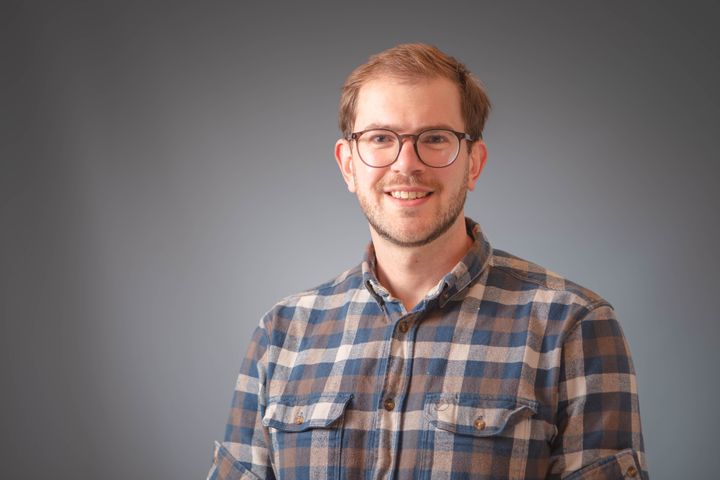
Same data, a different result? A new study published in Nature measures how much published findings depend on who analyses them — and a recently arrived researcher at Umeå University was part of the work.
A new study in Nature has put a number on something the published literature usually leaves unmeasured: how much a finding depends on the particular person who happens to analyse the data. Across 100 social and behavioural science studies reanalysed by 457 independent researchers, only a third of the new effect-size estimates fell close to the original. Marcus Kubsch, recently appointed Associate Professor at the Department of Science and Mathematics Education (NMD) at Umeå University, contributed three of those reanalyses.
The project, known as Multi100 and led by Balazs Aczel and Barnabas Szaszi at Eötvös Loránd University in Budapest, Hungary, gave each of 100 published claims to at least five independent analysts. Each analyst received the data and the claim, but no instructions about how to test it. The question was simple: if competent researchers are left to make their own justifiable choices about how to analyse the same data, do they reach the same answer?
One third of the numbers, three quarters of the conclusions
Results often differed — at least when it came to the exact numbers. In just over a third of cases, the new estimates were close to the original, and with a wider margin this rose to just over half. However, the overall conclusions were more consistent: in nearly three out of four cases, researchers reached the same general conclusion as in the original study. The differences could not be explained by the analysts’ statistical expertise, and larger datasets did not make the results more consistent.
The implication is not that the published literature is broadly wrong but that a single analytical path through a dataset is not, by itself, enough to settle a question. The authors behind the study recommend that high-stakes findings be accompanied by structured robustness reports or multi-analyst checks.
A question that predated the project
Marcus Kubsch took three of the 100 datasets, built his own analysis from the claim and the raw data, and submitted code and results to the lead team. His interest in the subject actually predates the paper. As a master's student he read John Ioannidis's Why most published research findings are false, and the argument stayed with him. As a PhD student, while analysing data for the project he was working on, he found a quiet bug in an R script that had been inflating effect sizes.
"Once you have seen one of those errors, you start asking how often the same kind of thing happens and never gets caught” he says. “Multi100 is the systematic version of that question."
The work travelled with him geographically. He began the reanalyses as a postdoctoral research group leader, continued them through his time as assistant professor, and saw the paper appear shortly after taking up his Umeå University position in May 2026.
A global effort
Multi100 is part of the Systematizing Confidence in Open Research and Evidence (SCORE) programme, funded by DARPA and coordinated by the Center for Open Science. The wider SCORE collaboration drew on 865 researchers across the social and behavioural sciences.
"Several hundred people on every continent were willing to spend real hours on a problem whose only payoff is a clearer picture of how science actually works" Kubsch says. "That tells you something about the field as well as about the finding."
About the article
Aczel, B., Szaszi, B., Clelland, H. T., Kovacs, M., et al. (2026). Investigating the analytical robustness of the social and behavioural sciences. Nature, 652, 135–142. https://doi.org/10.1038/s41586-025-09844-9
Contacts
Marcus KubschAssociate professorDepartment of Science and Mathematics Education
Tel:+46 90 786 75 31marcus.kubsch@umu.seAnna-Lena LindskogCommunication officerFaculty of Science & Technology
Tel:+46706422956anna-lena.lindskog@umu.seImages
About us
Umeå University is a comprehensive university and one of Sweden’s largest higher education institutions with around 38,000 students and 4,600 staff. We have a diverse range of high-quality educational programmes and research within all disciplinary domains and the arts. The University offers world-class educational and research environments and helps expand knowledge of global significance. This is where the groundbreaking discovery was made of the CRISPR-Cas9 gene-editing tool, which was awarded the Nobel Prize in Chemistry. At Umeå University, everything is just around the corner. Our tightly knit campus makes it easy to meet, collaborate and share knowledge, something that encourages a dynamic and open culture.
Subscribe to releases from Umeå University
Subscribe to all the latest releases from Umeå University by registering your e-mail address below. You can unsubscribe at any time.
Latest releases from Umeå University
New findings on drug treatment for Compulsive Sexual Behaviour Disorder8.10.2026 07:45:00 CEST | Press Release
Medication used to treat addiction is no more effective than antidepressants in treating Compulsive Sexual Behaviour Disorder (CSBD). This is shown in a new study from Umeå University and Karolinska Institutet. However, the medications differ in terms of side effects and the way symptoms improve over time.
First country to turn around type 2 diabetes trend7.10.2026 14:13:59 CEST | Press Release
Mauritius is the first country in the world to have successfully reduced the prevalence of type 2 diabetes after decades of rising rates, according to a new study involving researchers from Umeå University. The decline has been observed across all population groups and among both women and men.
3D printers can make advanced research more accessible5.10.2026 08:00:00 CEST | Press Release
Developing new research equipment is often expensive and time-consuming. In his doctoral thesis, Daniel Nilsson at Umeå University demonstrates how standard 3D printers can be used to rapidly manufacture advanced scientific instruments directly in the laboratory.
Researchers discover major ecological shift in the Gulf of Bothnia2.10.2026 10:00:00 CEST | Press Release
For decades, scientists have regarded phosphorus as the main nutrient limiting biological production in the Gulf of Bothnia. Now, a new study led by researchers at Umeå University shows that a fundamental change is underway. The Bothnian Sea has shifted to nitrogen limitation, while the Bothnian Bay is rapidly moving in the same direction.
Bildmuseet: Anneli Furmark / You Are the Centre of the Earth1.10.2026 15:29:11 CEST | Press Release
Anneli Furmark’s works, graphic novels as well as painting, often explore the ways people relate to one another, to the landscape, and to the place. Her narratives frequently unfold in northern settings, with particular attention to houses and built environments. Bildmuseet presents drawings, comics, paintings and sketchbooks from the past fifteen years. Also on view is a film created especially for the exhibition, in which actors give voice to short stories from Furmark’s graphic novels.
In our pressroom you can read all our latest releases, find our press contacts, images, documents and other relevant information about us.
Visit our pressroom