
Thawing permafrost may trigger overlooked carbon sink in rivers
17.6.2026 17:00:00 CEST | Umeå University | Press Release
A new study published in Nature study shows that rock weathering increasingly counteracts river CO₂ emissions as permafrost degrades. The study has been carried out by a collaborative team of researchers from Umeå University, Sweden, and East China Normal University.
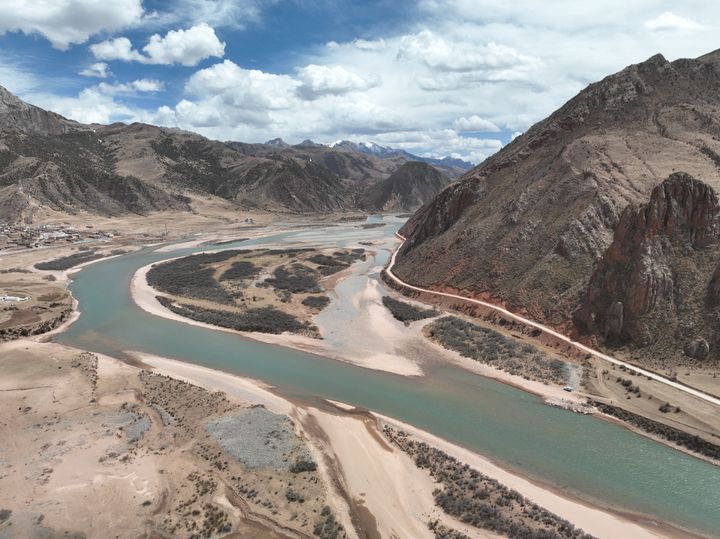
Thawing permafrost is often viewed as a growing source of greenhouse gases as climate warming releases ancient carbon stored in frozen soils. But a new study published in the journal Nature reveals a more complex picture. As permafrost thaws, rivers may also develop an overlooked capacity to remove carbon dioxide (CO₂) through intensified rock weathering. Researchers found that warming and permafrost degradation expose reactive minerals and increase water–rock interactions, accelerating chemical weathering processes that consume CO₂. In some river catchments, this geological carbon uptake partially or even fully offset river CO₂ emissions.
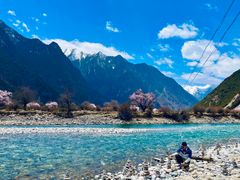
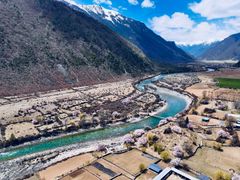
The international research team investigated 50 rivers across the Qinghai–Tibet Plateau, Earth’s largest high-altitude cryosphere outside the polar regions, to understand how thawing permafrost reshapes carbon cycling. By combining measurements of river CO₂ emissions, dissolved carbon, isotopic tracers and geochemical modelling, the researchers found evidence that thawing landscapes intensify chemical weathering, transferring carbon into dissolved inorganic forms while consuming atmospheric CO₂.
Carbon uptake can even exceed emissions
“We found that river CO₂ emissions decline while carbon uptake through rock weathering increases as permafrost cover decreases,” said Liwei Zhang, biogeochemist at East China Normal University. “In some catchments where permafrost has become patchier, weathering-driven carbon uptake was large enough to offset or even exceed river CO₂ emissions.”
Across the study region, the team estimated that carbon uptake from rock weathering offsets roughly 35 percent of river CO₂ emissions on average. In regions with continuous permafrost, the offset was relatively small. However, in landscapes with discontinuous or isolated permafrost, weathering-driven carbon uptake sometimes exceeded 100 percent of river CO₂ emissions, suggesting that geological carbon uptake can rival biological carbon release.
Biological and geological carbon cycles linked
The findings challenge a simplified view of thawing permafrost as only a carbon source. As frozen soils thaw, rivers receive large inputs of ancient organic carbon that microbes convert into greenhouse gases released to the atmosphere. The new study suggests that geological processes operating alongside biological ones may partly counterbalance these emissions.
Still, the researchers caution that rock weathering is not a simple or permanent climate solution. Carbon cycling in thawing landscapes remains complex, and some weathering reactions can also release CO₂ depending on mineral composition. The study instead highlights a mechanism that remains poorly represented in many climate and carbon-cycle models.
“Our findings show that biological and geological carbon cycles are tightly linked,” says Jan Karlsson, professor at Department of Ecology, Environment and Geosciences at Umeå University. “To understand whether thawing permafrost ultimately amplifies or dampens climate warming, we need to consider both the carbon released from ancient soils and the carbon consumed through rock weathering.”
The researchers argue that future climate assessments should move beyond a sole focus on biological driven carbon emissions and incorporate geological carbon sources and sinks that emerge as frozen landscapes thaw.
About the study
Liwei Zhang, Aron Bufe, Joshua F.Dean, Gerard Rocher-Ros, Ryan A.Sponseller, Emily H. Stanley, Jan Karlsson, David E. Butman, Ran Liu, Lijun Hou,Jinzhi Ding, Shilong Piao, Xinghui Xia, Tom J. Battin, Rock weathering can counteract river CO2 emissions induced by permafrost thaw, Nature, https://doi.org/10.1038/s41586-026-10664-8
Contacts
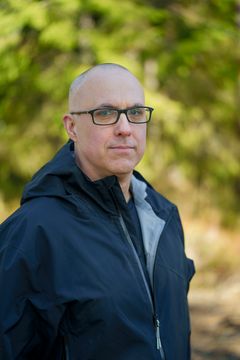
Ryan SponsellerprofessorDepartment of Ecology, Environment and Geosciences, Umeå University
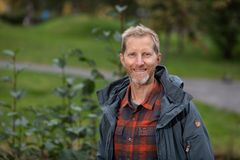
Tel:+46 90 786 65 50ryan.sponseller@umu.seGerard Rocher Rosassistant professorDepartment of Ecology, Environment and Geosciences, Umeå University
Tel:+46 90 786 64 25gerard.rocher.ros@umu.seAnna-Lena LindskogCommunication officerFaculty of Science & Technology
Tel:+46706422956anna-lena.lindskog@umu.seImages
About us
Umeå University is a comprehensive university and one of Sweden’s largest higher education institutions with around 38,000 students and 4,600 staff. We have a diverse range of high-quality educational programmes and research within all disciplinary domains and the arts. The University offers world-class educational and research environments and helps expand knowledge of global significance. This is where the groundbreaking discovery was made of the CRISPR-Cas9 gene-editing tool, which was awarded the Nobel Prize in Chemistry. At Umeå University, everything is just around the corner. Our tightly knit campus makes it easy to meet, collaborate and share knowledge, something that encourages a dynamic and open culture.
Subscribe to releases from Umeå University
Subscribe to all the latest releases from Umeå University by registering your e-mail address below. You can unsubscribe at any time.
Latest releases from Umeå University
First country to turn around type 2 diabetes trend7.10.2026 14:13:59 CEST | Press Release
Mauritius is the first country in the world to have successfully reduced the prevalence of type 2 diabetes after decades of rising rates, according to a new study involving researchers from Umeå University. The decline has been observed across all population groups and among both women and men.
3D printers can make advanced research more accessible5.10.2026 08:00:00 CEST | Press Release
Developing new research equipment is often expensive and time-consuming. In his doctoral thesis, Daniel Nilsson at Umeå University demonstrates how standard 3D printers can be used to rapidly manufacture advanced scientific instruments directly in the laboratory.
Researchers discover major ecological shift in the Gulf of Bothnia2.10.2026 10:00:00 CEST | Press Release
For decades, scientists have regarded phosphorus as the main nutrient limiting biological production in the Gulf of Bothnia. Now, a new study led by researchers at Umeå University shows that a fundamental change is underway. The Bothnian Sea has shifted to nitrogen limitation, while the Bothnian Bay is rapidly moving in the same direction.
Bildmuseet: Anneli Furmark / You Are the Centre of the Earth1.10.2026 15:29:11 CEST | Press Release
Anneli Furmark’s works, graphic novels as well as painting, often explore the ways people relate to one another, to the landscape, and to the place. Her narratives frequently unfold in northern settings, with particular attention to houses and built environments. Bildmuseet presents drawings, comics, paintings and sketchbooks from the past fifteen years. Also on view is a film created especially for the exhibition, in which actors give voice to short stories from Furmark’s graphic novels.
Bildmuseet: Nina Mangalanayagam / Blank Pages1.10.2026 15:25:46 CEST | Press Release
Drawing on photography, film and sound installation, Nina Mangalanayagam explores questions of belonging and composite identities, often with an autobiographical approach. In a compelling, thought-provoking exhibition at Bildmuseet, she presents new works examining Sweden’s colonial past and its relevance today.
In our pressroom you can read all our latest releases, find our press contacts, images, documents and other relevant information about us.
Visit our pressroom