
KTH builds Swedish expertise in nitrocellulose
2.9.2026 12:54:32 CEST | KTH Royal Institute of Technology | Press Release
Sweden wants to reduce its dependence on foreign suppliers for nitrocellulose, a raw material central to the production of conventional propellants. KTH is now launching a new competence centre to build up expertise across the entire chain – from forest-based raw materials and manufacturing to safe storage.
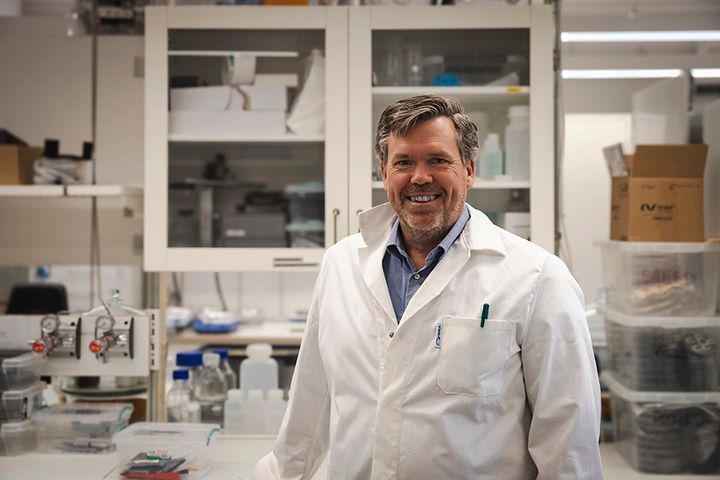
The Svenskt Krut competence centre brings together KTH, the Swedish Defence Materiel Administration (FMV), the Swedish Defence Research Agency (FOI) and Swedish industry. Over five years, researchers and engineers will investigate how Sweden can strengthen its capabilities in nitrocellulose and nitrocellulose-based propellants.
The initiative is driven by the need to strengthen Sweden’s domestic supply capacity.
“We are building something that Sweden needs to establish – a comprehensive scientific environment focused on nitrocellulose and propellants. This is just as much about understanding the materials as it is about educating the engineers and researchers who will help ensure Sweden’s supply capacity in the decades to come,” says Daniel Söderberg, director of Svenskt Krut and professor at KTH.
FMV comments on its participation:
“For us, access to qualified expertise is essential to being able to set the right requirements and make the right assessments. A centre of this kind strengthens the entire chain, from research to procurement and use,” says Carl-Axel Blomdahl, head of Army Materiel, Weapons & Protection at FMV.
Using Swedish raw materials
Nitrocellulose is a key raw material in conventional propellants. One important question is how it can be produced using Swedish raw materials. Today, cotton is the main raw material used, but Sweden has another resource available: its forests.
Forest-based cellulose could provide an alternative to cotton. But switching raw materials is not straightforward. The properties of cellulose affect the behaviour of the material throughout the manufacturing process and in the final product. This is an area where important knowledge gaps remain.
The centre will also investigate what happens to nitrocellulose over time. The material degrades slowly, making knowledge about ageing and storage important. Researchers will study degradation processes, new stabilisers and methods for assessing the material’s service life.
“It feels both important and exciting to lead an initiative that can strengthen Sweden’s own defence capabilities. We will build knowledge and expertise for the future while also making use of advanced characterisation, modelling and AI. It is a highly focused and exciting research challenge,” Söderberg says.
Next generation of expertise
FOI will contribute expertise in energetic materials, testing and safety assessments. The institute will also serve as the main research environment for studies of ageing.
“Understanding the properties of nitrocellulose and how the material can be handled safely is crucial both for research and for its use. We contribute extensive experience in energetic materials and an environment where testing can be carried out safely,” says Henric Östmark, research director for Energetic Materials at FOI.
Svenskt Krut will also help build the next generation of expertise. Doctoral students and researchers will take part in joint training, while industry and government agencies will be offered shorter courses. Conferences and seminars will help bring the different stakeholders together.
The initiative will run from 2026 to 2031 and is funded by FMV with SEK 100 million. The goal is for Sweden to be in a stronger position after five years – with greater knowledge of raw materials and materials, a better understanding of manufacturing processes, and a broader skills base to strengthen national supply capacity.
Subscribe to releases from KTH Royal Institute of Technology
Subscribe to all the latest releases from KTH Royal Institute of Technology by registering your e-mail address below. You can unsubscribe at any time.
Latest releases from KTH Royal Institute of Technology
With climate-resilient crops in mind, study tackles flaw in photosynthesis22.10.2026 13:56:58 CEST | Press Release
Rising temperatures and increasing drought are shortening crop growing seasons in many parts of the world. Now scientists in Sweden report new advances toward engineering more efficient photosynthesis, work that could eventually contribute to efforts to adapt crops for climate change.
Now multiple optical devices' stabilizing properties can be identified with a single reprogrammable chip14.10.2026 13:03:08 CEST | Press Release
In optical fibers, chips and other light-guiding devices, minor defects can scatter photons and disrupt their path. A new study demonstrates a way to reveal properties which, in certain systems, help light wave behavior withstand such flaws. The method could help speed up the search for new kinds of electronics and optical technologies, and contribute to more reliable quantum devices.
Researchers identify aggressive molecular features in low-risk prostate cancer7.10.2026 13:41:39 CEST | Press Release
A new study revealed molecular features linked to more aggressive prostate cancer in a subset of patients who had been classified as low risk, highlighting biological differences that may not be apparent from clinical measures alone. The results could lead to new therapeutic strategies.
Why do spruce take decades to reproduce? A genetic study offers new clues14.9.2026 17:41:41 CEST | Press Release
New techniques have enabled researchers in Sweden to begin decoding how one of Northern Europe's most important coniferous tree species switches from growing branches to producing cones – their seed-bearing reproductive organs.
'Like uprooting tree stumps' – a simpler method to manufacture biosensors27.8.2026 15:42:00 CEST | Press Release
A new manufacturing method could help move the production of nanoscale sensors from specialized fabrication facilities to conventional semiconductor manufacturing plants.
In our pressroom you can read all our latest releases, find our press contacts, images, documents and other relevant information about us.
Visit our pressroom