
Researchers identify aggressive molecular features in low-risk prostate cancer
7.10.2026 13:41:39 CEST | KTH Royal Institute of Technology | Press Release
A new study revealed molecular features linked to more aggressive prostate cancer in a subset of patients who had been classified as low risk, highlighting biological differences that may not be apparent from clinical measures alone. The results could lead to new therapeutic strategies.
The results were published in npj Digital Medicine by researchers at KTH Royal Institute of Technology, who combined multi-omics analysis of different molecular layers with machine learning, modelling and network analysis.
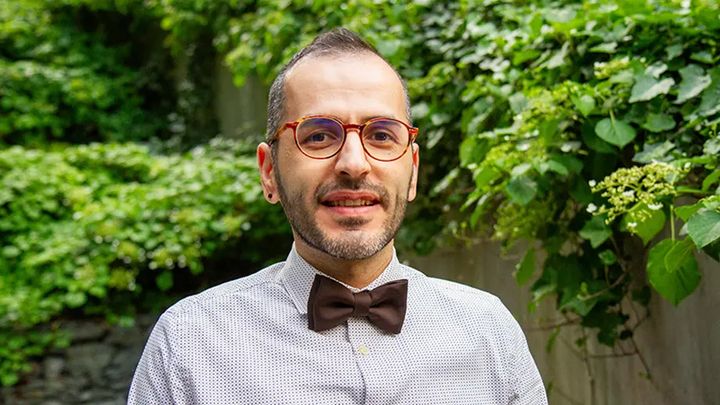
“The study is a good example of the type of data-driven precision medicine research we are building at KTH, combining large-scale molecular data with machine learning to address clinically relevant questions in cancer,” says assistant professor Arian Lundberg, whose A.Lundberg Lab has launched one of the largest national and international efforts to study the tumor microbiome, using extensive Swedish and global clinical cohorts.
The multi-omics approach means that the researchers look at different molecular measurements to tell the complete story of a tumor.
“For example, genomics tells us about DNA alterations, transcriptomics tells us which genes are active, and epigenomics tells us about regulatory changes that can influence gene activity,” Lundberg says.
“Instead of looking at these layers separately, we integrate them to build a more complete, patient-specific picture of tumor biology.”
Machine-learning and network-analysis were central to the study and its findings.The study's machine-learning model was developed by a team led by Assistant Professor Golnaz Taheri at the Department of Computational Science and Technology at KTH.
At the moment, the new method is at the research stage and not yet ready for clinical use. The next step is to test some of the potential therapeutic vulnerabilities suggested by the analysis, through laboratory experiments. This will help Lundberg’s team understand whether the molecular changes they identified are useful for risk prediction alone or may also point towards new therapeutic strategies.
“In the longer term, the goal is to translate these findings into more precise risk stratification, and to potentially identify patients who could benefit from earlier or more targeted treatment,” Lundberg says.
The work was supported by SciLifeLab-Knut and Alice Wallenberg Data-Driven Life Science (DDLS) program, Vetenskapsrådet (Swedish Research Council), Prostatacancerförbundet and Digital Futures.
Contacts
Arian LundbergAssistant ProfessorKTH Royal Institute of Technology
arianl@kth.seGolnaz TaheriKTH Royal Institute of Technology
Assistant Professor at the KTH Royal Institute of Technology
Links
Subscribe to releases from KTH Royal Institute of Technology
Subscribe to all the latest releases from KTH Royal Institute of Technology by registering your e-mail address below. You can unsubscribe at any time.
Latest releases from KTH Royal Institute of Technology
Now multiple optical devices' stabilizing properties can be identified with a single reprogrammable chip14.10.2026 13:03:08 CEST | Press Release
In optical fibers, chips and other light-guiding devices, minor defects can scatter photons and disrupt their path. A new study demonstrates a way to reveal properties which, in certain systems, help light wave behavior withstand such flaws. The method could help speed up the search for new kinds of electronics and optical technologies, and contribute to more reliable quantum devices.
Why do spruce take decades to reproduce? A genetic study offers new clues14.9.2026 17:41:41 CEST | Press Release
New techniques have enabled researchers in Sweden to begin decoding how one of Northern Europe's most important coniferous tree species switches from growing branches to producing cones – their seed-bearing reproductive organs.
KTH builds Swedish expertise in nitrocellulose2.9.2026 12:54:32 CEST | Press Release
Sweden wants to reduce its dependence on foreign suppliers for nitrocellulose, a raw material central to the production of conventional propellants. KTH is now launching a new competence centre to build up expertise across the entire chain – from forest-based raw materials and manufacturing to safe storage.
'Like uprooting tree stumps' – a simpler method to manufacture biosensors27.8.2026 15:42:00 CEST | Press Release
A new manufacturing method could help move the production of nanoscale sensors from specialized fabrication facilities to conventional semiconductor manufacturing plants.
Technique could make flat optic fiber 1,000 times more sensitive than standard fiber13.8.2026 10:57:20 CEST | Press Release
Optical fiber has already transformed the modern world. New research now suggests it could do even more. A new flat fiber fabrication technique produces a high fidelity sensor for a wide range of applications, from batteries to bridges, according to a recently-published study.
In our pressroom you can read all our latest releases, find our press contacts, images, documents and other relevant information about us.
Visit our pressroom