
With climate-resilient crops in mind, study tackles flaw in photosynthesis
22.10.2026 13:56:58 CEST | KTH Royal Institute of Technology | Press Release
Rising temperatures and increasing drought are shortening crop growing seasons in many parts of the world. Now scientists in Sweden report new advances toward engineering more efficient photosynthesis, work that could eventually contribute to efforts to adapt crops for climate change.
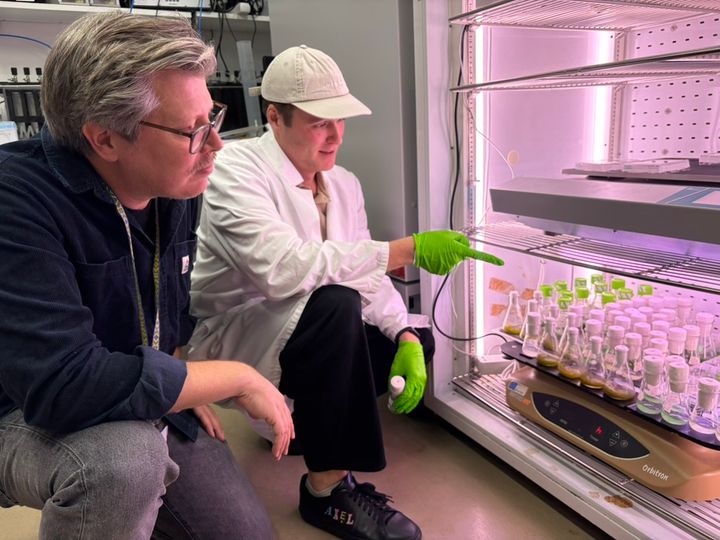
- Researchers created and tested about 15,000 altered versions of a fast bacterial Rubisco in living photosynthetic cells.
- They identified mutations that helped the cells grow and reduced Rubisco’s wasteful reaction with oxygen while preserving useful carbon-processing speed.
- Beneficial mutations often failed when combined, and computer models struggled to predict which combinations would work.
- The findings may guide future work on crops and industrial microorganisms.
A team at KTH Royal Institute of Technology created and tested about 15,000 genetically altered versions of bacterial Rubisco—an enzyme that helps turn carbon dioxide into material for growth. Paul Hudson, professor in systems biology at KTH, says the study focused on bacterial rather than plant Rubisco and searched for versions that support bacteria growth.
Publishing in Science Advances, the researcher report they found several promising variants—and identified numerous changes that didn’t appear to work.
Carbon capturing for growth
Arguably the most important enzyme for life on Earth, Rubisco’s role in bacteria and plants goes hand-in-hand with photosynthesis. Where sunlight provides the power, Rubisco captures carbon dioxide and incorporates it into material the organism can use to make sugars and grow.
Nevertheless, the enzyme is surprisingly inefficient. It works slowly and sometimes captures oxygen instead of CO2. Plants must then spend energy recycling the unwanted products.
While the study focused on a bacterial Rubisco rather than the plant enzyme, its large database of successful and unsuccessful mutations offers a possible map for designing better enzymes, which may help researchers improve computer models of how Rubisco responds to genetic changes. The lessons may eventually guide work on plant Rubisco, but producing faster-growing, climate-resilient crops will require further testing in plant cells and whole plants.
Technological achievement
Using a specially developed high-throughput screening platform, with each variant carrying a short DNA label, the team could simultaneously track the efficiency of thousands of candidate variants, including cells with single and combined mutations. Hudson says the screening method might also be adapted to other metabolic enzymes.
The research focused on bacterial Rubisco because its simpler structure makes it easy to produce and test on a large scale, and by doing so identify engineering principles that can be tested later in plant enzymes and plant cells.
Also, Hudson says, some bacterial form II Rubiscos process CO2 faster than the plant enzyme. “But they also catalyze the oxygenation reaction more readily, meaning that they are less selective for carbon dioxide. Our idea was to take these fast Rubiscos and make them even faster, or at least reduce their oxygenation rate while retaining a high carboxylation rate.”
New insights
Two leading variants reacted less with oxygen while retaining useful carbon-dioxide turnover, although both showed trade-offs in their overall carbon-dioxide efficiency. Beneficial mutations often stopped working when combined.
The researchers also evaluated several computer models designed to predict how mutations would affect Rubisco. The models were more reliable for single mutations than for combinations of mutations.
“This shows that the effects of Rubisco mutations are complex and difficult to predict without a large amount of experimental data.”
Further work will focus on further reducing the oxygen reaction in promising variants, and investigate which of the enzyme’s building blocks help it choose carbon dioxide over oxygen. The researchers are also testing new enzymes in plant cells and in cyanobacteria that produce useful chemicals through an EU-funded project.
Links
Subscribe to releases from KTH Royal Institute of Technology
Subscribe to all the latest releases from KTH Royal Institute of Technology by registering your e-mail address below. You can unsubscribe at any time.
Latest releases from KTH Royal Institute of Technology
Now multiple optical devices' stabilizing properties can be identified with a single reprogrammable chip14.10.2026 13:03:08 CEST | Press Release
In optical fibers, chips and other light-guiding devices, minor defects can scatter photons and disrupt their path. A new study demonstrates a way to reveal properties which, in certain systems, help light wave behavior withstand such flaws. The method could help speed up the search for new kinds of electronics and optical technologies, and contribute to more reliable quantum devices.
Researchers identify aggressive molecular features in low-risk prostate cancer7.10.2026 13:41:39 CEST | Press Release
A new study revealed molecular features linked to more aggressive prostate cancer in a subset of patients who had been classified as low risk, highlighting biological differences that may not be apparent from clinical measures alone. The results could lead to new therapeutic strategies.
Why do spruce take decades to reproduce? A genetic study offers new clues14.9.2026 17:41:41 CEST | Press Release
New techniques have enabled researchers in Sweden to begin decoding how one of Northern Europe's most important coniferous tree species switches from growing branches to producing cones – their seed-bearing reproductive organs.
KTH builds Swedish expertise in nitrocellulose2.9.2026 12:54:32 CEST | Press Release
Sweden wants to reduce its dependence on foreign suppliers for nitrocellulose, a raw material central to the production of conventional propellants. KTH is now launching a new competence centre to build up expertise across the entire chain – from forest-based raw materials and manufacturing to safe storage.
'Like uprooting tree stumps' – a simpler method to manufacture biosensors27.8.2026 15:42:00 CEST | Press Release
A new manufacturing method could help move the production of nanoscale sensors from specialized fabrication facilities to conventional semiconductor manufacturing plants.
In our pressroom you can read all our latest releases, find our press contacts, images, documents and other relevant information about us.
Visit our pressroom