
Beyond food: Bran-based gels show potential for targeted drug delivery
11.11.2026 14:02:45 CET | KTH Royal Institute of Technology | Press Release
When it comes to colon health, the benefits of wheat and rye bran in wholegrain foods are well-known. Now researchers in Sweden have shown how these fibers may have a therapeutic use, too. A new study demonstrates the potential to marshal bran fiber for direct delivery of drugs treating colon diseases like ulcerative colitis, Crohn's or colorectal cancer.
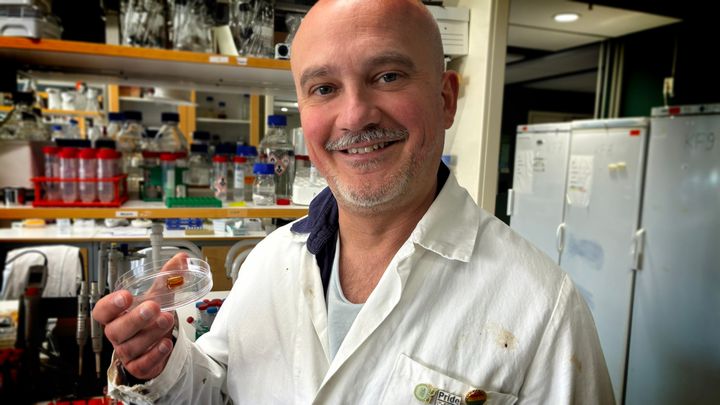
Researchers at KTH Royal Institute of Technology report they have successfully tested the concept of using bran-based hydrogels for encapsulating potential colon treatments, ensuring they are delivered where they are most needed. While more development and research are needed, the latest test results – with encapsulated model small molecules and proteins – offer a possible bridge between agricultural side streams, biomaterials and medicine delivery.
"We believe this could one day have applications for oral delivery of drugs or probiotics to the gut, for example to treat inflammatory symptoms," says Francisco Vilaplana, professor in glycoscience at Sweden's KTH Royal Institute of Technology and director of the PLENTY research center at KTH.
Medications that release in the colon can ensure a concentration of drugs to target diseased tissue, which is important when treating lower intestine issues. Most of these kinds of drugs are packed in coatings that dissolve when acidity reaches a certain point more commonly found in the colon, typically at a level of pH7.
But from person-to-person, drugs are exposed to varying levels of stomach acid, digestive enzymes, changing fluid volumes, mucus, and a moving intestinal tract, all of which can trigger an early release. So, the search for alternative triggers has led researchers to an enzyme found among colon bacteria, β-xylanase, which can digest plant fiber.
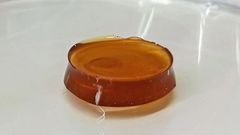
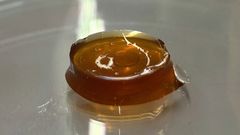
The researchers created their hydrogel with the plant fiber Arabinoxylan, which was extracted from wheat and rye bran. Rye arabinoxylan (RAX) hydrogels fully retained a model protein and then released a substantial amount triggered by a gut bacterial β-xylanase enzyme.
It remains unknown whether the gel would survive the stomach and small intestine during in vivo digestion. But, because β-xylanase cuts the gel's arabinoxylan fibre network to release the encapsulated target molecules, it offers the possibility of using natural and degradable materials for repeated contact with the gut.
Vilaplana says that rye gel was found to be particularly effective at retaining the model protein. The researchers also explored techniques to tune performance of the gels through steps like freeze-drying.
The study was co-authored by KTH PhD student Carl Rämgård and Associate Professor Lauren McKee.Funding support for the study was provided by Svenska Forskningsrådet (Formas) and PLENTY - the Centre for Circular and Symbiotic Food Provisioning
Images
Links
Subscribe to releases from KTH Royal Institute of Technology
Subscribe to all the latest releases from KTH Royal Institute of Technology by registering your e-mail address below. You can unsubscribe at any time.
Latest releases from KTH Royal Institute of Technology
Five top Nordic universities join forces to scale deeptech startups18.11.2026 15:21:59 CET | Press Release
Today at Slush in Helsinki, five leading technical universities are launching a new collaboration that will let research-based deep tech startups access opportunities across the region to help them scale faster and compete globally.
Disabling cells’ ‘clean-up crew’ could speed drug target production18.11.2026 14:34:29 CET | Press Release
With an unusual genetic modification which disabled cells’ recycling systems, researchers found a way to make cells produce significantly larger amounts of the proteins used to discover and develop new medicines. The findings could help speed up drug development while reducing research and development costs.
With climate-resilient crops in mind, study tackles flaw in photosynthesis22.10.2026 13:56:58 CEST | Press Release
Rising temperatures and increasing drought are shortening crop growing seasons in many parts of the world. Now scientists in Sweden report new advances toward engineering more efficient photosynthesis, work that could eventually contribute to efforts to adapt crops for climate change.
Now multiple optical devices' stabilizing properties can be identified with a single reprogrammable chip14.10.2026 13:03:08 CEST | Press Release
In optical fibers, chips and other light-guiding devices, minor defects can scatter photons and disrupt their path. A new study demonstrates a way to reveal properties which, in certain systems, help light wave behavior withstand such flaws. The method could help speed up the search for new kinds of electronics and optical technologies, and contribute to more reliable quantum devices.
Researchers identify aggressive molecular features in low-risk prostate cancer7.10.2026 13:41:39 CEST | Press Release
A new study revealed molecular features linked to more aggressive prostate cancer in a subset of patients who had been classified as low risk, highlighting biological differences that may not be apparent from clinical measures alone. The results could lead to new therapeutic strategies.
In our pressroom you can read all our latest releases, find our press contacts, images, documents and other relevant information about us.
Visit our pressroom