
Study shows making cities greener doesn’t just capture carbon – it reduces it
Dozens of European cities could reach net zero carbon emissions over the next 10 years by incorporating nature into their infrastructure, according to a new study.
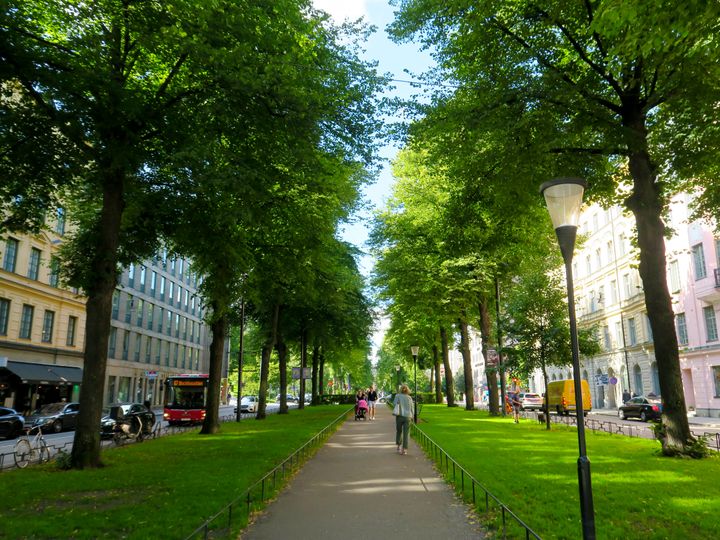
Published recently in the journal, Nature Climate Change, the analysis shows the ways cities can orchestrate a wide range of green solutions like parks, streetscaping and roof gardens to not only capture carbon emissions, but help reduce them.
The study was undertaken by researchers from Sweden, the U.S. and China. It recommends the most effective approaches for natural carbon sequestration in 54 cities in the EU. And it shows how blending these steps with other climate actions can enable cities to reach net-zero carbon and actually reduce emissions by an average of 17.4 percent.
Zahra Kalantari, an associate professor in Water and Environmental Engineering at KTH Royal Institute of Technology, says the researchers focused on the indirect ways that so-called “nature-based solutions” can contribute to carbon neutrality.
“Nature-based solutions not only offset a proportion of a city’s emissions, but can contribute to reduction in emissions and resource consumption too,” Kalantari says.
The results are based on integrating data from previous studies on the effects of nature-based solutions. These include urban farming, permeable pavements which enable rainwater absorption into the ground, narrower roads with more greenery and trees, wildlife habitat preservation, and creating more agreeable environments for walking and bicycling.
For example, urban parks, greenspace and trees promote more walking, bicycling and other environmentally positive habits that replace automobile driving. Combined with other solutions like green infrastructure, these measures can further improve urban microclimates by absorbing heat and cold, and as a result reduce energy use in buildings.
It also provides guidance on which measures should be prioritized and where to locate them for the best effect, she says. For example, in Berlin the study recommends prioritizing green buildings and urban green spaces, which could result in an emissions reduction rate of 6 percent for residences, 13 percent in industry and 14 percent in transportation.
“There are many studies that examine the effects of individual nature-based solutions, but this merges all of them and analyzes the potential systemic effect,” she says. “That’s new.”
The study was a collaboration by researchers from KTH Royal Institute of Technology in Stockholm, MIT, Stockholm University, University of Gävle, Linköping University, Royal Swedish Academy of Sciences and Shanghai Jiao Tong University.
Images
Links
Subscribe to releases from KTH Royal Institute of Technology
Subscribe to all the latest releases from KTH Royal Institute of Technology by registering your e-mail address below. You can unsubscribe at any time.
Latest releases from KTH Royal Institute of Technology
Study explains why new kinds of steel needed to build lead cooled reactors11.12.2025 14:23:59 CET | Press Release
Safer operation, better fuel efficiency and lower waste mark lead-cooled nuclear power as a potentially dramatic shift from the water-cooled nuclear stations the world has relied on since the mid 20th century. A recent Swedish study casts new light on how to avoid corrosion in the steel used to build these next-generation nuclear facilities.
Alternative to BPA passes toxicity and sustainability standards set by EU innovation guidelines4.12.2025 11:07:37 CET | Press Release
Polyester and a host of other plastic products could potentially be manufactured with non-toxic and sustainable BPA alternatives identified in a multidisciplinary study published today by researchers in Sweden.
Study shows potential for more affordable and efficient hydrogen gas production3.12.2025 15:29:35 CET | Press Release
A recent advance in the science of hydrogen fuel production could enable higher output and more sustainable production of this renewable energy source, researchers with Stockholm’s KTH Royal Institute of Technology report.
Calcium-sensitive switch designed to boost efficacy of cancer drugs24.11.2025 21:11:53 CET | Press Release
Cancer-fighting antibody drugs are designed to penetrate tumor cells and release a lethal payload deep within, but too often they don’t make it that far. A new study shows how this Trojan Horse strategy works better by exploiting calcium differences outside and inside cells.
Potential treatment may prevent brain damage in premature babies11.11.2025 11:10:46 CET | Press Release
A treatment that could protect premature babies from brain damage showed promise in a recent study in Sweden. Using a first-of-its-kind prenatal brain model created with human cells, researchers observed new details about the effects of cerebral hemorrhages on stem cells during premature birth. And they successfully tested an antidote that reduced the damage.
In our pressroom you can read all our latest releases, find our press contacts, images, documents and other relevant information about us.
Visit our pressroom